In the unpredictable world of cryptocurrency, few phenomena have captured attention quite like the relentless rise of meme coins. Whilst established digital assets like Bitcoin and Ethereum navigate turbulent waters with cautious optimism, meme coins, tokens born from internet jokes, cultural moments, and viral trends, continue to defy gravity. November 2025 painted a vivid picture of this paradox: the broader meme coin market shed 27% of its value, yet individual projects like MemeCore posted 15% weekly gains, and Dogecoin maintained its staggering $22.60 billion market capitalisation. These assets shouldn’t work according to traditional financial logic. They lack whitepapers detailing revolutionary technology, offer minimal utility, and exist primarily as digital inside jokes. Yet millions of retail investors pour capital into them, riding waves of hype that can turn modest stakes into life-changing sums, or wipe out portfolios overnight. So why do meme coins keep surging when every rational indicator suggests they shouldn’t? The answer lies in a complex interplay of psychology, accessibility, culture, and the modern internet’s unmatched power to transform absurdity into financial reality.
Key Takeaways
- Meme coins keep surging due to powerful psychological factors including community-driven momentum, social proof, and the fear of missing out on rapid gains.
- Social media platforms like X and Reddit amplify meme coin rallies through viral marketing, influencer endorsements, and instant coordination at scale.
- Low entry barriers and affordable token prices make meme coins accessible to retail investors seeking high-risk, high-reward opportunities that established cryptocurrencies cannot match.
- Traditional valuation metrics do not apply to meme coins, as their worth is driven entirely by sentiment, cultural relevance, and entertainment value rather than fundamentals.
- Despite their appeal, meme coins carry extreme risks including volatility, scams, liquidity issues, and regulatory uncertainty that can lead to complete capital loss.
- The resilience of meme coins through market volatility reflects their unique position as cultural phenomena with financial components, not competitors to Bitcoin or Ethereum.
The Psychology Behind Meme Coin Investing
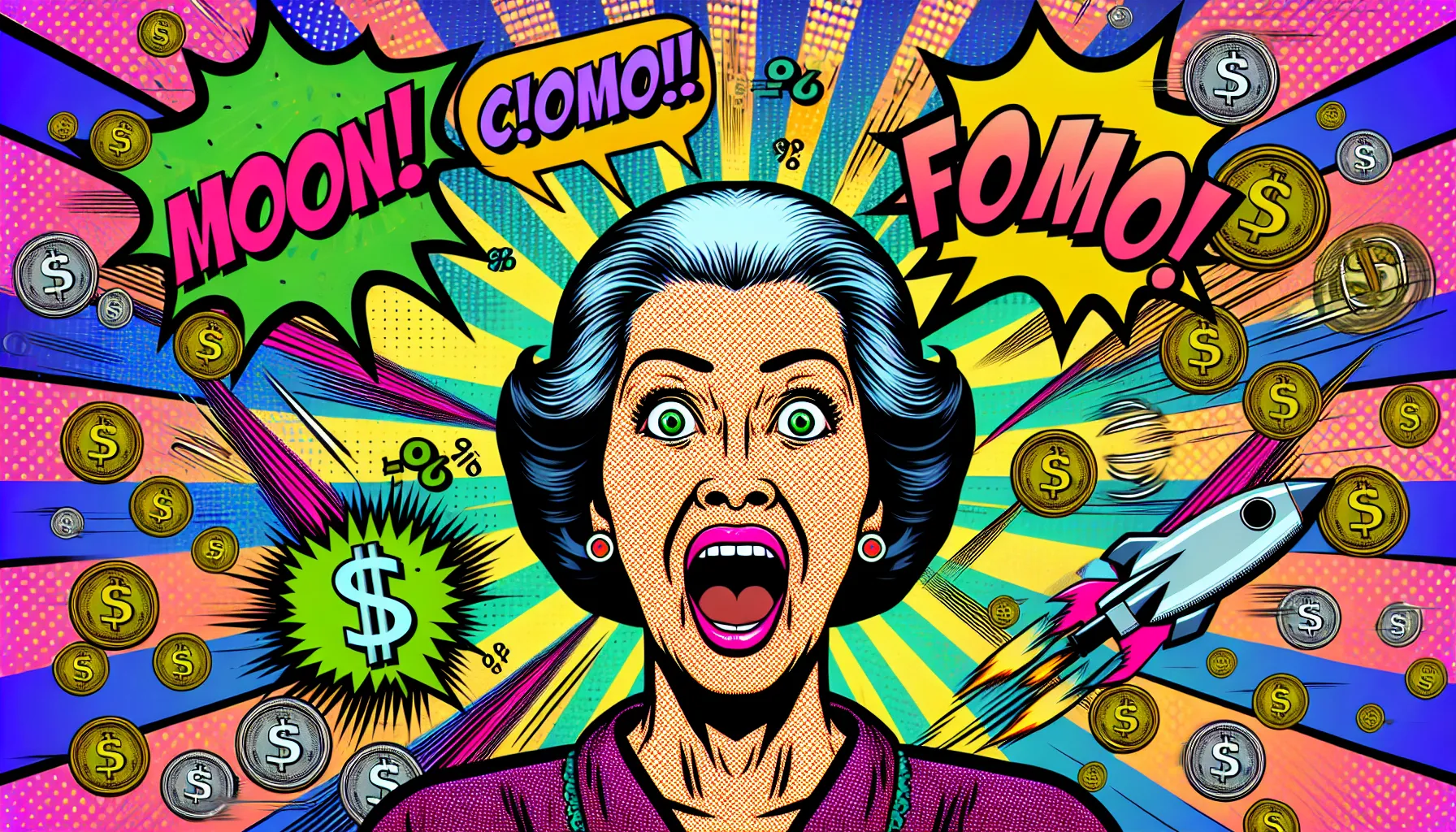
Understanding meme coin success requires looking beyond spreadsheets and into the human mind. These tokens thrive on psychological factors that traditional financial analysis often overlooks or undervalues.
Community-Driven Momentum and Social Proof
At the heart of every successful meme coin lies a community, often thousands or millions strong, bound by shared language, memes, and a collective belief that their chosen token will “moon.” This community-driven momentum creates powerful network effects that reinforce themselves. When newcomers observe an active, enthusiastic community rallying behind a token, it provides social proof: if this many people believe in the project, perhaps there’s something valuable here.
Social proof operates as a psychological shortcut. Instead of conducting technical analysis or scrutinising tokenomics, investors look to others’ behaviour as a guide. Each new participant validates the decision for those who joined earlier, creating a self-reinforcing cycle. Community members become evangelists, spreading the word across social platforms, generating memes, and creating content that attracts yet more participants.
This dynamic differs fundamentally from traditional investing, where value derives from earnings, assets, or utility. For meme coins, the community is the product. The token serves as a cultural banner, a shared identity marker that grows more valuable as more people rally beneath it.
FOMO and the Fear of Missing Out on Rapid Gains
Few psychological forces prove as potent in financial markets as FOMO, the fear of missing out. Meme coins weaponise this emotion with devastating effectiveness. When a relatively unknown token surges 500% in a week, stories spread rapidly across social media: life-changing gains from modest investments, tales of ordinary people transforming £100 into £5,000 overnight.
These narratives create urgency. Retail investors, watching from the sidelines, experience mounting pressure as they witness what they perceive as missed opportunity. Each hour they delay potentially represents thousands in unrealised profits. This urgency short-circuits rational decision-making. Due diligence feels like a luxury one can’t afford when prices are climbing by the minute.
FOMO amplifies existing rallies into parabolic moves. As prices rise, more investors capitulate to the fear of being left behind, creating buying pressure that drives prices higher still. This feedback loop continues until the marginal buyer exhausts themselves, but predicting that moment proves nearly impossible. The psychological toll of watching others profit whilst remaining on the sidelines drives decisions that investors might later regret, but in the moment, the pain of potential regret outweighs concerns about downside risk.
Social Media Amplification and Viral Marketing
Meme coins are native products of the social media age. Their success depends entirely on the viral mechanisms that platforms like X (formerly Twitter), Reddit, and TikTok help.
The Role of Influencers and Celebrity Endorsements
When Elon Musk tweets about Dogecoin, markets move. When a celebrity with millions of followers mentions a new meme token, projects can experience 1000% gains within hours. Influencer endorsements act as powerful catalysts, lending perceived legitimacy and creating massive visibility spikes.
These endorsements work because audiences trust, or at least pay attention to, the figures they follow. A single tweet from a high-profile individual reaches millions instantaneously, many of whom interpret the mention as investment advice or insider knowledge. The endorser’s reputation transfers, but tenuously, to the token itself.
Critically, these endorsements often occur without rigorous vetting. Celebrities might mention a token as a joke, a paid promotion, or genuine enthusiasm, but audiences frequently cannot distinguish between these motivations. Regardless of intent, the effect remains the same: cascading buying pressure as followers rush to capitalise on what they perceive as opportunity.
The phenomenon creates a self-perpetuating cycle. Projects court influencer attention through creative marketing, outrageous branding, or direct payment. Influencers, recognising their audiences’ appetite for the next big thing, remain receptive. Each successful launch raises the stakes, with new projects attempting ever more audacious stunts to capture attention in an increasingly crowded space.
How Platforms Like X and Reddit Fuel Meme Coin Rallies
Social media platforms function as megaphones for meme coin communities, enabling organic coordination at scale. X facilitates rapid information dissemination, with trending hashtags and viral threads reaching far beyond core communities. Reddit’s structure, particularly communities like r/CryptoMoonShots, creates dedicated spaces where enthusiasts congregate to share “alpha,” speculate wildly, and coordinate buying pressure.
These platforms enable viral marketing that traditional advertising cannot replicate. A clever meme, a well-timed joke, or an absurd concept can spread exponentially through shares, retweets, and cross-posting. This organic engagement costs nothing but generates exposure worth millions in traditional advertising spend.
The speed matters enormously. Information, and misinformation, travels at light speed across these networks. A rumour about an upcoming exchange listing, a celebrity’s alleged interest, or technical analysis suggesting imminent breakout can mobilise thousands of traders within minutes. By the time fact-checkers verify claims, markets have already moved.
Also, social platforms create echo chambers where bullish sentiment reinforces itself. Algorithms favour engaging content, and few things engage quite like financial speculation. Positive predictions and success stories dominate feeds, whilst warnings and scepticism often sink beneath the noise. This creates distorted information environments where newcomers encounter overwhelmingly positive sentiment, skewing their risk perception.
Low Entry Barriers and Accessibility
Meme coins democratise cryptocurrency speculation in ways that established projects cannot match. This accessibility represents a key driver of their persistent popularity.
Affordable Prices Attract Retail Investors
Psychological pricing matters. A token trading at $0.00005488 feels dramatically different from Bitcoin at £40,000, even though market capitalisation being the actual valuation metric that matters. Retail investors can purchase millions of meme coin tokens for the price of a single Bitcoin fraction, creating a psychological satisfaction that transcends rational analysis.
This “cheap” perception drives investment decisions. An investor might reason, “If Dogecoin reached pennies, why couldn’t this token?” The mathematics of such appreciation, often requiring market caps exceeding entire national economies, rarely receives serious scrutiny. Instead, the unit price creates an illusion of accessibility and upside potential.
Smaller investors particularly gravitate towards this affordability. Whilst £100 might purchase 0.0025 Bitcoin, that same amount could buy billions of certain meme tokens. The psychological difference is profound. Owning whole coins, or better yet, millions of them, provides satisfaction that fractional ownership cannot replicate, even when the actual monetary value remains identical.
Simplified Trading on Decentralised Exchanges
Decentralised exchanges (DEXs) like Uniswap and PancakeSwap remove traditional barriers to entry. Anyone with a cryptocurrency wallet can trade thousands of tokens within minutes, without identity verification, minimum account balances, or geographic restrictions that traditional finance imposes.
This friction-free access enables rapid participation. A viral tweet about a new meme coin can translate into trades within minutes as users simply connect wallets and swap tokens. The speed and accessibility create markets that respond instantaneously to sentiment shifts, amplifying volatility but also enabling the explosive rallies that attract speculators.
Also, the permissionless nature of DEXs means new projects can launch without regulatory approval or exchange listing processes. This lowers barriers not just for traders but for project creators, flooding markets with new tokens and ensuring a constant stream of “next big things” for communities to rally behind.
Speculative Nature and High-Risk, High-Reward Appeal
Meme coins exist primarily as speculative vehicles, and they make no apologies for it. This clarity of purpose attracts a specific investor profile: those seeking asymmetric returns who understand, or at least accept, the substantial risks involved.
The appeal follows simple mathematics. Established cryptocurrencies like Bitcoin might deliver 2x or 3x returns during bull markets, respectable by traditional standards but modest compared to meme coin potential. A relatively unknown meme token, but, might deliver 50x, 100x, or even 1000x returns if it captures attention at the right moment. These lottery-ticket odds attract speculators willing to risk complete capital loss for shots at life-changing gains.
Current market data illustrates both the opportunity and danger. As of November 2025, Dogecoin leads the meme coin sector with a $22.60 billion market capitalisation, representing remarkable success for a token that began as a joke. Newer projects like MemeCore posted 15% weekly gains even as the broader meme coin market experienced a 27% November decline, demonstrating how individual tokens can surge whilst the sector overall struggles.
This volatility creates trading opportunities. Active speculators attempt to ride momentum waves, entering during accumulation phases and exiting before inevitable corrections. The strategy demands constant attention, quick reflexes, and acceptance of frequent losses, but successful trades can compensate for numerous failures with single positions.
The high-risk nature actually enhances appeal for certain investors. Those with modest capital seeking wealth accumulation perceive greater opportunity in volatile speculation than in stable appreciation. A £500 investment in Bitcoin might conservatively double in a bull market, delivering £500 profit. That same investment in a surging meme coin might realistically target £5,000 or £10,000, or vanish entirely. For those with capital to risk and tolerance for total loss, the mathematics favour the lottery ticket.
The Disconnect Between Fundamentals and Price Action
Traditional investing relies on fundamental analysis: examining revenue, assets, competitive advantages, and growth prospects to determine fair value. Meme coins obliterate this framework entirely.
Why Traditional Valuation Metrics Don’t Apply
Projects like Official Trump, maintaining a $1.36 billion market capitalisation as of late 2025, demonstrate the utter irrelevance of conventional metrics. The token offers no revenue-generating mechanism, no technological innovation, no utility beyond cultural signalling. Yet billions in value persist based purely on name recognition, novelty appeal, and the cultural moment it captures.
This creates a fundamental disconnect that confounds traditional analysts. How does one value a joke? What discount rate applies to a meme? Conventional financial models fail because the inputs they require, cash flows, earnings multiples, book values, simply don’t exist for most meme coins.
Instead, valuation becomes entirely sentiment-driven. A meme coin is worth precisely what the market believes it’s worth at any given moment, with that belief shifting wildly based on social media trends, influencer mentions, broader crypto market movements, and countless unpredictable factors. This makes meme coins perhaps the purest expression of greater fool theory: tokens have value because buyers believe they can sell to someone else at higher prices, not because of any inherent utility or cash flow generation.
The disconnect creates both opportunity and danger. Traditional analysis provides no edge, which levels the playing field between institutional investors and retail speculators. But, it also means prices can collapse as rapidly as they rose, with no fundamental floor to support valuations once sentiment shifts. When belief evaporates, so does value, often with stunning speed that leaves latecomers nursing substantial losses.
Cultural Relevance and Entertainment Value
Perhaps the most underappreciated driver of meme coin success is their entertainment value. These tokens function as much as cultural artefacts and participatory entertainment as investment vehicles.
Meme coins tap into internet culture, current events, and collective humour in ways that traditional cryptocurrencies cannot. They serve as inside jokes that anyone can join, cultural moments frozen in blockchain permanence, and vehicles for creative expression. Community members create art, memes, music, and elaborate lore around their chosen tokens, generating entertainment value that extends beyond mere price speculation.
This cultural relevance creates emotional attachment that transcends financial calculation. Holders don’t simply own tokens: they’re part of a movement, a community, an inside joke shared with thousands of like-minded individuals. This emotional dimension makes people more likely to hold through volatility, promote their holdings enthusiastically, and remain engaged even during price downturns.
Certain tokens explicitly lean into cultural moments. Political meme coins surge during election seasons. Celebrity-themed tokens spike around relevant news events. Pop culture references launch tokens that ride waves of mainstream attention. This cultural anchoring provides temporary relevance that can translate into genuine financial value, but fleeting.
The entertainment value also mitigates some psychological cost of losses. An investor who loses money on a meme coin might partially console themselves with the experience, the excitement of participation, the community engagement, the stories they can tell. This differs from losing money on a “serious” investment, which offers no such consolation. The gamification of investing that meme coins represent makes speculation more palatable, particularly for younger investors raised on video games and social media engagement.
The Risks That Persist Beneath the Surface
For all their appeal and demonstrated staying power, meme coins remain extraordinarily risky investments, a reality that enthusiasm and success stories often obscure.
Extreme volatility represents the most obvious danger. The same mechanisms that enable 1000% rallies help equally dramatic collapses. Meme coins can lose 50%, 70%, or 90% of their value within days as sentiment shifts or attention moves to newer projects. The November 2025 market data, a 27% sector-wide decline, illustrates how quickly fortunes reverse.
Liquidity risk compounds volatility. Many meme coins trade on relatively thin order books, meaning large sell orders can crash prices far beyond what sellers intended. What appears as substantial paper profits might prove impossible to realise without dramatically moving the market against one’s position.
Scams and rug pulls plague the meme coin space. Malicious developers launch tokens with no intention of long-term development, instead accumulating coins before dumping on unwitting investors. The low barriers to token creation and the speculative frenzy surrounding launches create ideal conditions for bad actors to exploit enthusiasm.
Regulatory uncertainty looms over the entire sector. Authorities worldwide are increasingly scrutinising cryptocurrency markets, and meme coins, particularly those leveraging celebrity images or making implicit promises, may face future restrictions, delistings, or enforcement actions that could dramatically impact values.
Perhaps most insidiously, the psychological factors that drive meme coin success, FOMO, social proof, community pressure, can cloud judgement and encourage excessive risk-taking. Investors caught in the frenzy might allocate capital they cannot afford to lose, hold positions far longer than prudent, or fail to recognise warning signs until too late.
The entertainment value and cultural relevance that make meme coins appealing can also mask their fundamentally speculative nature. When investing feels like gaming and community participation, the genuine financial risks can fade into background noise until losses crystallise.
Conclusion
Meme coins persist not even though their apparent absurdity but partly because of it. They’ve carved out a unique niche in financial markets by combining accessibility, entertainment, community, and speculation into packages that traditional investments cannot replicate. The psychological factors driving their success, social proof, FOMO, cultural engagement, prove remarkably durable even as individual projects rise and fall.
Their resilience through market volatility stems from understanding what they actually are: not competitors to Bitcoin or Ethereum, not revolutionary technologies, but cultural phenomena with financial components. As long as internet culture thrives, as long as communities seek shared identity markers, and as long as speculators seek asymmetric returns, meme coins will likely maintain relevance.
But, sustainability for the sector doesn’t mean sustainability for individual projects. Most meme coins will eventually fade into irrelevance, their communities dispersing and attention moving elsewhere. The few that endure, Dogecoin being the prime example, might do so by transcending their origins, developing actual utility, or becoming so culturally entrenched that they achieve legitimacy through sheer persistence.
For those considering participation, the path forward requires clear-eyed recognition of what meme coins represent. They’re speculative vehicles offering potentially spectacular returns alongside the very real possibility of complete capital loss. They’re entertainment that happens to involve money, community engagement that carries financial consequences. Approaching them with appropriate risk management, investing only disposable capital, maintaining realistic expectations, conducting independent research, remains essential.
The meme coin phenomenon eventually reflects something broader: financial markets are human constructs, driven as much by psychology and culture as by rational calculation. In that sense, meme coins might be more honest than traditional investments, openly acknowledging the emotional and social factors that influence all financial decisions. They’ll likely continue surging, crashing, and surging again, bewildering traditional analysts whilst enriching and devastating speculators in equal measure. That volatility isn’t a bug, it’s the entire point.
Frequently Asked Questions
Why do meme coins keep surging despite market volatility?
Meme coins surge due to powerful psychological factors including community-driven momentum, FOMO, social media amplification, and low entry barriers. Their success relies on cultural relevance and viral marketing rather than traditional fundamentals, creating self-reinforcing cycles of enthusiasm and investment.
What psychological factors drive meme coin investments?
Social proof and community validation play crucial roles, as investors look to enthusiastic communities as signals of value. FOMO creates urgency that short-circuits rational decision-making, whilst viral success stories of life-changing gains from modest investments amplify buying pressure and sustain rallies.
How do influencers affect meme coin prices?
Celebrity endorsements and influencer mentions can trigger immediate 1000% gains within hours. When high-profile figures like Elon Musk tweet about tokens such as Dogecoin, millions of followers interpret this as investment opportunity, creating cascading buying pressure that dramatically moves markets.
Are meme coins a good long-term investment?
Meme coins are highly speculative with extreme volatility and minimal fundamental value. Most will fade into irrelevance over time. Whilst a few like Dogecoin have endured, they’re best approached as high-risk speculation with only disposable capital, not as long-term investment vehicles.
What is the difference between meme coins and traditional cryptocurrencies?
Traditional cryptocurrencies like Bitcoin and Ethereum offer technological innovation and utility, whilst meme coins lack whitepapers and fundamental value. Meme coins function primarily as cultural artefacts and speculative vehicles, deriving value from community enthusiasm and viral momentum rather than technological advancement.
Can you lose all your money investing in meme coins?
Yes, complete capital loss is a genuine possibility. Meme coins can lose 50–90% of value within days due to sentiment shifts. Additional risks include rug pulls, scams, liquidity issues, and extreme volatility, making them unsuitable for risk-averse investors or essential capital.