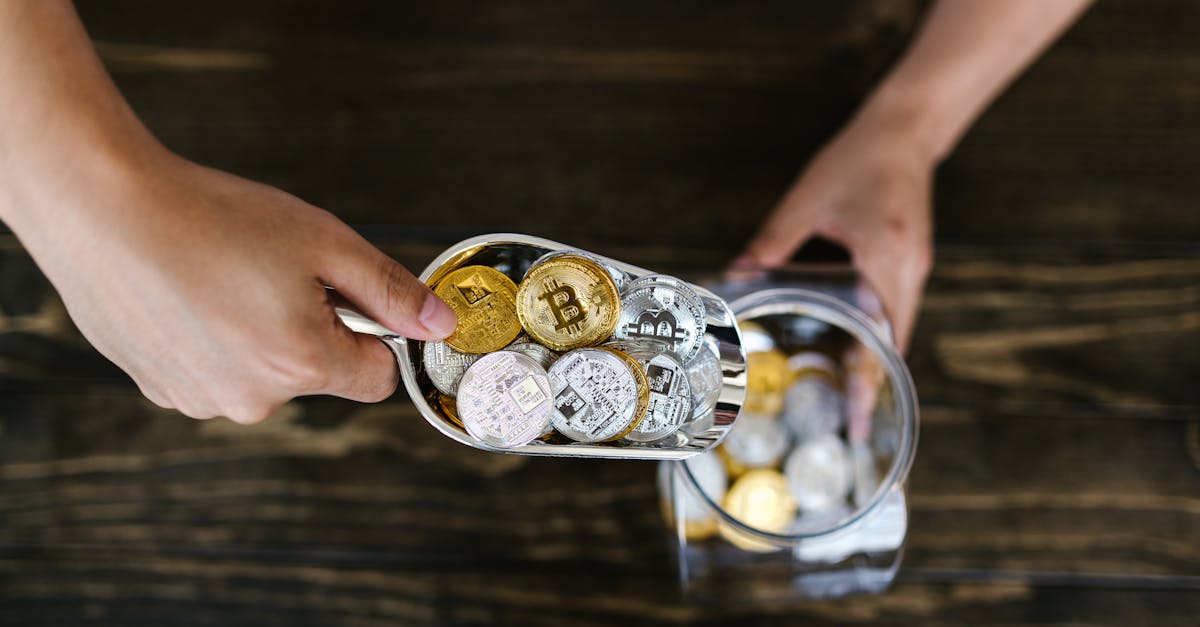
You’ve probably heard of Bitcoin but wondered about those other cryptocurrencies that keep popping up in the news. These digital currencies are called altcoins and they’re reshaping the financial landscape in ways Bitcoin never imagined.
Altcoins – short for “alternative coins” – represent thousands of cryptocurrencies that emerged after Bitcoin’s groundbreaking debut in 2009. While Bitcoin paved the way for digital money you can truly own and control these newer currencies offer unique features that address Bitcoin’s limitations and explore entirely new possibilities.
Understanding the differences between Bitcoin and altcoins isn’t just academic curiosity – it’s essential knowledge for anyone looking to navigate today’s cryptocurrency ecosystem. From faster transaction speeds to smart contract capabilities each altcoin brings something different to the table that could impact your financial future.
What Are Altcoins?
Altcoins represent every cryptocurrency created after Bitcoin, encompassing thousands of digital assets that operate on blockchain technology. These alternative coins emerged from developers’ desire to improve upon Bitcoin’s original framework or serve entirely different purposes within the digital economy.
Definition and Origins
Altcoins derive their name from “alternative coins” – cryptocurrencies that function as alternatives to Bitcoin’s original design. Namecoin launched in April 2011 as the first altcoin, introducing domain name registration capabilities alongside cryptocurrency functionality.
The altcoin ecosystem expanded rapidly after 2011, with developers creating new cryptocurrencies to address specific limitations in Bitcoin’s architecture. Litecoin emerged in October 2011, offering faster transaction processing times through reduced block generation intervals. Ethereum followed in 2015, revolutionising the space by introducing smart contract capabilities that enabled programmable money and decentralised applications.
Most altcoins operate on independent blockchain networks, though some function as tokens built on existing platforms like Ethereum. The total number of altcoins exceeded 20,000 by 2024, with new projects launching regularly across various blockchain networks.
Types of Altcoins
Altcoins fall into distinct categories based on their primary functions and underlying technology:
Payment Cryptocurrencies focus on facilitating transactions with improved speed or lower fees compared to Bitcoin. Litecoin processes transactions in 2.5 minutes versus Bitcoin’s 10-minute average, whilst Dash offers instant transactions through its InstantSend feature.
Platform Cryptocurrencies provide infrastructure for building decentralised applications and smart contracts. Ethereum hosts over 3,000 decentralised applications, whilst Cardano emphasises academic research and peer-reviewed development processes.
Privacy Coins enhance transaction anonymity through advanced cryptographic techniques. Monero uses ring signatures and stealth addresses to obscure sender and receiver identities, whilst Zcash employs zero-knowledge proofs for optional privacy features.
Stablecoins maintain stable values by pegging to traditional assets like fiat currencies or commodities. Tether (USDT) remains pegged to the US dollar through collateral reserves, whilst Maker’s DAI achieves stability through algorithmic mechanisms and over-collateralisation.
Utility Tokens grant access to specific services or platforms within blockchain ecosystems. Chainlink’s LINK tokens compensate oracle providers for delivering external data to smart contracts, whilst Basic Attention Token (BAT) rewards users for viewing advertisements in the Brave browser.
Key Differences Between Altcoins and Bitcoin
Understanding these fundamental differences helps you make informed decisions when exploring cryptocurrency investments. Each distinction impacts how these digital assets function and their potential applications in your portfolio.
Technology and Blockchain Architecture
Bitcoin operates on its original blockchain using Proof-of-Work (PoW) consensus mechanism, securing transactions through energy-intensive mining processes. This established architecture processes approximately 7 transactions per second whilst maintaining robust security protocols.
Altcoins frequently implement advanced blockchain architectures that enhance functionality beyond simple transactions. Ethereum’s blockchain enables smart contracts and decentralised applications, whilst platforms like Solana utilise innovative consensus mechanisms for superior performance. These technological improvements allow altcoins to support complex financial instruments, gaming applications and decentralised finance protocols that Bitcoin’s architecture cannot accommodate.
Many altcoins also feature modular blockchain designs that separate transaction processing from application execution. This separation enables developers to build sophisticated applications whilst maintaining network security and efficiency.
Transaction Speed and Scalability
Bitcoin’s transaction throughput remains limited to roughly 7 transactions per second due to its 10-minute block generation time and 1MB block size limit. This constraint creates network congestion during high-demand periods, resulting in increased transaction fees and longer confirmation times.
Altcoins address these scalability challenges through various technological solutions. Solana processes over 50,000 transactions per second using its Proof-of-History consensus mechanism, whilst Cardano achieves significantly higher throughput through its layered architecture. Polygon provides scaling solutions for Ethereum, enabling thousands of transactions per second with minimal fees.
Layer-2 solutions implemented by various altcoin projects further enhance scalability without compromising security. These networks process transactions off the main blockchain before settling final states, dramatically reducing costs and processing times for everyday users.
Mining and Consensus Mechanisms
Bitcoin exclusively uses Proof-of-Work mining, requiring specialised hardware to solve complex mathematical puzzles for network validation. This process consumes substantial electricity but provides unparalleled security through computational difficulty and distributed mining operations globally.
Most altcoins employ alternative consensus mechanisms that reduce energy consumption whilst maintaining security. Proof-of-Stake systems like Ethereum 2.0 select validators based on their token holdings rather than computational power, consuming 99% less energy than traditional mining. Delegated Proof-of-Stake networks such as EOS allow token holders to vote for validators, creating more democratic governance structures.
Some altcoins utilise hybrid consensus models combining multiple validation methods for enhanced security and efficiency. Dash implements a masternode system alongside traditional mining, whilst newer projects experiment with Proof-of-Authority mechanisms for enterprise blockchain applications requiring known validator identities.
Popular Categories of Altcoins
Altcoins span diverse categories, each addressing specific blockchain applications and user needs. Understanding these categories helps you identify which altcoins align with your investment goals and cryptocurrency requirements.
Ethereum and Smart Contract Platforms
Smart contract platforms revolutionise blockchain technology by enabling programmable agreements that execute automatically when predetermined conditions are met. Ethereum leads this category as the second-largest cryptocurrency by market capitalisation, powering thousands of decentralised applications (dApps) across finance, gaming, and digital art sectors.
Ethereum processes approximately 15 transactions per second using its native ETH token for transaction fees and smart contract execution. The platform’s transition from Proof-of-Work to Proof-of-Stake through Ethereum 2.0 reduced energy consumption by over 99% while maintaining network security.
Alternative smart contract platforms offer enhanced performance and lower costs. Solana processes over 50,000 transactions per second with sub-second finality, making it suitable for high-frequency trading applications. Binance Smart Chain provides Ethereum compatibility whilst offering faster transactions and lower fees, supporting its native BNB token for network operations.
| Platform | Transactions Per Second | Consensus Mechanism | Primary Use Cases |
|---|---|---|---|
| Ethereum | 15 | Proof-of-Stake | DeFi, NFTs, dApps |
| Solana | 50,000+ | Proof-of-History | High-frequency trading, gaming |
| Binance Smart Chain | 100+ | Proof-of-Stake | Cross-chain DeFi, yield farming |
Stablecoins
Stablecoins maintain price stability by pegging their value to external assets like fiat currencies, commodities, or algorithmic mechanisms. These cryptocurrencies serve as digital alternatives to traditional money, providing price predictability essential for daily transactions and crypto trading.
Fiat-collateralised stablecoins represent the largest category by market capitalisation. Tether (USDT) maintains a $1 peg through US dollar reserves, processing over $50 billion in daily trading volume across major exchanges. USD Coin (USDC) offers similar functionality with enhanced regulatory compliance and monthly attestation reports from certified public accounting firms.
Crypto-collateralised stablecoins use cryptocurrency reserves to maintain price stability. MakerDAO’s DAI employs Ethereum-based collateral through smart contracts, allowing users to mint DAI tokens by depositing ETH or other approved cryptocurrencies. This decentralised approach eliminates reliance on traditional banking systems whilst maintaining the $1 peg through algorithmic adjustments.
Algorithmic stablecoins attempt price stability through supply adjustments without backing assets. These protocols increase token supply when prices exceed the peg and reduce supply during price drops, though this mechanism has proven volatile during extreme market conditions.
Privacy Coins
Privacy coins enhance transaction anonymity by obscuring sender identities, receiver addresses, and transaction amounts on blockchain networks. These cryptocurrencies address Bitcoin’s transparent ledger system, where all transactions remain publicly viewable and traceable.
Monero (XMR) implements ring signatures, stealth addresses, and RingCT technology to provide complete transaction privacy by default. Ring signatures mix your transaction with multiple others, making it computationally infeasible to determine the actual sender. Stealth addresses generate unique, one-time addresses for each transaction, preventing address reuse tracking.
Zcash (ZEC) offers selective privacy through zero-knowledge proofs called zk-SNARKs, allowing you to choose between transparent and shielded transactions. Shielded transactions hide all transaction details whilst maintaining mathematical proof of validity, providing regulatory flexibility for users requiring optional privacy.
Dash (DASH) incorporates PrivateSend functionality through coin mixing, combining multiple transactions to obscure payment trails. The platform also features InstantSend for near-instantaneous transactions, making it suitable for point-of-sale applications requiring both speed and privacy.
| Privacy Coin | Privacy Method | Transaction Speed | Key Feature |
|---|---|---|---|
| Monero | Ring signatures, stealth addresses | 2 minutes | Default privacy |
| Zcash | zk-SNARKs | 2.5 minutes | Selective privacy |
| Dash | Coin mixing | 15 seconds (InstantSend) | Optional privacy with speed |
Utility Tokens
Utility tokens provide access to specific blockchain network services, products, or functionalities within decentralised ecosystems. Unlike security tokens representing ownership stakes, utility tokens serve operational purposes and grant usage rights for platform features.
Network utility tokens power blockchain operations and pay transaction fees. Ethereum’s ETH functions as both a cryptocurrency and utility token, enabling smart contract execution and dApp interactions. Binance Coin (BNB) offers trading fee discounts on Binance exchange, with quarterly token burns reducing total supply to increase scarcity.
Service utility tokens grant access to specialised blockchain services. Chainlink’s LINK token compensates node operators for providing real-world data to smart contracts through oracle networks. Basic Attention Token (BAT) facilitates advertising payments within the Brave browser ecosystem, rewarding users for viewing advertisements.
Governance utility tokens enable decentralised decision-making within protocol ecosystems. Uniswap’s UNI token allows holders to vote on protocol upgrades, fee structures, and treasury allocation decisions. Compound’s COMP token provides similar governance rights for the lending protocol, with voting power proportional to token holdings.
Platform utility tokens provide access to specific application features and services. Many DeFi protocols issue utility tokens for accessing premium features, earning staking rewards, or participating in liquidity mining programmes, creating economic incentives for ecosystem participation.
Advantages and Disadvantages of Altcoins
Altcoins present both significant opportunities and notable risks compared to Bitcoin’s established framework. Understanding these trade-offs helps you make informed decisions about incorporating alternative cryptocurrencies into your investment strategy.
Benefits Over Bitcoin
Enhanced transaction efficiency represents altcoins’ primary advantage over Bitcoin’s slower network. You can execute transactions faster and pay lower fees when using altcoins like Litecoin or Cardano, which process significantly more transactions per second than Bitcoin’s 7 TPS limitation.
Programmable functionality expands beyond Bitcoin’s basic payment capabilities through smart contracts and decentralised applications. Ethereum enables you to create complex automated agreements, whilst platforms like Polygon support DeFi protocols that Bitcoin cannot natively execute.
Energy consumption decreases substantially with Proof-of-Stake consensus mechanisms used by modern altcoins. You contribute to more sustainable blockchain operations when choosing altcoins like Ethereum 2.0 or Cardano, which consume 99% less energy than Bitcoin’s Proof-of-Work system.
Diverse use cases accommodate specific industry requirements through specialised altcoins. Privacy coins like Monero enhance your transaction anonymity, whilst utility tokens such as Chainlink’s LINK provide access to oracle services that Bitcoin’s network lacks.
Innovation acceleration occurs more rapidly in altcoin ecosystems due to their flexible architectures. You benefit from cutting-edge features like layer-2 scaling solutions and cross-chain interoperability that altcoin developers implement faster than Bitcoin’s conservative upgrade process.
Potential Risks and Limitations
Market volatility affects altcoins more severely than Bitcoin’s relatively stable price movements. Your investments face extreme price swings, with some altcoins experiencing 50-90% value drops during market downturns, as demonstrated by speculative tokens like Shiba Inu.
Lower adoption rates result in smaller user bases and reduced network security compared to Bitcoin’s established infrastructure. You encounter higher counterparty risks when using altcoins with fewer validators or miners securing their networks.
Regulatory uncertainty creates compliance challenges for newer altcoins with unproven legal frameworks. Your holdings may face restrictions or bans if regulatory authorities classify certain altcoins as securities rather than commodities.
Technology risks emerge from untested consensus mechanisms and newer blockchain architectures. You may experience smart contract vulnerabilities, protocol bugs, or governance failures that established networks like Bitcoin have already addressed through years of operation.
Centralisation concerns arise when altcoins use Delegated Proof-of-Stake or authority-based consensus systems. Your transactions depend on smaller validator sets, potentially compromising the decentralisation principles that make cryptocurrencies valuable alternatives to traditional finance.
How to Choose and Invest in Altcoins
Selecting profitable altcoins requires systematic evaluation and strategic planning to navigate the cryptocurrency market effectively. Your investment success depends on thorough research and balanced portfolio allocation across different digital assets.
Research and Due Diligence
Technology Assessment: Examine the altcoin’s underlying blockchain architecture and consensus mechanism to understand its technical capabilities. Evaluate whether the project addresses real-world problems or offers genuine improvements over existing cryptocurrencies like Bitcoin’s transaction speed limitations.
Team Analysis: Research the development team’s credentials including their previous experience in blockchain technology and successful project delivery. Verify team members’ professional backgrounds on platforms like LinkedIn and GitHub to assess their technical expertise.
Use Case Evaluation: Identify the altcoin’s primary purpose such as smart contract functionality (Ethereum), privacy protection (Monero), or stable value maintenance (Tether). Determine whether the use case has market demand and potential for widespread adoption.
Market Metrics: Analyse key statistics including market capitalisation, trading volume, and circulating supply to gauge the altcoin’s market position. Higher market caps typically indicate more established projects with greater liquidity.
Community Support: Assess community engagement through social media platforms, developer activity on GitHub, and ecosystem partnerships. Active communities often signal stronger long-term viability and ongoing development support.
Roadmap Review: Examine the project’s development timeline including planned upgrades, partnerships, and feature implementations. Look for consistent milestone achievements and transparent communication from the development team.
Portfolio Diversification Strategies
Bitcoin Foundation: Allocate 40-60% of your cryptocurrency portfolio to Bitcoin as it serves as the most established digital asset with highest liquidity. Bitcoin provides stability whilst altcoins offer growth opportunities in your investment mix.
Altcoin Categories: Distribute remaining investments across different altcoin types including smart contract platforms (Ethereum, Cardano), payment cryptocurrencies (Litecoin, Dash), and stablecoins (USDC, DAI). This approach reduces risk exposure to any single altcoin category.
Risk Allocation: Invest larger percentages in established altcoins with market caps exceeding £1 billion and smaller amounts in emerging projects with higher growth potential. Consider allocating 20-30% to top 10 altcoins and 10-20% to promising smaller projects.
Geographic Distribution: Select altcoins from different regulatory jurisdictions to minimise localised regulatory risks. Include projects from various regions like European-based Cardano, Singapore-based projects, and US-regulated stablecoins.
Rebalancing Schedule: Review your altcoin portfolio quarterly to maintain desired allocation percentages as cryptocurrency prices fluctuate significantly. Sell overperforming assets and purchase underweighted positions to maintain balance.
Entry Strategy: Use dollar-cost averaging by investing fixed amounts monthly rather than lump-sum investments to reduce timing risks in volatile cryptocurrency markets. This strategy helps smooth out price fluctuations over time.
Conclusion
The altcoin landscape represents a dynamic evolution beyond Bitcoin’s foundational framework. With over 20,000 alternatives now available you’ve got unprecedented opportunities to explore diverse blockchain applications and investment strategies.
Your success in this space depends on thorough research and understanding each project’s unique value proposition. Whether you’re drawn to smart contract platforms privacy coins or stablecoins each category serves distinct purposes in the growing digital economy.
Remember that altcoins carry both enhanced potential and increased risks compared to Bitcoin. By maintaining a balanced approach and staying informed about technological developments you’ll be better positioned to navigate this rapidly evolving cryptocurrency ecosystem and make informed decisions that align with your financial goals.
Frequently Asked Questions
What are altcoins and how do they differ from Bitcoin?
Altcoins are “alternative coins” – any cryptocurrency created after Bitcoin’s launch in 2009. Unlike Bitcoin, which primarily serves as digital money, altcoins often offer additional features like smart contracts, faster transaction speeds, enhanced privacy, or specific utility functions. While Bitcoin processes about 7 transactions per second using energy-intensive Proof-of-Work, many altcoins utilise more efficient consensus mechanisms and can handle thousands of transactions per second.
When was the first altcoin launched and what was it called?
The first altcoin was Namecoin, launched in April 2011. Beyond functioning as a cryptocurrency, Namecoin introduced domain name registration capabilities, demonstrating that blockchain technology could serve purposes beyond simple peer-to-peer payments. This pioneering altcoin paved the way for the thousands of digital assets that followed, each bringing unique innovations to the cryptocurrency ecosystem.
What are the main categories of altcoins?
Altcoins fall into five primary categories: Payment Cryptocurrencies (like Litecoin) for faster transactions; Platform Cryptocurrencies (like Ethereum) providing infrastructure for decentralised applications; Privacy Coins (like Monero) enhancing transaction anonymity; Stablecoins (like Tether) maintaining stable values; and Utility Tokens (like Chainlink) granting access to specific blockchain services. Each category serves distinct purposes within the broader cryptocurrency ecosystem.
How many altcoins exist today?
By 2024, the total number of altcoins exceeded 20,000, with new projects continually emerging across various blockchain networks. This explosive growth reflects the diverse applications and innovations that altcoins bring to the cryptocurrency space. However, not all altcoins achieve significant adoption or maintain long-term viability, making careful research essential for potential investors.
What are the main advantages of altcoins over Bitcoin?
Altcoins offer several key advantages: enhanced transaction efficiency with faster processing speeds; programmable functionality through smart contracts; reduced energy consumption via alternative consensus mechanisms; diverse use cases beyond simple payments; and rapid innovation with emerging technologies. Many altcoins also provide lower transaction fees and greater scalability, addressing some of Bitcoin’s inherent limitations.
What risks should I consider when investing in altcoins?
Key risks include high market volatility with price swings exceeding Bitcoin’s; lower adoption rates compared to established cryptocurrencies; regulatory uncertainty that could impact specific projects; technology risks including bugs or security vulnerabilities; and potential centralisation concerns with some projects. Additionally, the vast number of altcoins makes thorough research challenging, increasing the risk of investing in unsuccessful projects.
How should I research altcoins before investing?
Conduct thorough due diligence by assessing the underlying technology and blockchain architecture; analysing the development team’s credentials and track record; evaluating real-world use cases and market demand; reviewing market metrics including market capitalisation and trading volume; examining community support and engagement; and studying the project’s roadmap and development progress. This systematic approach helps identify promising opportunities whilst avoiding potential pitfalls.
What’s the recommended strategy for building an altcoin portfolio?
Adopt a balanced diversification approach: allocate between Bitcoin and various altcoin categories based on risk tolerance; distribute investments across different market capitalisation tiers (large-cap, mid-cap, small-cap); consider geographic diversification to mitigate regulatory risks; implement a regular rebalancing schedule; and use dollar-cost averaging for entry to manage timing risks. This strategy helps optimise potential returns whilst managing the inherent volatility of cryptocurrency markets.