We’ve watched crypto markets mature over the past decade, but the game has changed dramatically. Gone are the days when simply buying Bitcoin or Ethereum and holding was the only path to speculative gains. Today’s crypto landscape offers an entirely different playground, one where pre-sales, airdrops, and manufactured hype create opportunities that didn’t exist during earlier bull runs.
The new frontier for crypto speculators isn’t just about picking the right coin. It’s about positioning ourselves early, understanding tokenomics before anyone else, and navigating a complex web of whitelists, snapshot dates, and community engagement metrics. We’re seeing retail investors score life-changing gains from tokens they received for free or purchased before public launch, but we’re also watching countless others lose their shirts chasing FOMO-driven projects with no substance.
This shift represents both promise and peril. The barriers to entry have lowered, giving more of us access to early-stage opportunities that were once reserved for venture capitalists. But with that democratization comes increased risk, sophisticated scams, and a dizzying amount of noise to filter through. Let’s break down how pre-sales, airdrops, and hype actually work in today’s market, and more importantly, how we can approach them strategically rather than recklessly.
Understanding the Modern Crypto Speculation Landscape
The crypto speculation playbook has evolved beyond recognition from the ICO boom of 2017. Back then, it was straightforward: projects launched public token sales, anyone could participate, and early buyers hoped for exchange listings that would pump prices. Regulators cracked down on that model, and the industry adapted, some would say it became more sophisticated, others might call it more opaque.
What we’re seeing now is a multi-tiered launch strategy that creates artificial scarcity and FOMO at every stage. Projects typically follow a progression: private sale (insiders and VCs), pre-sale (whitelisted community members), public sale or DEX launch, and then exchange listings. Each tier comes with different pricing, vesting schedules, and access requirements. We’ve essentially recreated traditional finance’s exclusive investment structures, except with far less regulatory oversight.
Airdrops have simultaneously emerged as both a legitimate distribution method and a marketing tool. Projects use them to reward early users, incentivize specific behaviors, and build communities before tokens even have market value. The most successful airdrops, think Uniswap‘s UNI token in 2020 or Arbitrum‘s ARB in 2023, distributed millions of dollars in value to users who’d simply interacted with protocols organically.
But here’s what really drives this ecosystem: hype. Social media influence, celebrity endorsements, coordinated community campaigns, and carefully orchestrated “leaks” create speculative frenzies that can push valuations into the billions before a product even launches. We’re operating in an environment where narrative often matters more than fundamentals, at least in the short term.
Understanding this landscape means recognizing that traditional investment analysis, examining balance sheets, revenue projections, competitive advantages, often takes a backseat to community size, Twitter engagement, and who’s backing the project. That doesn’t mean fundamentals are irrelevant, but the speculative game we’re playing prioritizes different metrics than we might be used to.
Pre-Sales: Early Access to High-Risk, High-Reward Tokens
Pre-sales represent the speculator’s sweet spot, the opportunity to buy tokens before they hit the broader market, often at significant discounts. When projects succeed, pre-sale participants can see returns that make traditional investments look quaint. A token purchased at $0.01 during pre-sale that launches at $0.50 represents a 50x return before it even begins trading publicly. But getting access to quality pre-sales and avoiding the countless scams requires navigating an increasingly complex system.
How Pre-Sales Work and Who Gets Access
Pre-sales typically target community members who’ve demonstrated engagement with a project before launch. We might need to join Discord servers, complete specific tasks, hold certain tokens, or get whitelisted through a competitive application process. Some projects use a lottery system where completing tasks earns entries: others grant access based on holding partner project tokens or NFTs.
The actual purchase process varies, but usually involves connecting a wallet, sending ETH or stablecoins to a smart contract, and receiving tokens either immediately or after a vesting period. Vesting schedules are crucial, we might buy tokens at $0.01, but if they’re locked for six months while seed investors and team members can sell, we could be holding bags while early insiders exit at peak hype.
Access has become increasingly gatekept. Top-tier pre-sales often require us to be part of specific communities, hold substantial amounts of other tokens, or have connections within crypto Twitter circles. Launchpads like DAO Maker, TrustSwap, and Polkastarter have systematized the process, requiring users to stake platform tokens to gain allocation rights. The more platform tokens we stake, the larger our potential allocation.
The Risks and Rewards of Pre-Sale Participation
The reward potential is obvious, early pricing combined with initial launch hype can generate outsized returns. We’ve seen projects 10x, 50x, or even 100x from pre-sale prices within weeks of launching. For speculators willing to take concentrated risks, pre-sales offer leverage that’s hard to find elsewhere in crypto.
But the risks are equally dramatic. Most pre-sale projects fail outright or never gain traction, leaving us with worthless tokens. Even legitimate projects can struggle with tokenomics, if too much supply is allocated to early investors with short vesting periods, selling pressure can crater prices immediately after launch.
Then there’s the scam factor. Fake pre-sales are everywhere. We might send funds to what looks like a legitimate smart contract only to discover it’s a honeypot or rug pull. Projects promise revolutionary technology, gather pre-sale funds, and disappear. The lack of regulatory protection means if we get scammed, our money is simply gone.
Vesting lockups also create liquidity risk. We might be sitting on massive paper gains but unable to sell for months while market conditions deteriorate. By the time our tokens unlock, the hype cycle may have passed, leaving us with far less value than we anticipated.
The key insight: pre-sales favor those who can evaluate projects quickly, stomach complete losses, and aren’t investing money they can’t afford to lose. We’re essentially making venture capital-style bets with crypto volatility layered on top.
Airdrops: Free Tokens with Strategic Value
Airdrops sound too good to be true, free money for doing relatively simple tasks or just using protocols we might have interacted with anyway. But they’ve become a sophisticated user acquisition and distribution strategy that, when approached correctly, can generate real value for speculators. The challenge is separating legitimate airdrops from scams and optimizing our approach to maximize returns without wasting time on low-value opportunities.
Types of Airdrops and Eligibility Criteria
We’re seeing several distinct airdrop categories, each with different risk-reward profiles. Retroactive airdrops reward past users who organically used a protocol before it launched a token. These are the holy grail, Uniswap‘s airdrop gave 400 UNI tokens (worth $1,200+ at airdrop) to anyone who’d used the protocol. Ethereum Name Service similarly rewarded early adopters with ENS tokens worth thousands.
Task-based airdrops require us to complete specific actions: follow social media accounts, join Telegram groups, refer friends, or test beta products. These typically distribute smaller amounts and favor marketing over genuine user acquisition. The tokens often have minimal value, but occasionally projects surprise us.
Holder airdrops distribute tokens to people who hold specific cryptocurrencies or NFTs at a snapshot date. If we hold 1 ETH at the moment a project takes a blockchain snapshot, we might receive tokens proportional to our holdings. This incentivizes accumulation before known snapshot dates.
Liquidity mining airdrops reward users who provide liquidity to decentralized exchanges or protocols. By staking tokens or providing trading pairs, we earn points or direct token distributions. These carry impermanent loss risk but can generate substantial airdrop value alongside trading fees.
Eligibility typically depends on on-chain activity, wallet holdings, or community participation. For retroactive airdrops, we can’t game the system, we either used the protocol or we didn’t. For announced airdrops, eligibility criteria become public, creating a rush to qualify before snapshot dates.
Maximizing Airdrop Opportunities Without Getting Scammed
The airdrop farming strategy has become increasingly sophisticated. We can position ourselves for potential future airdrops by using new Layer 2s, trying bridge protocols, interacting with DeFi applications, and minting NFTs on emerging chains. The goal is genuine usage that might trigger future retroactive drops while avoiding obvious Sybil farming that projects will exclude.
Portfolio diversification applies to airdrops too. Rather than concentrating efforts on one potential airdrop, we spread activity across multiple promising protocols. If we’re testing zkSync, we might also use StarkNet, Linea, and other Layer 2s that haven’t launched tokens yet. Some won’t airdrop, but the ones that do can make the entire strategy worthwhile.
Scam awareness is critical. Fake airdrop sites ask us to connect wallets and sign transactions that drain funds. We should never enter seed phrases for airdrops, avoid clicking random links in Telegram or Discord, and verify official project channels before claiming anything. If an airdrop asks us to send tokens first or pay gas fees upward of reasonable amounts, it’s likely fraudulent.
The math matters too. We need to calculate whether time and gas fees justify potential airdrop value. Spending $50 in Ethereum gas to maybe receive $20 worth of tokens doesn’t make sense. But spending $50 across multiple protocols with potential four-figure airdrops becomes worthwhile risk management.
Timing is everything. Claiming airdrops at launch can mean selling into peak hype, capturing maximum value before reality sets in. Alternatively, holding quality project tokens after initial dumps can yield long-term gains if the protocol succeeds. We’re making a speculative call either way.
The Role of Hype in Driving Speculative Value
Let’s be honest: fundamentals matter less than we’d like to admit in early-stage crypto speculation. We’ve watched technically superior projects languish while inferior competitors with better marketing soar. Hype isn’t just noise we need to filter out, it’s the actual mechanism that drives short-to-medium term speculative value. Understanding and potentially leveraging hype cycles is essential for anyone playing this game.
Hype operates through narrative construction. A project isn’t just launching another DeFi protocol, it’s “revolutionizing finance” or “bringing the next billion users to crypto.“ These narratives, repeated across social channels, create belief systems that drive buying behavior. We might know the claims are exaggerated, but if enough participants believe (or think others believe), prices move accordingly.
The reflexivity is real: hype creates price appreciation, which validates the hype, attracting more participants, driving prices higher in a self-reinforcing loop. This continues until reality intrudes, the product launches and disappoints, token unlocks flood supply, or simply the next hyped project diverts attention. As speculators, we’re trying to ride the wave without being the last ones holding when it crashes.
Influencer endorsements and celebrity involvement amplify hype exponentially. When a prominent crypto personality tweets about a project, their followers investigate, community members rally, and prices often pump immediately. Some influencers are genuinely enthusiastic: others are paid promoters or holding bags they want to exit. We’re navigating an environment where paid promotion often isn’t disclosed and conflicts of interest are endemic.
FOMO, fear of missing out, is the psychological fuel that hype engines run on. We see others posting gains, watch prices climb, and feel the anxiety of being left behind. Projects and their communities deliberately cultivate FOMO through countdown timers, limited allocations, waitlists, and breathless announcements of partnerships or developments.
Social Media and Community Building as Price Catalysts
Twitter has become the primary battleground for crypto hype. Projects live or die by their social media presence. A vibrant Twitter community with engaged followers, regular updates, and organic discussion signals momentum that attracts speculators. Dead social channels, conversely, are red flags that hype has died or never existed.
Discord and Telegram communities serve as echo chambers that reinforce belief and coordinate buying. We join these servers to gauge genuine enthusiasm versus artificial pumping. Active development discussions, substantive questions, and diverse perspectives suggest real community. Channels full of rocket emojis, price predictions, and “wen moon“ comments indicate we’re in a speculative bubble.
Community size has become a pseudo-fundamental metric. Projects boast about Twitter followers and Discord members as validation, even though these numbers are easily manipulated with bots. Still, genuine community growth does correlate with speculative interest. A project that grows from 5,000 to 50,000 followers in weeks is capturing attention that typically translates to price action.
AMA sessions (Ask Me Anything), partnerships announcements, and roadmap updates are orchestrated to maintain hype momentum. Projects time these carefully, not releasing everything at once but spacing announcements to keep communities engaged and prices supported. As speculators, we’re analyzing whether these updates contain substance or are just hype maintenance.
The savvy speculator approach to hype isn’t dismissing it as irrational noise but rather understanding it as a measurable, exploitable force. We’re tracking social metrics, identifying narrative shifts, and timing entries and exits around hype cycles rather than fighting them.
Navigating the New Frontier: Strategies for Speculators
Understanding pre-sales, airdrops, and hype means nothing without a coherent strategy to navigate them. We’re operating in an environment with asymmetric information, pervasive scams, and volatility that can wipe out portfolios overnight. Success requires discipline, risk management, and the ability to make quick decisions with incomplete information.
Due Diligence and Red Flags to Watch For
Our due diligence process needs to be both rapid and systematic. We can’t spend weeks researching every opportunity, momentum moves too fast, but we also can’t blindly ape into every hyped project. The framework we use focuses on a few critical questions that can be answered relatively quickly.
Who’s behind the project? Anonymous teams aren’t automatically disqualifying, Satoshi was anonymous, after all, but they increase risk. Doxxed teams with track records give us accountability and make exit scams less likely. We’re checking LinkedIn profiles, GitHub activity, and past project involvement.
Does the tokenomics make sense? This is where most projects reveal their true nature. If team and early investors control 70% of supply with short or no vesting, we’re likely exit liquidity. Healthy tokenomics distribute supply broadly, include long vesting periods for insiders, and allocate meaningful percentages to community and ecosystem development.
Is there a working product or just promises? Projects with functioning beta products, active users, or demonstrated traction are fundamentally less risky than those with only whitepapers and roadmaps. We can test the product ourselves, evaluate user experience, and assess whether it solves a real problem.
Red flags are often obvious once we know what to look for. Guaranteed returns are impossible in speculative markets, projects promising them are scams. Pressure to invest quickly, limited-time offers that keep extending, and inability to ask critical questions in community channels all signal problems. If we can’t find critical analysis or negative perspectives anywhere, that’s actually concerning, it suggests dissent is being suppressed.
Smart contract audits from reputable firms (CertiK, PeckShield, Trail of Bits) provide some security assurance, though audits don’t guarantee safety. We’re checking audit dates, severity of issues found, and whether problems were fixed.
Portfolio Allocation and Risk Management
The speculative frontier demands aggressive risk management because losses are not just possible but probable for most positions. We’re operating under the assumption that many, perhaps most, of our speculative bets will go to zero or near-zero. That reality shapes how we allocate capital.
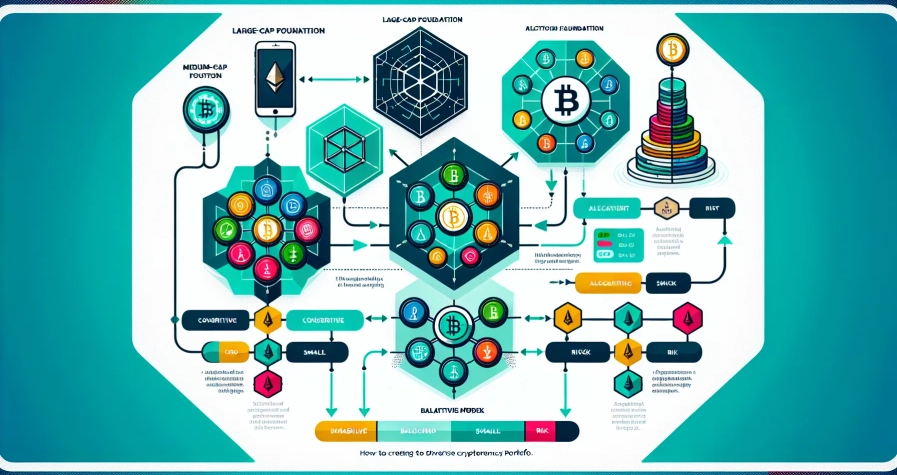
The barbell strategy works well here: keep the majority of our crypto holdings in established assets (Bitcoin, Ethereum, maybe a few large-cap altcoins) while allocating a smaller percentage, perhaps 10-20%, to high-risk speculative plays including pre-sales and airdrop farming. This way we’re exposed to potential 50x or 100x gains without risking our entire portfolio.
Within our speculative allocation, diversification is crucial. Rather than putting everything into one pre-sale, we’re spreading across 10-20 different opportunities. If 15 go to zero, 3 do okay, and 2 do extremely well, we can still come out significantly ahead. This only works if we size positions small enough that losses don’t devastate us.
Profit-taking discipline separates successful speculators from those who ride gains back to zero. When a position 5x’s or 10x’s, we’re taking original capital off the table at minimum. This locks in gains and lets us ride the rest with house money. Greed kills, we’ve all watched positions that were up 20x evaporate because we didn’t sell.
Gas fees and transaction costs matter more in speculation. If we’re entering positions with $100 or $200, spending $30 in Ethereum gas fees severely impacts potential returns. We’re using Layer 2s and alternative chains where fees are lower, or we’re sizing positions large enough that fees become negligible percentages.
Time management is a hidden cost. Airdrop farming, whitelist grinding, and constant market monitoring consume hours. We’re evaluating whether our time is better spent on these activities or simply focusing on fewer, higher-conviction opportunities. Sometimes doing less generates better risk-adjusted returns.
Conclusion
The landscape we’re operating in today would be unrecognizable to crypto investors from even a few years ago. Pre-sales, airdrops, and manufactured hype have created entirely new pathways to speculative gains, and equally new ways to lose everything. We’re navigating a Wild West environment with minimal regulation, maximum volatility, and asymmetric information flows that favor insiders.
But that chaos also creates opportunity for those of us willing to do the work. By understanding how these mechanisms actually function, implementing systematic due diligence processes, and managing risk appropriately, we can participate in this frontier without becoming victims of it. The key is recognizing what game we’re playing: this isn’t long-term investing based on fundamental value creation. It’s speculation on narrative, momentum, and community dynamics in an immature market.
We’re not going to pretend this approach is for everyone. It requires constant attention, high risk tolerance, and the emotional discipline to take losses without revenge trading or doubling down on losers. Most people are better off dollar-cost averaging into Bitcoin and Ethereum and ignoring the speculative noise entirely.
For those of us who do engage with pre-sales, airdrops, and hype cycles, success comes from respecting the risks while capitalizing on the rewards. We’re sizing positions appropriately, diversifying broadly, taking profits systematically, and never investing capital we can’t afford to lose completely. The frontier is wild precisely because the rewards can be extraordinary, but only for speculators who approach it with eyes wide open.