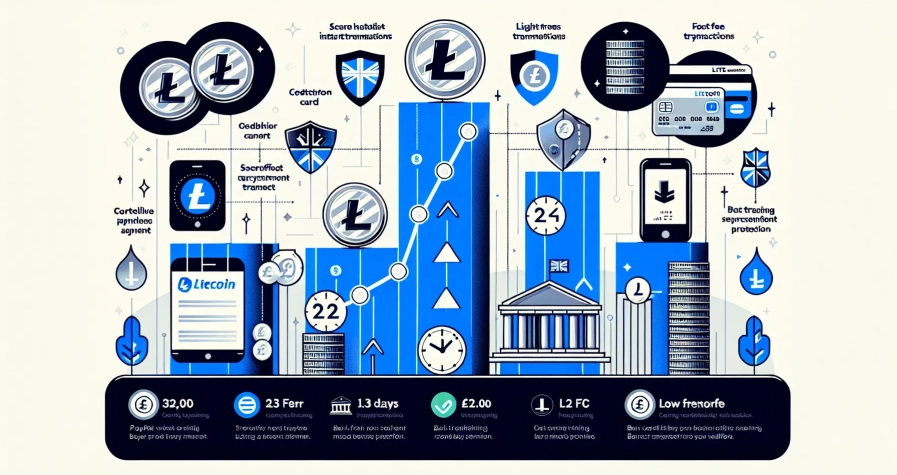
In the crowded world of cryptocurrencies, where thousands of digital assets compete for attention, Litecoin has carved out a distinct identity. Often referred to as “digital silver” in contrast to Bitcoin’s “digital gold,” Litecoin has maintained its relevance since 2011, making it one of the oldest and most established cryptocurrencies still actively traded today. But what exactly does this silver metaphor mean, and why has Litecoin earned this particular nickname?
The answer lies in Litecoin’s design philosophy and practical utility. Created by former Google engineer Charlie Lee, Litecoin was never intended to replace Bitcoin. Instead, it was built to complement it,offering faster transaction times, lower fees, and a more accessible approach to everyday digital payments. While Bitcoin positioned itself as a store of value, akin to gold bars sitting securely in a vault, Litecoin aimed to be the currency people actually use for daily transactions, much like silver coins changing hands in a marketplace.
Understanding Litecoin’s role in the cryptocurrency ecosystem requires looking beyond marketing slogans. It means examining the technical differences that set it apart, the relationship it shares with Bitcoin, and the practical advantages it offers users. This article breaks down exactly what Litecoin is, how it works, and why the “digital silver” comparison isn’t just catchy branding,it’s a reflection of Litecoin’s fundamental purpose in the digital economy.
Key Takeaways
- Litecoin is called “digital silver” because it complements Bitcoin’s “digital gold” by offering faster transactions, lower fees, and better suitability for everyday payments rather than long-term value storage.
- Created by Charlie Lee in 2011, Litecoin generates blocks four times faster than Bitcoin (every 2.5 minutes) and has a maximum supply of 84 million coins compared to Bitcoin’s 21 million.
- Litecoin transaction fees typically remain under $1, making it economically practical for small purchases and cross-border remittances, unlike Bitcoin’s higher fees during network congestion.
- The cryptocurrency uses the Scrypt mining algorithm instead of Bitcoin’s SHA-256, and has served as a testing ground for innovations like SegWit and Lightning Network before Bitcoin implementation.
- Despite facing competition from newer cryptocurrencies with smart contract functionality, Litecoin maintains relevance through proven reliability, wide exchange support, and over a decade of consistent network operation.
- Litecoin’s design philosophy prioritizes being a practical medium of exchange for daily transactions, mirroring how silver historically served as everyday currency while gold functioned as a store of wealth.
What Is Litecoin?
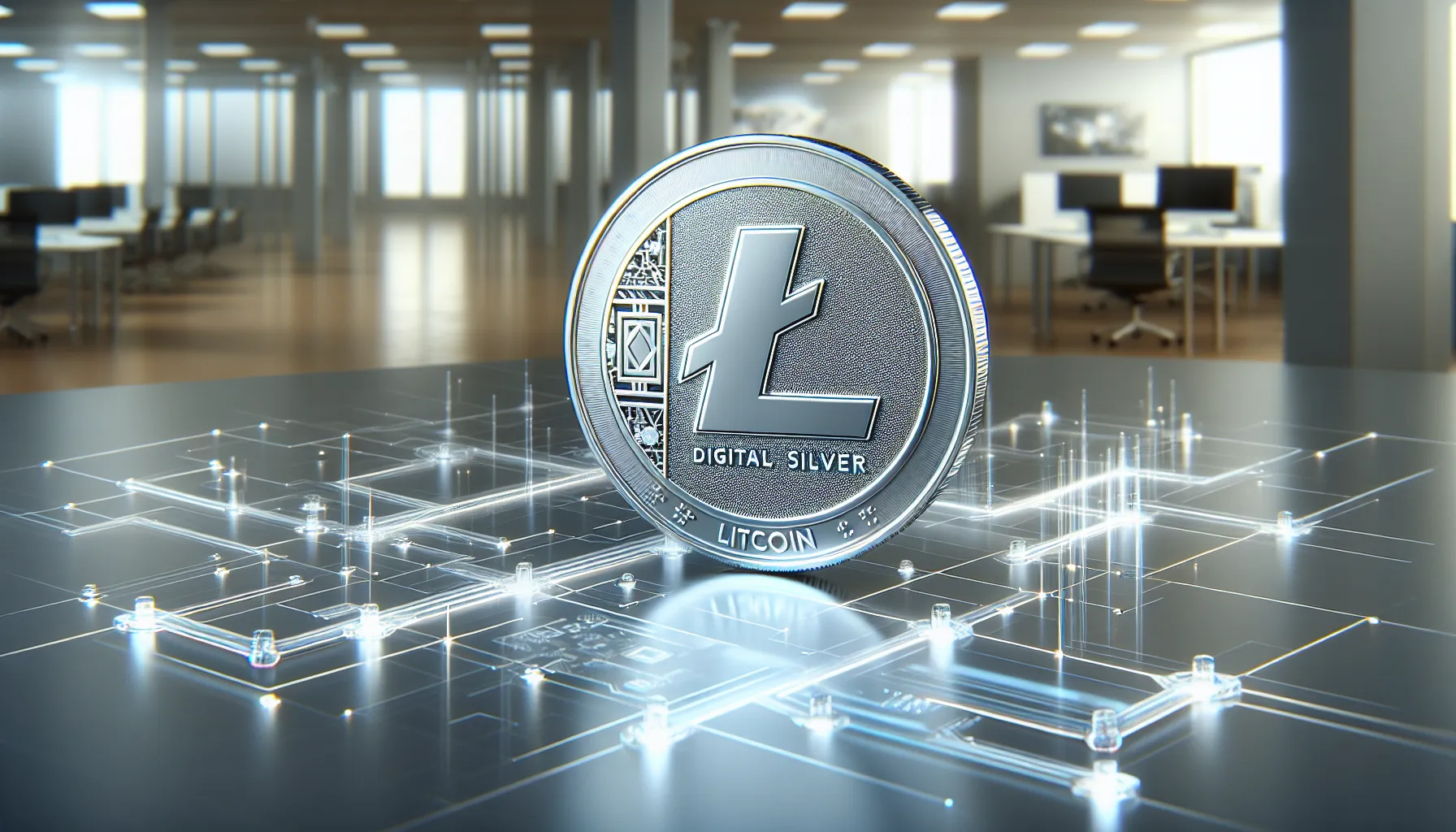
Litecoin (LTC) is a decentralized peer-to-peer digital currency that operates on blockchain technology, allowing individuals to send and receive payments directly without relying on banks or other intermediaries. Launched in October 2011, Litecoin ranks among the earliest cryptocurrencies and has consistently maintained a position among the top digital assets by market capitalization.
At its core, Litecoin functions similarly to Bitcoin. It uses cryptographic principles to secure transactions, and all transaction data gets recorded on a public ledger,the blockchain,that anyone can verify. But, Litecoin distinguishes itself through specific technical choices designed to make it faster and more suitable for everyday transactions rather than long-term value storage.
The Origins of Litecoin
Litecoin was created by Charlie Lee, a former Google engineer who saw opportunities to improve upon Bitcoin’s original design. Lee released Litecoin as a fork of Bitcoin’s codebase, meaning he took Bitcoin’s open-source code and modified it to create a new cryptocurrency with different parameters.
Lee’s vision was straightforward: create a “lighter” version of Bitcoin that could handle transactions more quickly and affordably. He wasn’t trying to compete directly with Bitcoin as a store of value. Instead, he wanted to build a cryptocurrency better suited for daily purchases,buying coffee, sending money to friends, or making small online payments.
The name “Litecoin” itself reflects this philosophy. It’s meant to evoke something lighter, faster, and more practical than Bitcoin,not necessarily better, just different in purpose. Lee announced Litecoin on the Bitcointalk forum and launched it on October 13, 2011, with the genesis block. From the beginning, he positioned it as the silver to Bitcoin’s gold, a metaphor that has stuck for over a decade.
How Litecoin Works
Litecoin operates using a Proof-of-Work (PoW) consensus mechanism, similar to Bitcoin. In this system, miners compete to solve complex mathematical puzzles, and the first to succeed gets to add a new block of transactions to the blockchain while earning newly minted Litecoin as a reward.
The key technical difference lies in Litecoin’s use of the Scrypt hashing algorithm instead of Bitcoin’s SHA-256. Scrypt is more memory-intensive, which initially made Litecoin mining more accessible to individuals using consumer-grade hardware like CPUs and GPUs. The goal was to democratize mining and prevent the early dominance of specialized ASIC (Application-Specific Integrated Circuit) hardware that had quickly taken over Bitcoin mining.
One of Litecoin’s most significant features is its faster block generation time. While Bitcoin produces a new block approximately every 10 minutes, Litecoin generates blocks every 2.5 minutes,four times faster. This means transactions receive confirmations more quickly, making Litecoin more practical for situations where speed matters.
The faster block time doesn’t compromise security significantly because Litecoin adjusts its mining difficulty regularly, just like Bitcoin does. Users typically wait for multiple confirmations before considering a transaction fully settled, and even with faster blocks, Litecoin maintains robust security through its proof-of-work system.
The Bitcoin-Litecoin Relationship: Gold vs. Silver
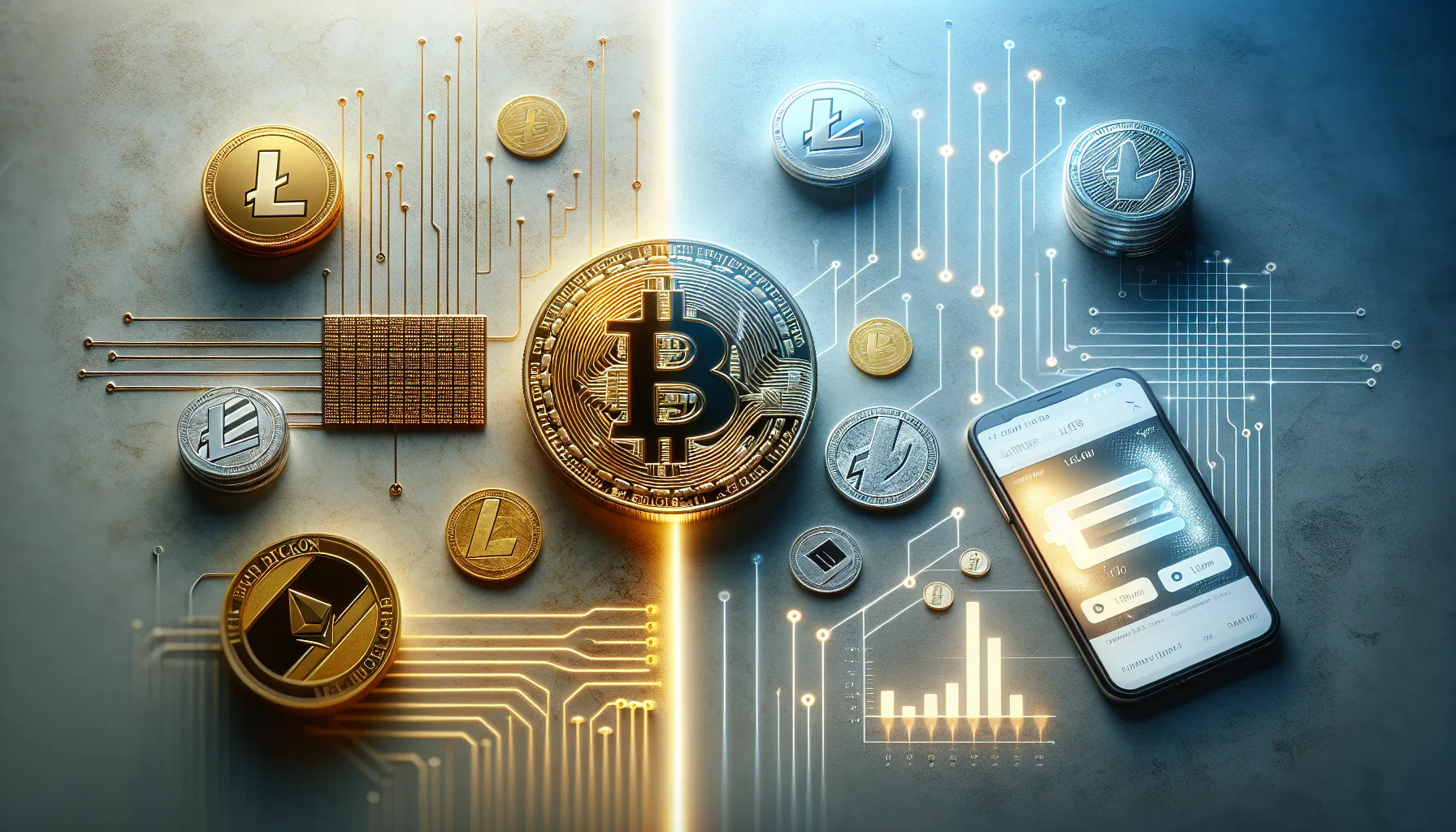
The comparison between Bitcoin and Litecoin mirrors the historical relationship between gold and silver in traditional monetary systems. For centuries, gold served as the ultimate store of wealth,precious, scarce, and primarily held for long-term value preservation. Silver, while also valuable, functioned more as a medium of exchange for everyday transactions because of its greater availability and lower per-unit cost.
Bitcoin has embraced the “digital gold” narrative wholeheartedly. Its 21 million coin supply cap creates artificial scarcity, and its growing institutional adoption positions it primarily as a hedge against inflation and a store of value rather than a day-to-day payment system. Bitcoin’s higher transaction fees and slower confirmation times make it less practical for buying a sandwich but ideal for moving large amounts of value or holding as an investment.
Litecoin, by contrast, was designed from the start to be the practical, transactional counterpart. Charlie Lee explicitly positioned it as complementary to Bitcoin rather than competitive. The idea wasn’t to dethrone Bitcoin but to create an alternative that people would actually use for purchases and transfers.
Why the “Digital Silver” Analogy Makes Sense
The digital silver metaphor works on multiple levels. First, there’s the supply difference: Litecoin has a maximum supply of 84 million coins,exactly four times Bitcoin’s 21 million cap. This larger supply mirrors how silver is more abundant than gold in nature, making it more suitable for widespread circulation.
Second, Litecoin’s faster block time (2.5 minutes versus Bitcoin’s 10 minutes) means transactions confirm more quickly. When someone pays with Litecoin, the recipient doesn’t need to wait as long for confirmation that the transaction is legitimate and irreversible. This speed advantage makes Litecoin more practical for point-of-sale purchases and situations where time matters.
Third, Litecoin’s transaction fees have historically been significantly lower than Bitcoin’s. During periods of network congestion, Bitcoin fees can spike to $20, $30, or even higher per transaction, making it impractical for small purchases. Litecoin fees typically remain under a dollar, often just pennies, regardless of network activity.
Finally, there’s the psychological aspect. Silver has always been seen as more accessible than gold,something ordinary people could own and use. Litecoin, with its lower per-coin price and emphasis on practical utility, carries that same accessible, user-friendly quality. It’s not trying to be the most prestigious cryptocurrency: it’s trying to be the most useful one for everyday transactions.
Key Differences Between Bitcoin and Litecoin
While Litecoin originated from Bitcoin’s codebase, several technical modifications give it distinct characteristics that shape its role in the cryptocurrency landscape.
Transaction Speed and Block Time
The most immediately noticeable difference is transaction speed. Bitcoin generates a new block approximately every 10 minutes, while Litecoin produces one every 2.5 minutes. This four-fold speed advantage means Litecoin transactions receive their first confirmation in a quarter of the time.
In practical terms, if someone sends Bitcoin, the recipient typically waits 10 minutes for the first confirmation and often prefers to wait for several confirmations (30-60 minutes) before considering a large transaction fully settled. With Litecoin, that first confirmation comes in 2.5 minutes, and multiple confirmations happen much more quickly.
This speed advantage makes Litecoin more suitable for retail environments, online purchases, and any situation where parties don’t want to wait around for confirmations. It also means the network can process roughly four times as many transactions in the same time period, contributing to better scalability.
Total Supply and Scarcity
Bitcoin’s 21 million coin cap is legendary,it’s a core part of its value proposition as “digital gold.” Litecoin quadruples that number with an 84 million maximum supply. This isn’t arbitrary: it was chosen specifically to maintain the 4:1 ratio with Bitcoin.
The larger supply affects psychology and pricing. While one Bitcoin might trade for tens of thousands of dollars, making it feel expensive to newcomers, Litecoin’s lower per-coin price makes it feel more accessible and spendable. People are more comfortable using something priced at $80 for a transaction than something priced at $40,000, even if they’re only spending a fraction of either coin.
From a scarcity perspective, both cryptocurrencies maintain deflationary characteristics. Both halve their mining rewards periodically, and both will eventually reach their maximum supply. Litecoin isn’t less scarce in a meaningful economic sense: it just has more individual units to go around.
Mining Algorithm
Perhaps the most significant technical difference is the hashing algorithm. Bitcoin uses SHA-256, which proved highly efficient for ASIC development. These specialized mining machines now completely dominate Bitcoin mining, making it virtually impossible for individuals to mine Bitcoin profitably with regular computers.
Litecoin uses Scrypt, a memory-intensive algorithm that was chosen specifically to resist ASIC development and keep mining accessible to ordinary users with consumer hardware. For several years, this worked,Litecoin remained mineable with GPUs long after Bitcoin mining had gone fully professional.
Eventually, but, manufacturers developed Scrypt ASICs, and Litecoin mining became professionalized as well. Still, the Scrypt algorithm remains distinct and requires different hardware than Bitcoin mining, meaning the two networks don’t directly compete for mining resources.
What Makes Litecoin Unique?
Beyond its technical specifications, Litecoin has developed several unique characteristics that distinguish it within the cryptocurrency ecosystem.
One of Litecoin’s defining traits is its role as a testing ground for new blockchain technologies. Because Litecoin shares much of Bitcoin’s codebase but has a smaller market cap and slightly lower stakes, developers often use it to test innovations before implementing them on Bitcoin.
The most notable example is Segregated Witness (SegWit), a protocol upgrade that improves transaction capacity and fixes certain technical issues. Litecoin activated SegWit in May 2017, several months before Bitcoin, allowing developers to observe how the upgrade performed in a live environment with real economic value at stake. When Bitcoin later activated SegWit, many potential issues had already been identified and addressed thanks to Litecoin’s pioneering implementation.
Litecoin also supports the Lightning Network, a second-layer protocol that enables near-instant, low-cost transactions by keeping most activity off the main blockchain. Again, Litecoin served as a testing environment, with some Lightning Network developments happening on Litecoin before or alongside Bitcoin implementation.
Another unique aspect is Litecoin’s consistency and longevity. In an industry where new projects launch and fail constantly, Litecoin has maintained steady development and community support for over a decade. It hasn’t undergone dramatic rebrands, controversial hard forks, or leadership controversies. This stability might seem boring compared to newer projects promising revolutionary features, but it’s valuable for users who want reliability.
Charlie Lee’s decision to sell his Litecoin holdings in 2017,citing conflicts of interest when he promoted the project,was controversial but also demonstrated a commitment to transparency. While critics argued he abandoned the project, Lee has remained actively involved in development and advocacy without holding coins, arguably reducing accusations of self-dealing.
Advantages of Using Litecoin
For users considering Litecoin for transactions or as part of a cryptocurrency portfolio, several practical advantages stand out.
Speed and efficiency top the list. When sending Litecoin, transactions confirm in roughly 2.5 minutes compared to Bitcoin’s 10 minutes. For merchants accepting cryptocurrency payments, this faster confirmation reduces the risk of double-spending attacks and allows customers to complete purchases more quickly. Nobody wants to stand at a register for 10 minutes waiting for a Bitcoin confirmation: with Litecoin, the wait is much more tolerable.
Lower transaction fees make Litecoin practical for smaller purchases. While Bitcoin fees can spike during network congestion,sometimes exceeding $30 per transaction,Litecoin fees typically remain under $1 and often cost just pennies. This makes economic sense for transactions of all sizes, from buying coffee to sending remittances internationally.
Wide availability and support give Litecoin practical utility. As one of the oldest cryptocurrencies, it’s supported by virtually every major exchange, wallet provider, and payment processor. Users don’t need to search for specialized platforms or worry about liquidity. Litecoin is consistently among the most traded cryptocurrencies, making it easy to buy, sell, or exchange.
Proven security and reliability matter in an industry plagued by hacks, scams, and failed projects. Litecoin’s blockchain has operated continuously since 2011 without major security breaches or network failures. Its proof-of-work security model, while energy-intensive, has proven robust against attacks.
Cross-border payments represent a practical use case where Litecoin excels. Traditional international money transfers can take days and cost significant fees. Litecoin transfers complete in minutes regardless of geographic distance, with minimal fees. For individuals sending remittances to family in other countries or businesses paying international suppliers, this represents real, tangible value.
Finally, Litecoin benefits from network effects and established infrastructure. Payment processors, point-of-sale systems, and merchant services that support cryptocurrency often include Litecoin alongside Bitcoin. This existing infrastructure makes adoption easier and provides more places where Litecoin can actually be spent rather than just held.
Challenges and Criticisms
Even though its longevity and practical advantages, Litecoin faces several challenges that affect its position in the evolving cryptocurrency landscape.
The most significant limitation is Litecoin’s lack of smart contract functionality. While Bitcoin and Litecoin were both designed as peer-to-peer payment systems, newer blockchains like Ethereum introduced programmable smart contracts that enable decentralized applications, DeFi protocols, NFTs, and other innovations. Litecoin’s architecture doesn’t natively support these features, limiting its utility to straightforward transactions and value transfer.
Developers are working on solutions. The MimbleWimble Extension Blocks (MWEB) upgrade, implemented in 2022, added enhanced privacy features and demonstrated that Litecoin’s protocol can evolve. Additional work on smart contract functionality continues, but Litecoin remains far behind Ethereum and other platforms in this area.
Mining centralization poses another concern. While Litecoin’s Scrypt algorithm was designed to resist ASIC dominance, manufacturers eventually developed efficient Scrypt ASICs. Today, profitable Litecoin mining requires specialized hardware and cheap electricity, making it inaccessible to casual users. Large mining operations now dominate Litecoin mining, similar to Bitcoin, raising questions about decentralization.
The competitive landscape has intensified dramatically since Litecoin’s launch. In 2011 and the years following, there were relatively few cryptocurrency options. Bitcoin was for serious value storage, and Litecoin offered a faster alternative for transactions. Today, thousands of cryptocurrencies exist, many offering features Litecoin lacks. Projects like Cardano, Solana, and Polygon provide fast, cheap transactions along with smart contracts, DeFi ecosystems, and active development communities.
Some critics argue Litecoin suffers from a lack of clear identity in today’s market. The “digital silver” narrative worked well when Bitcoin and Litecoin were the primary options, but it’s less compelling when users can choose from numerous fast, low-fee cryptocurrencies. What makes Litecoin special beyond being “like Bitcoin but faster” when dozens of projects claim similar advantages?
Development pace has also drawn criticism. Compared to well-funded projects with large development teams, Litecoin’s development appears slower and less ambitious. While stability and reliability are valuable, some observers worry Litecoin is being left behind as the industry evolves rapidly around it.
Litecoin’s Role in the Cryptocurrency Ecosystem Today
More than a decade after its creation, Litecoin occupies a specific, valuable niche within the cryptocurrency ecosystem, even as that ecosystem has grown exponentially more complex.
Litecoin continues to function as a reliable payment cryptocurrency. While many projects promise fast, cheap transactions, Litecoin delivers them consistently with over a decade of proven uptime. For merchants accepting cryptocurrency payments, Litecoin offers predictability,the network works, fees remain reasonable, and transactions confirm quickly. This reliability matters more than cutting-edge features for practical payment use cases.
The role as a testing ground for Bitcoin innovations remains relevant. Because proposed changes to Bitcoin undergo extensive scrutiny and conservative implementation timelines, having a “little brother” network where technologies can be battle-tested provides real value. Lightning Network developments, SegWit optimization, and other innovations benefit from Litecoin’s willingness to carry out and test them in a production environment.
Cross-border remittances and transfers represent an ongoing use case where Litecoin excels. In regions with limited banking infrastructure or high remittance fees, Litecoin provides a practical alternative. Its combination of speed, low fees, and wide exchange support makes it suitable for moving value internationally without relying on traditional banking systems or payment networks.
Litecoin maintains strong brand recognition and trust within the cryptocurrency community. While newer projects might offer more features, Litecoin’s longevity and track record provide confidence. For conservative users or institutions dipping their toes into cryptocurrency beyond Bitcoin, Litecoin offers a familiar, tested option.
The cryptocurrency also benefits from established liquidity and trading pairs. Litecoin is widely available on exchanges worldwide, often serving as a trading pair for other cryptocurrencies. This liquidity makes it useful as an intermediary,users might convert Bitcoin to Litecoin, then Litecoin to another altcoin, taking advantage of Litecoin’s faster transfer times and lower fees during the process.
Looking forward, Litecoin’s challenge is maintaining relevance as the cryptocurrency ecosystem continues evolving. Its strategy appears to focus on doing a few things exceptionally well,reliable payments, reasonable fees, proven security,rather than chasing every new trend. In an industry often characterized by hype and vaporware, there’s something to be said for steady, proven utility.
Conclusion
The “digital silver” nickname isn’t just marketing,it captures Litecoin’s fundamental purpose and position within the cryptocurrency ecosystem. Just as silver complemented gold throughout monetary history by providing a more practical medium for everyday transactions, Litecoin complements Bitcoin by offering faster confirmations, lower fees, and better suitability for regular use.
Litecoin’s technical choices,the 2.5-minute block time, 84 million coin supply, and Scrypt mining algorithm,weren’t arbitrary. They reflected a deliberate design philosophy: create something lighter, faster, and more accessible than Bitcoin while maintaining the same core principles of decentralization and security.
Over thirteen years after its launch, Litecoin has demonstrated remarkable staying power in an industry where most projects fail within months. It’s navigated technological challenges, market cycles, and intense competition while maintaining its core identity. The network continues processing transactions reliably, developers continue improving the protocol, and users continue finding practical value in its speed and affordability.
Litecoin may never reach Bitcoin’s market dominance or Ethereum’s ecosystem complexity. It doesn’t need to. Its value lies in being exactly what it was designed to be: a practical, reliable, fast cryptocurrency for transactions rather than speculation. In a market often dominated by hype and unrealistic promises, that consistency and clear purpose remain Litecoin’s strongest assets.
For anyone exploring cryptocurrency beyond Bitcoin, understanding Litecoin means understanding the difference between store of value and medium of exchange,between digital gold and digital silver. Both have their place, both serve important functions, and both continue shaping how we think about money in the digital age.
Frequently Asked Questions
Why is Litecoin called digital silver?
Litecoin is called digital silver because it complements Bitcoin’s role as digital gold. Just as silver historically served for everyday transactions while gold was a store of value, Litecoin offers faster transaction times, lower fees, and greater accessibility for daily payments compared to Bitcoin’s focus on long-term value storage.
How fast are Litecoin transactions compared to Bitcoin?
Litecoin generates new blocks every 2.5 minutes, which is four times faster than Bitcoin’s 10-minute block time. This means Litecoin transactions receive their first confirmation in about 2.5 minutes, making it significantly more practical for everyday purchases and transfers where speed matters.
What is the maximum supply of Litecoin?
Litecoin has a maximum supply of 84 million coins, exactly four times Bitcoin’s 21 million cap. This larger supply mirrors silver’s greater abundance compared to gold and makes Litecoin more suitable for widespread circulation and everyday transactions at more accessible price points.
Can you mine Litecoin with a regular computer?
While Litecoin originally used the Scrypt algorithm to enable mining with consumer hardware like CPUs and GPUs, manufacturers eventually developed specialized ASIC miners. Today, profitable Litecoin mining requires specialized equipment and cheap electricity, similar to Bitcoin mining, making casual mining largely impractical.
Is Litecoin better than Bitcoin for everyday payments?
Litecoin is generally better suited for everyday payments due to its faster 2.5-minute confirmation times and significantly lower transaction fees, often under $1. Bitcoin’s higher fees and slower confirmations make it less practical for small purchases, positioning it more as a store of value.
What are the main disadvantages of Litecoin?
Litecoin’s main disadvantages include lack of native smart contract functionality, which limits its use beyond basic transactions, and intense competition from newer cryptocurrencies offering similar speed and lower fees plus additional features like DeFi capabilities and programmable applications.