Digital currencies and blockchain projects have captured mainstream attention, yet many newcomers struggle to separate genuine opportunities from speculative hype. At the heart of this challenge lies tokenomics, a term that sounds intimidating but represents something fundamentally straightforward: the economic design behind digital tokens.
Understanding tokenomics isn’t just for technical experts or seasoned traders. It’s an essential skill for anyone considering crypto investments, as it reveals the structural foundation that determines whether a project can sustain itself over time. A token with poorly designed economics might generate short-term excitement before collapsing, whilst one built on sound principles can weather market volatility and deliver lasting value.
This guide breaks down tokenomics into digestible concepts, helping complete beginners evaluate projects with confidence. By the end, readers will possess the analytical tools to spot red flags, ask the right questions, and make informed decisions in the rapidly evolving crypto landscape.
Key Takeaways
- Tokenomics refers to the economic design behind digital tokens, encompassing supply, distribution, utility, and incentive structures that determine a project’s long-term viability.
- Understanding tokenomics enables investors to distinguish between genuine opportunities and speculative hype by analysing fundamental economic principles rather than market sentiment.
- Core components include token supply metrics, allocation transparency, vesting schedules, and genuine utility that creates organic demand beyond mere speculation.
- Red flags such as excessive insider control, unclear distribution details, or tokens lacking real utility often signal poorly designed tokenomics that may lead to project failure.
- Beginners should systematically evaluate tokenomics by examining official documentation, blockchain explorers, and cross-referencing data across multiple sources to build informed investment decisions.
- Sound tokenomics aligns stakeholder incentives through mechanisms like staking rewards, deflationary burns, and balanced distribution that supports sustainable growth over time.
What Is Tokenomics?
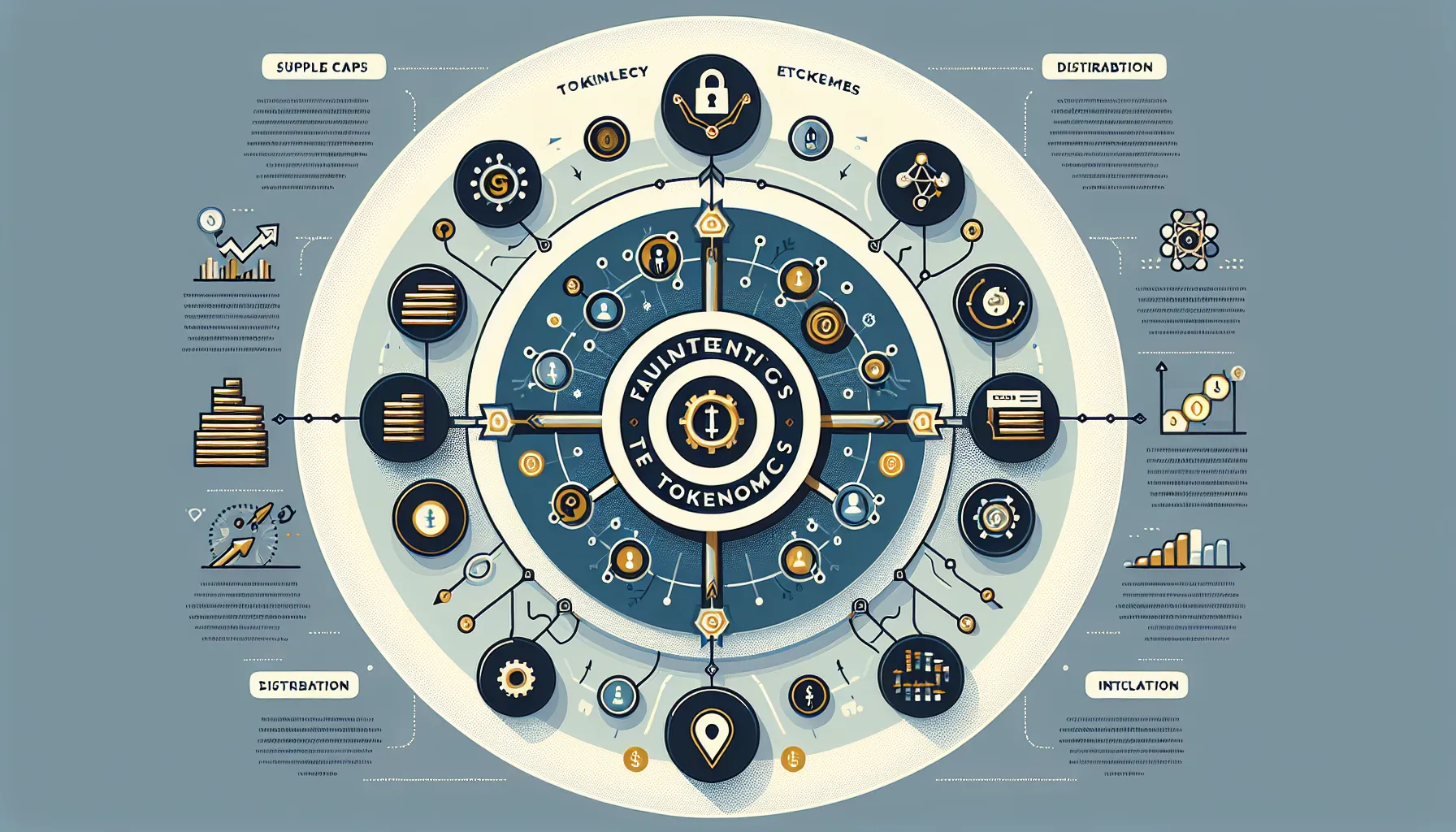
Tokenomics, a portmanteau of ‘token’ and ‘economics’, describes the economic attributes and systems governing how a digital token functions within its ecosystem. It encompasses everything from creation and distribution to usage patterns and market behaviour. Think of it as the rulebook that determines a token’s lifecycle and value proposition.
Every cryptocurrency project operates according to specific economic principles, whether explicitly stated or not. Bitcoin’s hard cap of 21 million coins represents a tokenomic decision. Ethereum’s transition to a deflationary model through token burning reflects another. These aren’t arbitrary choices, they’re deliberate designs that shape incentives, influence holder behaviour, and eventually determine project viability.
Breaking Down the Term
The word itself offers helpful clues to its meaning. Token refers to a digital asset issued on a blockchain, essentially a programmable unit of value that can represent anything from currency to voting rights to access credentials. Unlike traditional currencies controlled by central banks, tokens operate according to code and consensus rules.
Economics represents the study of value creation, incentive structures, and resource distribution. When applied to tokens, it examines questions like: Who receives tokens and when? What motivates people to hold rather than sell? How does supply interact with demand to influence price?
Together, tokenomics provides a framework for analysing the economic DNA of any blockchain project. It’s less about predicting short-term price movements and more about understanding the fundamental forces that will shape a token’s trajectory over months and years.
Why Tokenomics Matters for Investors
Serious crypto investors prioritise tokenomics analysis before committing capital, and for good reason. A project might boast impressive technology or a charismatic founder, yet poor economic design can undermine everything. Tokens with no clear utility, excessive insider allocations, or inflationary spirals rarely deliver sustainable returns.
Sound tokenomics suggests long-term viability. It demonstrates that the project’s creators have thought carefully about incentive alignment, ensuring that all stakeholders (users, developers, investors) benefit from the ecosystem’s growth rather than extracting value at others’ expense.
Transparent tokenomics also enables risk assessment. By examining distribution schedules, supply caps, and utility mechanisms, investors can identify potential price pressure from unlocking tokens or gauge whether demand will likely outpace supply. Projects that hide these details or provide vague explanations often do so for a reason.
Eventually, understanding tokenomics transforms speculation into well-informed choice-making. It shifts focus from hype cycles and social media buzz towards fundamental analysis, the kind of due diligence that separates lasting projects from temporary fads.
Core Components of Tokenomics
Every tokenomic system comprises several foundational elements that work together to create economic incentives and constraints. Beginners should familiarise themselves with these core components, as they appear across virtually all crypto projects, though implementation details vary considerably.
Token Supply and Distribution
Supply represents the quantity of tokens in existence or planned for creation. Projects typically define three supply metrics: maximum supply (the absolute cap on tokens that will ever exist), total supply (currently minted tokens, including locked ones), and circulating supply (tokens actively available for trading).
Distribution describes how these tokens are allocated amongst stakeholders. Common allocations include:
- Public sale participants: Early investors who purchased during initial coin offerings or token launches
- Team and founders: Typically reserved to incentivise the people building the project
- Ecosystem development: Funds for marketing, partnerships, or community rewards
- Investors and advisers: Private sale allocations or advisory compensation
- Treasury reserves: Tokens held by the project for future needs
The ratio between these categories matters enormously. If founders control 70% of supply, they wield disproportionate influence over price and governance. Transparent projects publish clear allocation breakdowns, allowing investors to assess concentration risk.
Token Utility and Use Cases
Utility defines what holders can actually do with tokens beyond simply trading them. Strong utility creates organic demand, as people need tokens to access services or participate in the ecosystem.
Common utility models include:
- Payment tokens: Used to purchase goods or services within a platform
- Governance tokens: Grant voting rights on protocol decisions, upgrades, or treasury spending
- Staking tokens: Can be locked to earn rewards or secure the network
- Access tokens: Required to use specific features or reach premium tiers
- Reward tokens: Distributed to users who contribute value (content creation, liquidity provision, etc.)
Projects sometimes combine multiple utilities. Ethereum’s ETH functions as payment for transaction fees, staking collateral, and the base currency for decentralised applications. This multi-purpose design strengthens demand from various user groups.
Beware of tokens with vague or forced utility. If the whitepaper struggles to explain why someone would need the token, that’s often because no compelling reason exists.
Token Release Schedule and Vesting
Not all allocated tokens enter circulation immediately. Vesting schedules determine when locked tokens become accessible, typically spread over months or years with regular unlock events (called ‘cliffs’ if large batches release simultaneously).
Vesting serves several purposes. For team allocations, it aligns long-term incentives, developers can’t simply cash out and abandon the project. For investor tokens, it prevents immediate dumps that would crater prices. For ecosystem reserves, it ensures gradual distribution rather than flooding the market.
Smart investors examine vesting calendars before buying. A token might appear scarce today, but if 40% of supply unlocks next month, significant price pressure looms. Conversely, projects with lengthy vesting periods and staggered releases tend to experience more stable price action as new supply enters gradually.
Some projects carry out dynamic release schedules tied to milestones or performance metrics. Others burn unvested tokens if certain conditions aren’t met. These mechanisms add complexity but can demonstrate commitment to sustainable growth over quick profits.
Understanding Token Value and Price Drivers
Whilst tokenomics can’t predict exact prices, markets involve too many variables, it reveals the structural forces that influence value over time. Beginners who grasp these dynamics can better interpret price movements and set realistic expectations.
Supply and Demand Dynamics
Like any market, token prices reflect the intersection of supply (how many tokens are available) and demand (how many people want them). But, crypto adds programmable elements that don’t exist in traditional markets.
Scarcity plays a powerful psychological and economic role. Bitcoin’s 21 million cap creates perceived scarcity that drives ‘digital gold’ narratives. When demand increases against fixed supply, prices tend to rise, assuming the scarcity is genuine and not artificially manufactured.
Utility-driven demand emerges when people need tokens for specific purposes. If a decentralised application gains users who must hold tokens to access features, organic buying pressure develops. This differs from speculative demand, which can evaporate during market downturns.
Velocity describes how quickly tokens change hands. High-velocity tokens see constant selling as people acquire them only for immediate use, creating downward price pressure. Low-velocity tokens benefit from holder behaviour, people buy and hold, reducing available supply.
Effective tokenomics balances these forces. Projects might incentivise holding through staking rewards (reducing velocity) whilst ensuring enough liquidity for the ecosystem to function. Getting this balance wrong can lead to either stagnant, illiquid markets or constant selling pressure.
Inflation vs Deflation Mechanisms
Token supply needn’t remain static. Many projects carry out inflationary models where new tokens continuously enter circulation, often to reward network validators or fund ongoing development. Moderate inflation isn’t inherently bad: it can ensure long-term sustainability and participation.
But, excessive inflation dilutes existing holders. If 10% new tokens are created annually but demand doesn’t grow proportionally, each token represents a smaller share of the ecosystem, typically depressing prices. This explains why many newer projects favour capped supplies.
Deflationary mechanisms reduce supply over time, creating upward price pressure if demand holds steady. Common approaches include:
- Token burning: Permanently removing tokens from circulation (Ethereum burns a portion of transaction fees)
- Buyback programmes: Projects repurchase and destroy tokens using revenue
- Supply caps: Hard limits on maximum tokens, ensuring scarcity
Deflation appeals to investors because it mirrors precious metals, the supply shrinks or stays fixed whilst potential demand is unlimited. But deflation alone doesn’t guarantee value: the underlying project must still deliver utility and attract users.
The most sophisticated projects employ adaptive models that shift between inflation and deflation based on network conditions. These dynamic systems can be harder to analyse but potentially offer better long-term stability than rigid approaches.
How to Evaluate a Project’s Tokenomics
Understanding tokenomic concepts is one thing: applying them to assess real projects requires a systematic approach. Beginners should develop a consistent evaluation framework rather than relying on intuition or marketing materials.
Key Questions to Ask
When examining any crypto project, these questions reveal critical information about economic design:
What is the maximum and circulating supply? This establishes scarcity. Wide gaps between circulating and maximum supply indicate substantial future dilution. Check whether the project clearly states these figures, if they’re hard to find, that’s concerning.
How are tokens distributed? Request allocation breakdowns. What percentage goes to the team, investors, public, and ecosystem? Balanced distribution (no single group controlling majority supply) suggests healthier governance and less manipulation risk.
What vesting schedules apply? Identify when large token batches unlock. Projects should publish detailed vesting calendars. Be especially wary if team tokens unlock before the project reaches maturity, it signals potential abandonment.
What utility does the token provide? Can holders do something meaningful beyond speculation? Strong projects articulate clear, necessary use cases. Weak projects describe vague ‘ecosystem participation’ or utilities that could function without a token.
Who benefits from holding versus selling? Examine incentive structures. Does staking provide rewards? Do holders gain governance influence or fee sharing? If the system only rewards selling, expect constant downward pressure.
Are there deflationary mechanisms? Token burns, buybacks, or supply caps can support long-term value. Check whether these mechanisms are programmatic (automated) or discretionary (relying on team decisions).
Documenting answers across multiple projects helps beginners develop pattern recognition. They’ll start noticing that successful projects share common characteristics whilst failures often exhibit similar warning signs.
Red Flags to Watch For
Certain tokenomic features should trigger immediate scepticism or deeper investigation:
Unclear or hidden allocation details: Legitimate projects proudly publish comprehensive breakdowns. If you can’t find clear distribution information after reasonable searching, assume the worst. Opacity usually hides unfavourable terms.
Excessive insider control: When founders and early investors hold 60-80% of supply, they can manipulate markets, outvote the community, and extract value at others’ expense. Concentrated ownership creates asymmetric risk for retail investors.
No genuine utility: Tokens described as ‘rewarding community participation’ or ‘enabling ecosystem growth’ without specific mechanisms often lack real purpose. Ask: could this platform function without the token? If yes, why does the token exist?
Extreme inflation rates: Annual supply increases exceeding 10-15% rarely maintain value unless demand growth dramatically outpaces inflation. High inflation often masks unsustainable reward programmes.
Immediate or short vesting for teams: Founders whose tokens unlock within 6-12 months aren’t committed to long-term success. Industry standards suggest 3-4 year vesting with 1-year cliffs.
Lack of transparency or documentation: Professional projects publish detailed whitepapers, tokenomic explanations, and regular updates. Missing, outdated, or vague documentation suggests either incompetence or intentional obfuscation.
Encountering one red flag doesn’t necessarily disqualify a project, but multiple warning signs should prompt extreme caution or avoidance. The crypto space offers thousands of options, there’s no reason to invest in projects with questionable economics.
Practical Steps for Beginners
Theory becomes valuable only when applied. Beginners can follow these concrete steps to start analysing tokenomics immediately, building competence through repeated practice.
Start by selecting a well-established project (Bitcoin, Ethereum, or a top-20 token) as your first analysis target. Established projects typically offer comprehensive documentation and serve as reference points for evaluating newer ventures.
Read the project’s whitepaper or tokenomics documentation thoroughly. Don’t skim, these documents contain essential details about supply, distribution, and economic mechanisms. Make notes on anything unclear for later research.
Visit the official project website and locate the ‘Tokenomics’ or ‘Economics’ section. Most serious projects dedicate pages to explaining their token model. Compare this information against the whitepaper to check consistency.
Create a simple spreadsheet tracking key metrics: maximum supply, circulating supply, allocation percentages, vesting schedules, utility types, and inflation/deflation mechanisms. This structured approach prevents overlooking important details and enables easy comparison across projects.
Don’t invest based on a single analysis. Examine 5-10 projects to develop pattern recognition. Notice how tokenomics differ between categories (DeFi platforms versus gaming tokens versus layer-1 blockchains). Understanding these patterns helps identify outliers and innovations.
Where to Find Tokenomics Information
Reliable data sources separate informed analysis from speculation:
Official project channels provide primary information. Check the project website, documentation portal, and official blog for tokenomics explanations, supply details, and allocation breakdowns. These sources should be your starting point.
Blockchain explorers like Etherscan reveal on-chain reality, actual token distribution, holder concentrations, and transaction patterns. Compare explorer data against official claims to verify accuracy.
Listing platforms such as CoinGecko and CoinMarketCap aggregate supply metrics, circulating versus maximum supply, and market data. They also link to official resources and sometimes provide tokenomic summaries. But, always verify platform data against official sources, as aggregators occasionally contain errors.
Community channels (Discord, Telegram, Reddit) can clarify confusing aspects, but treat community opinions sceptically. Distinguish between official team statements and member speculation.
Independent research platforms like Messari or Token Terminal offer professional analyses and standardised metrics across projects. These services provide valuable context but may require subscriptions for detailed reports.
Develop the habit of cross-referencing information. If official documentation claims 30% team allocation but blockchain explorers show 50% in team-controlled wallets, that discrepancy demands explanation.
Comparing Different Token Models
Tokens serve different purposes, and their economic designs reflect these functions. Beginners benefit from understanding how models vary:
| Model | Supply Characteristics | Primary Use Case | Example |
|---|---|---|---|
| Utility | Usually capped | Accessing platform services, paying fees | Ethereum (ETH) |
| Governance | Often capped | Voting on protocol decisions, treasury allocation | Maker (MKR) |
| Security | Variable | Representing ownership stake, profit sharing | Various security tokens |
| Stablecoin | Elastic (adjusts to maintain peg) | Stable value for transactions, lending | USDC, DAI |
| Reward | Often inflationary | Incentivising specific behaviours | Many play-to-earn tokens |
Utility tokens derive value from platform adoption. As more users need the token to access services, demand increases. Evaluate these by assessing whether the utility is genuine and whether the platform is gaining traction.
Governance tokens grant decision-making power. Their value reflects the importance and profitability of the protocol they govern. Strong governance tokens control significant treasuries or revenue streams.
Security tokens represent traditional financial instruments on blockchain. They’re subject to regulations and offer ownership rights or profit participation. Evaluate like traditional securities, considering cash flows and legal structure.
Stablecoins prioritise price stability over appreciation. Their tokenomics focus on maintaining pegs through collateralisation or algorithmic mechanisms. Assess reserve transparency and redemption mechanisms.
Understanding these categories helps set appropriate expectations. Don’t evaluate a governance token using utility token criteria, or expect security token price action to mirror speculative assets.
Conclusion
Tokenomics transforms crypto investing from gambling into well-informed choice-making. By understanding supply dynamics, distribution structures, utility mechanisms, and incentive designs, beginners can assess whether projects possess sustainable economics or merely temporary hype.
The frameworks outlined here, asking key questions, identifying red flags, systematically gathering information, apply across the entire crypto landscape. Whilst specific tokenomic innovations will continue emerging, these fundamental principles remain constant. Scarcity, utility, and aligned incentives drive value: opacity, excessive concentration, and weak use cases signal danger.
Beginners shouldn’t expect instant expertise. Tokenomic analysis is a skill developed through practice and pattern recognition. Start with established projects to build foundational understanding, then gradually tackle newer, more complex models. Over time, evaluating tokenomics becomes intuitive rather than laborious.
The crypto space rewards diligence. Projects with sound tokenomics don’t guarantee profits, but they dramatically improve odds whilst reducing exposure to catastrophic losses from poorly designed systems. As the industry matures, tokenomic literacy increasingly separates successful investors from those caught in boom-and-bust cycles.
Most importantly, understanding tokenomics encourages critical thinking in a space often dominated by speculation and social proof. It provides concrete analytical tools that cut through marketing narratives, enabling investors to form independent judgements based on structural fundamentals rather than fleeting sentiment.
Frequently Asked Questions
What is tokenomics and why should beginners understand it?
Tokenomics combines ‘token’ and ‘economics’, describing the economic design behind digital tokens. Beginners should understand it because it reveals whether a crypto project has sustainable fundamentals or will collapse after initial hype, helping separate genuine opportunities from speculation.
How do token supply and distribution affect a cryptocurrency’s value?
Token supply establishes scarcity, whilst distribution determines who controls tokens. Projects where founders hold 60-80% create manipulation risk. Balanced distribution with transparent vesting schedules indicates healthier governance and reduces the likelihood of price manipulation or sudden sell-offs.
What are the main red flags in tokenomics that investors should avoid?
Major red flags include unclear allocation details, excessive insider control, tokens with no genuine utility, extreme inflation rates, and short vesting periods for team tokens. Multiple warning signs together suggest the project prioritises quick profits over sustainable growth.
Can a cryptocurrency have good technology but poor tokenomics?
Yes, impressive technology alone doesn’t guarantee success. Poor economic design—such as excessive inflation, weak utility, or unfair distribution—can undermine even innovative projects. Sound tokenomics ensures incentives align amongst users, developers, and investors for long-term viability.
What is the difference between inflationary and deflationary token models?
Inflationary models continuously create new tokens, often rewarding validators but potentially diluting value. Deflationary models reduce supply through burning or buybacks, creating scarcity. Neither is inherently superior; effectiveness depends on whether the mechanism aligns with utility and demand growth.
Where can I find reliable tokenomics information for crypto projects?
Start with official project whitepapers and websites, then verify data using blockchain explorers like Etherscan. Aggregators such as CoinGecko provide supply metrics, whilst platforms like Messari offer professional analysis. Always cross-reference multiple sources to ensure accuracy.