The cryptocurrency market operates around the clock, never sleeping, never pausing. Prices surge and plummet whilst most investors are still reaching for their morning coffee. This relentless pace makes portfolio tracking not just important, it’s absolutely essential. Whether holding Bitcoin and Ethereum or experimenting with smaller altcoins, investors who fail to monitor their positions risk watching their carefully planned strategies unravel in real time. Proper tracking transforms portfolio management from guesswork into a disciplined, data-driven practice. It illuminates performance, highlights risks, and creates opportunities for strategic adjustments before market movements turn against you. The difference between casual holders and professional-grade investors often comes down to how systematically they track and manage their crypto holdings.
Why Proper Portfolio Tracking Matters in Crypto

Tracking cryptocurrency portfolios addresses challenges unique to digital assets. Unlike traditional equity markets with defined trading hours, crypto markets operate continuously across global exchanges. Market conditions can shift dramatically, even amongst large-cap tokens such as Bitcoin and Ethereum, creating opportunities and risks at any hour.
Regular monitoring ensures portfolios remain aligned with investment goals. Without consistent oversight, positions drift from their intended allocation as certain assets outperform or underperform others. An investor who allocated 40% to Bitcoin might discover it now represents 60% after a strong rally, inadvertently concentrating risk beyond their comfort level.
Timely tracking also reveals rebalancing opportunities. When market movements push allocations off-target, informed investors can take corrective action, selling portions of overweight positions and reinvesting into underweight areas. This disciplined approach captures gains from winners whilst maintaining strategic exposure across the portfolio.
Perhaps most critically, proper tracking prevents investors from losing sight of their overall position. With holdings potentially spread across multiple exchanges, wallets, and DeFi protocols, fragmented visibility makes it nearly impossible to understand true exposure. Comprehensive tracking consolidates this scattered information, providing the clear picture needed for sound decision-making in a volatile market.
Essential Metrics to Monitor in Your Crypto Portfolio
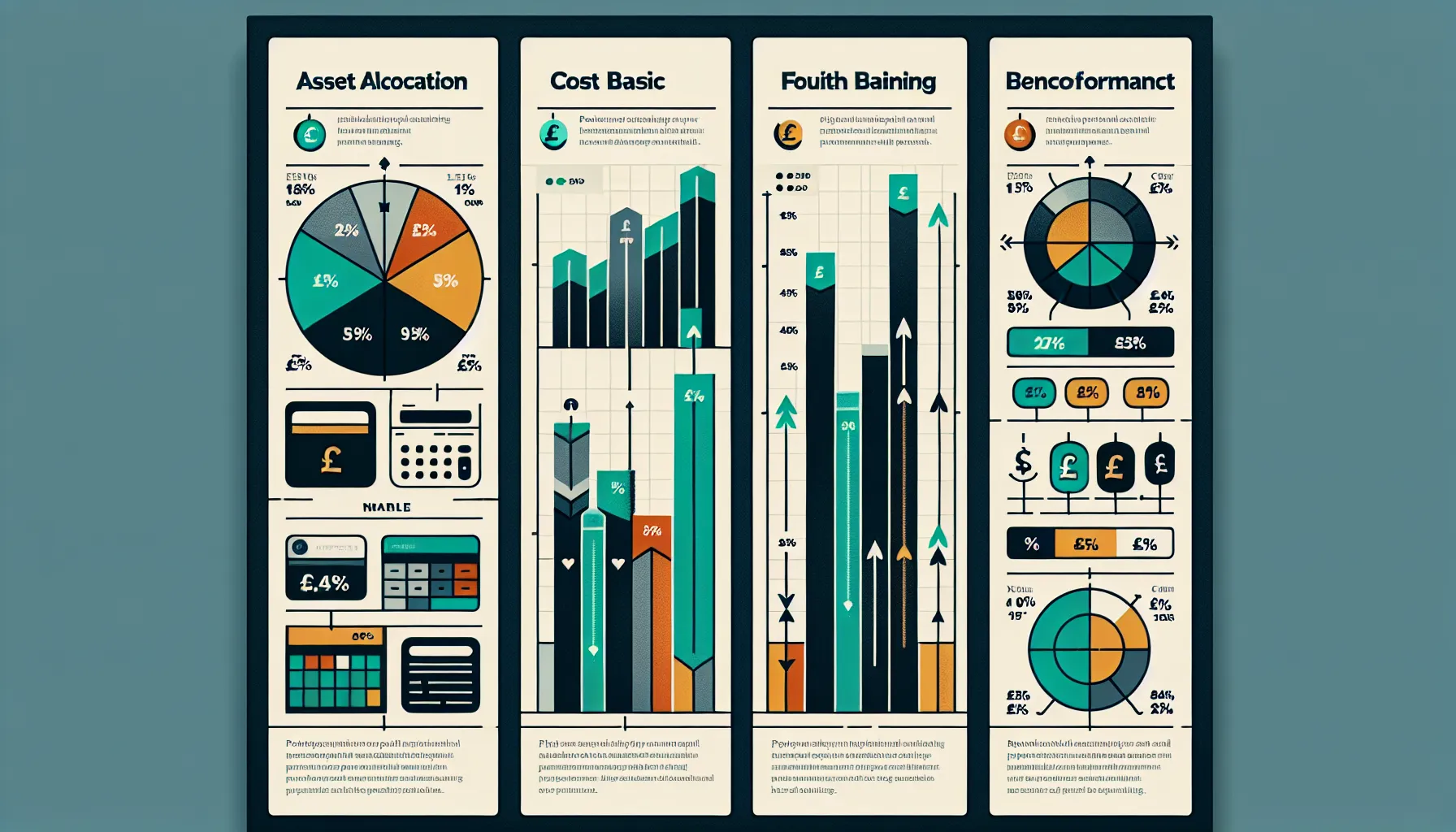
Professional portfolio management relies on specific metrics that reveal performance, risk, and strategic positioning. These measurements transform raw market data into actionable intelligence.
Total Portfolio Value and Asset Allocation
Total portfolio value represents the combined worth of all holdings at any given moment. This figure fluctuates constantly in crypto markets, making regular updates necessary for accurate assessment. But raw value alone tells an incomplete story.
Asset allocation shows how investments are distributed across different cryptocurrencies or asset types. This distribution should reflect chosen investment goals and risk tolerance. A conservative investor might maintain 70% in established coins like Bitcoin and Ethereum, with only 30% in higher-risk altcoins. An aggressive investor might flip these proportions entirely.
Monitoring allocation prevents unintended drift. When one holding surges whilst others stagnate, the portfolio’s risk profile changes without any deliberate action. Regular allocation checks catch these shifts before they become problematic, ensuring the portfolio continues reflecting its intended strategy rather than simply following market momentum.
Cost Basis and Profit/Loss Tracking
Cost basis represents the original amount paid for each cryptocurrency holding. This baseline measurement is essential for calculating actual performance. An investor who bought Bitcoin at £25,000 and now sees it trading at £30,000 has a clear 20% gain, but only if they’ve accurately recorded their cost basis.
Profit and loss (P&L) tracking builds on cost basis to show whether investments are gaining or losing value. This metric serves dual purposes: it provides immediate performance feedback and creates the documentation needed for UK tax reporting. Without accurate P&L records, investors face significant complications during tax season, potentially missing deductions or misreporting gains.
Sophisticated P&L tracking accounts for all costs, including exchange fees, network transaction costs, and any other expenses that reduce net returns. These seemingly small charges accumulate over time, and failing to incorporate them inflates apparent performance whilst understating true tax liability.
Performance Against Benchmarks
Absolute returns don’t tell the whole story. An investor celebrating a 15% annual gain might feel differently upon discovering Bitcoin itself returned 40% over the same period. Their strategy didn’t fail, but it significantly underperformed the market.
Comparing portfolio performance against relevant benchmarks provides crucial context. Bitcoin serves as the baseline benchmark for most crypto portfolios, whilst Ethereum offers comparison for those focused on smart contract platforms. Broader crypto indices capture overall market movements across multiple assets.
This contextual analysis reveals whether active management and diversification strategies are delivering value or simply adding complexity. If a carefully constructed portfolio of ten different tokens consistently underperforms Bitcoin alone, the investor might reconsider their approach. Conversely, outperformance validates strategy and builds confidence for maintaining the course through inevitable volatility.
Choosing the Right Portfolio Tracking Tools
The tracking method an investor chooses shapes their entire management experience. Different approaches offer varying levels of automation, precision, and control.
Manual Tracking Methods
Spreadsheets represent the most hands-on approach to portfolio tracking. This method grants complete control over data structure, calculations, and presentation. Investors who prefer understanding every aspect of their portfolio often gravitate toward manual tracking.
Effective spreadsheet tracking requires recording each transaction with dates, quantities, purchase prices, and associated fees. Regular updates, ideally daily or weekly, incorporate current market prices from exchanges or price aggregators. Calculated columns show current value, unrealised gains or losses, and allocation percentages.
Manual tracking demands discipline. Missing updates creates data gaps that compound over time, gradually degrading accuracy. The method also scales poorly: tracking five holdings might feel manageable, but twenty becomes burdensome. Still, for investors with modest portfolios who value transparency and control, spreadsheets remain perfectly viable.
Automated Portfolio Management Platforms
Dedicated portfolio management software eliminates much of the manual burden. These platforms range from free tools like CoinGecko or CoinMarketCap offering basic functionality to institutional-grade systems with sophisticated features.
Automated platforms typically allow investors to operate multiple portfolios simultaneously, tracking different strategies or separating personal holdings from business investments. Historical performance tracking shows how portfolios have evolved over weeks, months, or years, insights nearly impossible to generate manually without considerable effort.
Market alerts represent another valuable feature. Investors can configure notifications for significant price movements, ensuring they’re informed when positions require attention. Advanced platforms integrate directly with exchanges or trading bots, potentially executing orders automatically based on specific conditions.
The trade-off comes in reduced transparency and increased dependency. Investors must trust the platform’s data sources, calculations, and security measures. Free platforms might sell data or display advertisements, whilst premium services charge subscription fees. Nevertheless, for investors managing diverse portfolios across multiple platforms, automated tracking often proves essential for maintaining comprehensive oversight.
Setting Up Your Portfolio Tracking System
Establishing an effective tracking system requires thoughtful setup rather than rushed implementation. The initial configuration determines how useful the system proves over time.
Begin by documenting all current holdings. For each position, record the purchase date, quantity acquired, and acquisition cost. Don’t forget transaction fees, as these form part of the true cost basis. Investors with holdings scattered across exchanges, hardware wallets, and DeFi protocols should consolidate this information into a single comprehensive view.
Next, choose the tracking tool based on individual needs and technical comfort. Those managing fewer than ten positions might find spreadsheets sufficient. Investors with diverse holdings across multiple platforms should seriously consider automated solutions that can aggregate data from various sources.
Configure alerts for significant price movements once the system is operational. What constitutes ‘significant’ depends on individual risk tolerance and strategy. Conservative investors might set alerts at 10% movements, whilst those comfortable with volatility might use 20% or higher thresholds. These notifications ensure awareness without requiring constant manual monitoring.
Establish a regular review schedule, ideally weekly or monthly. Calendar reminders create accountability, transforming portfolio reviews from occasional afterthoughts into consistent practice. During these reviews, assess performance against goals, evaluate allocation drift, and identify necessary adjustments.
Finally, ensure the system captures all transaction types. Beyond simple buy and sell orders, this includes deposits and withdrawals between platforms, staking activities, yield farming returns, airdrops, and any other events affecting holdings. Incomplete transaction records create gaps that distort performance calculations and complicate tax reporting.
Advanced Portfolio Management Strategies
Once basic tracking is operational, sophisticated investors carry out strategies that actively manage risk and optimise returns.
Rebalancing Your Holdings
Rebalancing maintains portfolios aligned to their initial asset allocation and investment goals. Market movements inevitably push allocations away from their targets. A portfolio initially split 30% DeFi tokens, 40% Bitcoin, and 30% Ethereum might shift to 45% DeFi, 35% Bitcoin, and 20% Ethereum after the DeFi sector rallies.
Rebalancing addresses this drift by liquidating portions of overweight positions and reinvesting proceeds into underweight areas. In the example above, an investor would sell some DeFi tokens and purchase additional Bitcoin and Ethereum, restoring the 30/40/30 target allocation.
This strategy implements a disciplined approach of buying low and selling high. When an asset surges, rebalancing captures gains. When others lag, rebalancing increases positions at relatively lower prices. It prevents excessive concentration in any single holding, maintaining the diversification that underpins the original strategy.
Rebalancing frequency varies by investor preference. Some rebalance on fixed schedules, quarterly or annually, whilst others use threshold-based approaches, rebalancing only when allocations drift beyond specified tolerances. Both methods work: the key is maintaining consistency rather than rebalancing impulsively based on emotion.
Tax Reporting and Record Keeping
Comprehensive record-keeping serves both investment management and regulatory compliance. UK tax authorities require detailed documentation for calculating capital gains or losses on cryptocurrency disposals.
Every transaction should be recorded with complete information: dates, quantities, purchase prices, sale prices, and all associated fees. This documentation proves essential when determining which specific units were sold (important for tax calculations using methods like first-in-first-out or average cost basis).
Reliable records simplify tax filing and provide protection during audits. Investors who can produce complete transaction histories demonstrate compliance and reduce scrutiny. Those with incomplete records face significant challenges reconstructing historical activity, potentially leading to estimated assessments or penalties.
Portfolio tracking platforms that export transaction histories significantly streamline tax reporting. Many integrate with crypto tax software, automatically generating reports formatted for UK tax returns. This automation saves considerable time whilst reducing errors compared to manual compilation.
Risk Management and Diversification
Diversification reduces risk by spreading investments across different tokens and cryptocurrency types. Rather than concentrating holdings in Bitcoin alone, diversified portfolios might include Ethereum, layer-two solutions, DeFi tokens, and stablecoins. This approach reduces the impact of any single asset’s poor performance.
More sophisticated strategies employ multiple risk management techniques simultaneously. Generating staking returns through proof-of-stake cryptocurrencies provides income that can offset temporary market volatility losses. Using short positions hedges downside risk, protecting portfolios during market corrections. Derivatives such as options and futures offer additional tools for managing exposure.
Custody diversification protects against platform-specific risks. Splitting holdings between different wallets or custody providers guards against exchange hacks or provider failures. An investor might keep frequently traded assets on exchanges for liquidity, medium-term holdings in software wallets, and long-term positions in hardware wallets or institutional custody solutions.
Active management plays a central role in protecting capital through tactical positioning and real-time rebalancing. Skilled managers employ sector rotation strategies, shifting investments between different cryptocurrency sectors based on market cycles. They might use momentum trading during bull markets or adopt contrarian approaches to identify undervalued assets during downturns, actively adjusting positions as conditions evolve.
Common Portfolio Tracking Mistakes to Avoid
Even experienced investors fall into predictable traps when managing crypto portfolios. Recognising these mistakes helps avoid them.
Neglecting regular portfolio reviews tops the list. Market conditions change constantly in cryptocurrency, sometimes dramatically, sometimes subtly. Investors who check their portfolios only sporadically miss early warning signs of problems and fail to capitalise on emerging opportunities. Set specific review intervals and maintain them consistently.
Ignoring rebalancing opportunities represents another common error. Simply holding assets whilst hoping for gains is risky because no one can predict when markets will peak. An investor who watched their favourite altcoin grow from 10% to 50% of their portfolio might celebrate the gain, but they’ve also inadvertently concentrated enormous risk in a single position. When that asset eventually corrects, as volatile assets inevitably do, portfolio value suffers disproportionate damage.
Consolidating all holdings in a single wallet or exchange concentrates risk unnecessarily. Exchange hacks, platform insolvencies, and technical failures occur with uncomfortable regularity in crypto markets. Diversifying custody across multiple secure locations protects capital even if one provider encounters problems.
Tracking only price movements whilst ignoring fees and costs creates an inflated sense of performance. Exchange fees, network transaction costs, and other charges erode returns. An investor who sees 25% price appreciation but paid 5% in accumulated fees actually netted only 20%. Failing to account for these expenses overstates gains and understates tax liability.
Finally, failing to document transactions properly creates both compliance and tax complications. Reconstructing transaction histories months or years later proves extremely difficult, particularly for investors who’ve used multiple platforms. Incomplete records lead to estimated tax assessments, missed deduction opportunities, and potential penalties. Document every transaction as it occurs, making record-keeping a habit rather than a dreaded annual task.
Conclusion
Effective cryptocurrency portfolio management separates casual holders from professional-grade investors. The difference isn’t necessarily capital size or market expertise, it’s systematic tracking, strategic rebalancing, and disciplined risk management.
By implementing a robust tracking system matched to individual needs, investors gain the visibility required for well-informed choice-making. Monitoring essential metrics transforms raw data into actionable intelligence, revealing performance, identifying risks, and highlighting opportunities. Regular reviews against investment goals ensure portfolios remain aligned with objectives rather than drifting with market currents.
Combining automated tools with active oversight creates a powerful management approach. Technology handles the tedious work of data aggregation and calculation, whilst human judgement interprets results and makes strategic decisions. Meticulous record-keeping serves immediate portfolio management needs whilst building the documentation foundation for tax compliance.
Diversification strategies and tactical risk management protect capital through inevitable market volatility. Cryptocurrency’s dramatic price swings will continue, that’s the nature of the asset class. Professional portfolio management doesn’t eliminate volatility: it positions investors to navigate turbulence whilst pursuing their investment objectives systematically and confidently.
Frequently Asked Questions
How often should I track my crypto portfolio?
Ideally, you should review your crypto portfolio weekly or monthly on a scheduled basis. Since cryptocurrency markets operate 24/7 with constant price fluctuations, regular monitoring ensures your holdings remain aligned with investment goals and helps you identify rebalancing opportunities before market movements work against you.
What is portfolio rebalancing and why does it matter?
Rebalancing maintains your intended asset allocation by selling portions of overweight positions and reinvesting into underweight areas. When Bitcoin surges from 40% to 60% of your portfolio, rebalancing captures gains and prevents excessive concentration in a single asset, maintaining diversification and managing risk effectively.
What’s the difference between manual spreadsheet tracking and automated portfolio tools?
Manual spreadsheets offer complete control and transparency but require disciplined daily updates and scale poorly with larger portfolios. Automated platforms like CoinGecko eliminate manual burden, aggregate data from multiple sources, provide historical analysis, and offer market alerts, making them essential for diverse holdings across multiple exchanges.
Can I use a crypto portfolio tracker for UK tax reporting?
Yes, comprehensive portfolio tracking platforms document all transactions with dates, quantities, purchase prices, and fees—essential data for UK capital gains calculations. Many platforms export transaction histories and integrate with crypto tax software, automatically generating reports formatted for UK tax returns and simplifying compliance significantly.
How do I calculate my crypto cost basis accurately?
Your cost basis is the original amount paid for each cryptocurrency, including the purchase price plus all associated fees such as exchange charges and network transaction costs. Accurate cost basis records are essential for calculating true profit and loss and for meeting UK tax reporting requirements.
Should I keep all my cryptocurrency on one exchange or spread it across multiple wallets?
Diversify custody across multiple secure locations to protect against platform-specific risks like exchange hacks or insolvencies. Consider keeping frequently traded assets on exchanges for liquidity, medium-term holdings in software wallets, and long-term positions in hardware wallets or institutional custody solutions for optimal security and access.