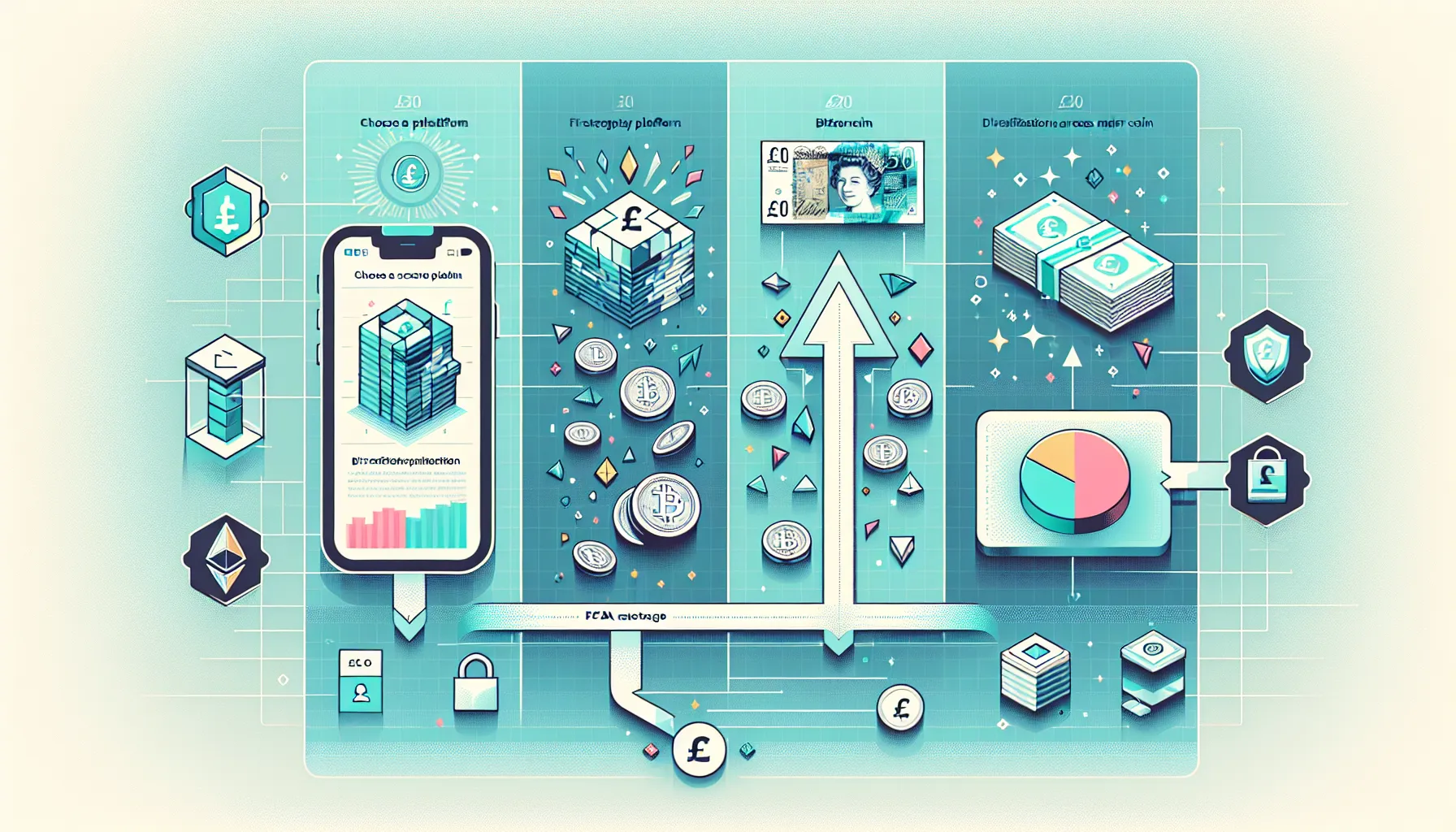
The idea that cryptocurrency investing requires thousands of pounds to get started is one of the most persistent myths keeping new investors on the sidelines. In reality, anyone with as little as £50 or $50 can begin their crypto journey today, gaining exposure to one of the most talked-about asset classes without very costly. The modern crypto landscape has evolved to welcome small investors, offering fractional purchases and user-friendly platforms that make the barrier to entry remarkably low. Starting small isn’t just possible, it’s actually a smart approach. It allows new investors to learn the ropes, test the waters, and understand market behaviour without risking significant capital. This guide walks through every step needed to confidently invest that first £50, from selecting a platform and understanding the risks to making a purchase and safely storing digital assets.
Key Takeaways
- You can start investing in crypto with only £50 or $50 thanks to fractional purchasing, allowing you to buy small portions of Bitcoin, Ethereum, or other cryptocurrencies.
- Starting with a modest amount provides valuable hands-on experience whilst limiting financial risk, making it an ideal way to learn how crypto markets and exchanges work.
- Choose a beginner-friendly crypto exchange that offers strong security features, FCA registration, low fees, and an intuitive interface for seamless transactions.
- Established coins like Bitcoin and Ethereum are safer starting points for beginners, though diversifying across two or three cryptocurrencies can help spread risk even with a small budget.
- Pound-cost averaging—investing a fixed amount regularly—is an effective strategy for building your crypto portfolio over time without trying to time the market.
- Always understand the risks: cryptocurrency investments are highly volatile, lack consumer protection, and can result in total loss, so only invest what you can afford to lose.
Why £50 Is Enough to Begin Your Crypto Journey
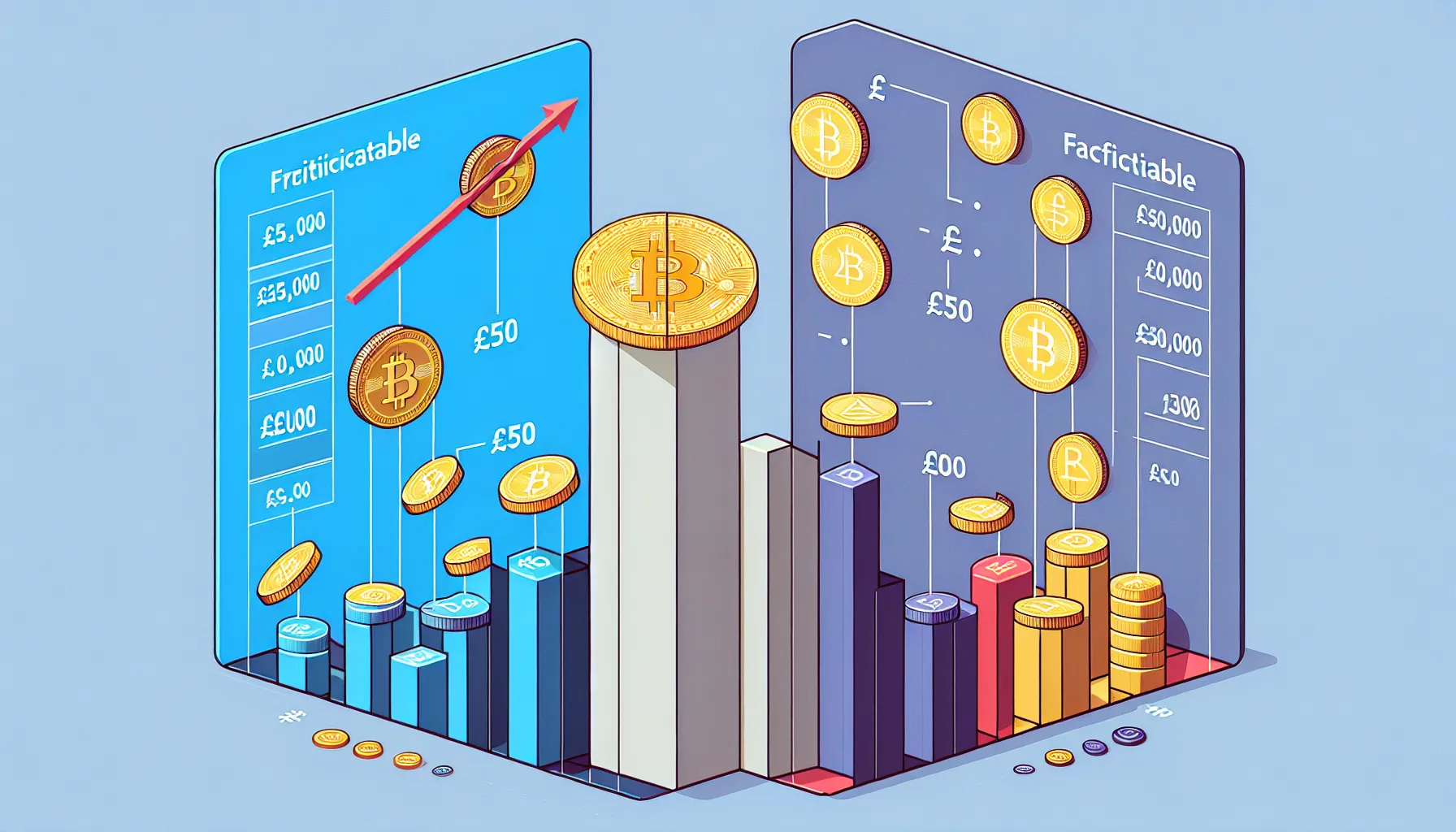
Gone are the days when buying cryptocurrency meant purchasing entire coins. When Bitcoin trades at tens of thousands of pounds, the notion of needing a full coin is understandably daunting. But here’s the thing: you don’t need to buy a whole Bitcoin, Ethereum, or any other cryptocurrency. Modern exchanges support fractional purchases, meaning you can buy a tiny slice of a coin, sometimes down to eight decimal places.
This fractional investing capability transforms £50 from a trivial amount into a genuine starting point. With that sum, an investor can own a small portion of Bitcoin, a fraction of Ethereum, or even split the amount across several different cryptocurrencies. The key benefit isn’t necessarily the immediate returns (though they can happen), but rather the educational value and practical experience gained.
Starting with a modest amount helps new investors understand how exchanges work, how prices fluctuate throughout the day, and how their own emotional responses to gains and losses play out in real time. It’s a low-stakes environment for learning, lose it all (which is always a possibility), and whilst unpleasant, it won’t devastate your finances. But the lessons learned? Those are worth far more than £50.
Another advantage of beginning small is that it removes the psychological pressure that can lead to poor decision-making. When you’ve invested £5,000, every market dip feels like a crisis. With £50, you can observe, learn, and make mistakes without panic setting in. It’s essentially paying for an education in crypto markets, and at that price, it’s remarkably good value.
Understanding the Basics Before You Invest
What Is Cryptocurrency and How Does It Work?
Before parting with any money, it helps to understand exactly what cryptocurrency is and why it exists. At its core, cryptocurrency is a digital or virtual asset that uses cryptography for security. Unlike traditional currencies issued by governments, cryptocurrencies operate on decentralised networks based on blockchain technology, a distributed ledger that records all transactions across a network of computers.
When someone buys, sells, or trades cryptocurrency, that transaction is encrypted, verified by network participants (often called miners or validators), and then permanently recorded on the blockchain. This public ledger means transactions are transparent and extremely difficult to alter or forge, which is part of what gives cryptocurrencies their value proposition.
It’s important to note that cryptocurrency isn’t legal tender in most countries, including the UK. You can’t walk into most shops and pay with Bitcoin. But, it’s widely accepted as a tradeable asset on specialist platforms called exchanges, where it can be bought and sold much like stocks or commodities. Some see it as a store of value, others as a speculative investment, and still others as the future of money itself. Whatever the perspective, understanding that crypto exists in a digital-only space and operates outside traditional banking systems is fundamental.
Key Risks to Consider With Small Investments
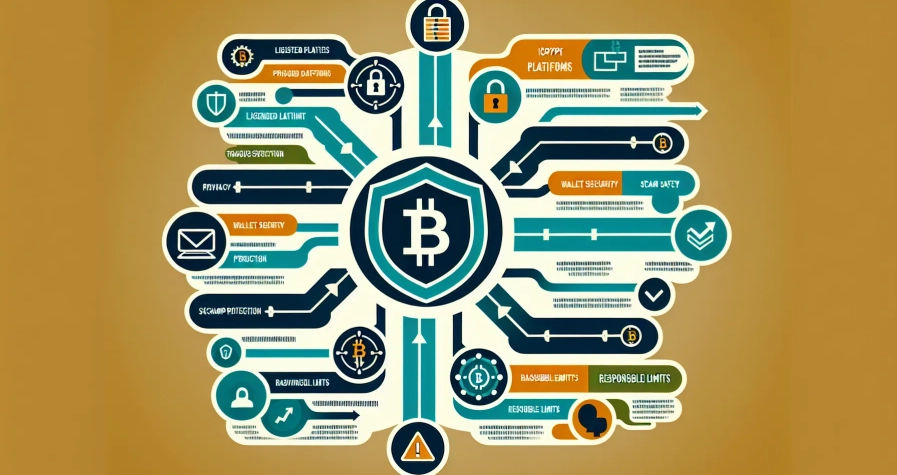
Whilst £50 might seem like a small amount to risk, going in blind is never wise. Cryptocurrency markets are notoriously volatile. Prices can swing 10%, 20%, or more in a single day, driven by everything from regulatory news to social media posts. This volatility cuts both ways, spectacular gains are possible, but so are rapid losses.
Security is another major concern. Crypto exchanges and wallets can be targeted by hackers, and scams abound. Phishing attacks, fake platforms, and Ponzi schemes have cost investors millions. Even legitimate platforms can face security breaches, and if an exchange is hacked, there’s often no recourse for recovering lost funds.
Unlike traditional bank accounts or investment products, cryptocurrency investments come with no consumer protection. If you lose your investment due to a hack, a collapsed exchange, or simply a bad trade, there’s no Financial Services Compensation Scheme to bail you out. You can lose your entire investment, and that risk exists whether you’re investing £50 or £50,000.
There are also regulatory and tax considerations. In the UK, cryptocurrency gains may be subject to Capital Gains Tax, depending on your total gains in a tax year. Even small investors should keep records of transactions, as HMRC takes crypto taxation seriously. Understanding these risks doesn’t mean avoiding crypto altogether, it just means going in with eyes open and managing expectations.
Choosing the Right Crypto Exchange for Beginners
Features to Look for in a Beginner-Friendly Platform
Not all crypto exchanges are created equal, and choosing the right one can make the difference between a seamless process and a frustrating ordeal. For beginners working with small amounts, certain features should be prioritised.
First, security is non-negotiable. Look for platforms that offer two-factor authentication (2FA), which adds an extra layer of protection beyond just a password. Reputable exchanges will also store the majority of user funds in “cold storage”, offline wallets that are much harder for hackers to access.
Regulatory compliance is another green flag. In the UK, crypto exchanges should be registered with the Financial Conduct Authority (FCA) for anti-money laundering purposes. Whilst this doesn’t guarantee safety, it does indicate the platform meets certain baseline standards.
User experience matters, especially for newcomers. A cluttered, confusing interface can lead to mistakes, buying the wrong coin, entering the wrong amount, or misunderstanding fees. Beginner-friendly platforms often feature intuitive navigation, clear labelling, and educational resources like guides, glossaries, or tutorial videos.
Finally, consider the range of available cryptocurrencies. Some platforms offer only the major coins like Bitcoin and Ethereum, whilst others provide access to hundreds of altcoins. For someone starting with £50, having options for diversification, even on a small scale, can be valuable.
Understanding Fees and Minimum Investment Requirements
Fees can quietly erode returns, so it pays to compare platforms carefully. Most exchanges charge a combination of trading fees (a percentage of each buy or sell transaction), deposit fees (for adding funds to your account), and withdrawal fees (for moving crypto off the platform or cashing out).
Trading fees typically range from 0.1% to 2% per transaction, though some platforms offer discounted rates for higher volumes or for using their native tokens. Deposit fees vary depending on payment method, bank transfers are often free or low-cost, whilst credit or debit card deposits may carry a premium of 2%–4%.
Withdrawal fees can be particularly sneaky. Some platforms charge a flat fee for withdrawing crypto, which can be proportionally significant on a small investment. If you’re only investing £50, a £5 withdrawal fee represents 10% of your capital, an immediate loss before any market movement.
Minimum investment requirements are generally low on mainstream exchanges, often as little as £10 or even £1 for certain coins. This makes £50 a perfectly viable starting amount on most platforms. But, always check the specifics for your chosen exchange and the particular cryptocurrency you want to buy, as minimums can vary.
Setting Up Your First Crypto Account
Once you’ve selected an exchange, setting up an account is typically straightforward, though it does require a bit of patience due to identity verification requirements.
The process usually begins with basic registration, providing an email address, creating a password, and agreeing to terms of service. You’ll then need to verify your email, often by clicking a link sent to your inbox.
Next comes Know Your Customer (KYC) verification, a regulatory requirement for most legitimate exchanges. You’ll be asked to provide personal information such as your full name, date of birth, address, and sometimes your National Insurance number. You’ll also need to upload identification documents, typically a passport, driving licence, or national ID card, and sometimes a selfie or video to prove you’re the person on the ID.
This verification process can take anywhere from a few minutes to a few days, depending on the platform and current demand. It might feel invasive, but it’s a necessary part of operating within legal frameworks and helps protect against fraud and money laundering.
Once your account is verified, you can deposit funds. Most exchanges accept bank transfers, debit cards, or credit cards. Bank transfers (via Faster Payments in the UK) are usually free or low-cost and arrive within minutes to a few hours. Card payments are faster but often come with higher fees.
After your funds appear in your exchange account, you’re ready to make your first purchase. It’s worth taking a moment to explore the platform, check out any educational resources, and familiarise yourself with the interface before diving in.
Deciding Which Cryptocurrencies to Buy With £50
Starting With Established Coins vs. Altcoins
With £50 to invest, the question quickly becomes: which cryptocurrencies should a beginner buy? The answer depends on risk tolerance, investment goals, and how much research you’re willing to do.
Established coins like Bitcoin and Ethereum are often recommended for beginners. Bitcoin, the first and most well-known cryptocurrency, is frequently described as “digital gold”, a store of value with the highest market capitalisation and liquidity. Ethereum, the second-largest by market cap, powers a vast ecosystem of decentralised applications and smart contracts. Both have demonstrated resilience over years of market cycles, and their high liquidity means they’re easy to buy and sell.
The trade-off with these established coins is that they’re less likely to deliver explosive short-term gains compared to smaller, newer projects. If Bitcoin doubles in value, that’s a significant return, but some investors chase the allure of altcoins that might 10x or more.
Altcoins, essentially any cryptocurrency that isn’t Bitcoin, range from well-established projects like Cardano, Solana, and Polkadot to obscure tokens with tiny market caps and uncertain futures. The potential for high returns is real, but so is the risk. Many altcoins have failed entirely, leaving investors with worthless tokens.
For someone investing £50, there’s an argument for sticking with the safety of Bitcoin or Ethereum, at least initially. The goal at this stage is learning and gaining exposure, not necessarily hitting a home run. That said, there’s nothing wrong with allocating a portion to an altcoin if you’ve researched it and understand the risks.
Diversification Strategies for Small Budgets
Diversification is a core principle of investing, and it applies even with modest sums like £50. Rather than putting all your money into a single cryptocurrency, consider splitting it across two or three different coins.
For example, you might allocate £25 to Bitcoin, £15 to Ethereum, and £10 to a smaller altcoin you’ve researched. This approach reduces the impact of any single coin’s poor performance whilst still giving you exposure to different segments of the crypto market.
Of course, diversification with £50 has practical limits. Transaction fees can eat into your capital if you’re making multiple small purchases, so you’ll need to balance the desire to spread risk with the reality of costs. Some platforms offer bundles or index-like products that provide diversified exposure in a single transaction, which can be a cost-effective option for small investors.
Another approach is to start with a single coin and diversify over time as you add more funds. There’s no rule that says you must diversify immediately, sometimes simplicity is better when you’re still learning the ropes.
Making Your First £50 Crypto Purchase
With your account funded and your research done, it’s time to make your first purchase. The process is surprisingly simple on most platforms, though the exact steps vary slightly depending on the exchange.
Navigate to the “Buy” or “Trade” section of the platform. You’ll typically see a list of available cryptocurrencies, often with current prices and charts showing recent performance. Select the coin you want to buy, let’s say Bitcoin for this example.
You’ll then enter the amount you want to purchase. Most exchanges let you specify either the amount of fiat currency (e.g., £50) or the amount of cryptocurrency (e.g., 0.001 BTC). Entering your budget in pounds is usually simpler for beginners. The platform will show you exactly how much crypto you’ll receive after fees.
Before confirming, double-check the details: the correct cryptocurrency, the correct amount, and the total cost including fees. Crypto transactions are irreversible, so it’s worth taking an extra moment to be sure.
Once you confirm the purchase, the transaction is processed almost immediately. Your newly acquired cryptocurrency will appear in your exchange wallet or account balance, usually within seconds to a few minutes. Congratulations, you’re now a crypto investor.
It’s normal to feel a mix of excitement and nervousness after your first purchase. The price will likely fluctuate from the moment you buy it, and seeing those changes in real time can be unnerving. Resist the urge to check constantly or to panic-sell at the first dip. Remember, this is a learning experience, and volatility is part of the crypto landscape.
Storing Your Crypto Safely on a Limited Budget
Once you’ve bought cryptocurrency, the next question is where to keep it. The answer depends on how much security and control you want versus how much convenience matters.
The simplest option is to leave your crypto in the exchange wallet where you bought it. This is convenient, you can easily trade, sell, or buy more without transferring funds. But, keeping crypto on an exchange means you don’t truly control it. If the exchange is hacked, goes bankrupt, or freezes accounts, your funds could be at risk. There’s a saying in crypto: “Not your keys, not your coins.”
For more control, you can transfer your crypto to a private wallet. Hot wallets, software wallets that connect to the internet, offer a middle ground. They give you control of your private keys (the cryptographic passwords that prove ownership) whilst remaining accessible for transactions. Popular hot wallets include apps and browser extensions that are free to use. The trade-off is that they’re still online and hence vulnerable to hacking if your device is compromised.
For maximum security, especially as your holdings grow, a hardware wallet (or cold wallet) is ideal. These are physical devices that store your private keys offline, making them nearly immune to online attacks. But, they do cost money, typically £50 to £150, which might not make sense for someone with only £50 invested. As your portfolio grows, though, a hardware wallet becomes a worthwhile investment.
For a £50 starter investment, leaving funds on a reputable, secure exchange is perfectly reasonable, especially if you plan to trade or add more funds soon. Just be aware of the risks and consider moving to a private wallet as your investment grows.
Building Your Portfolio Over Time
Starting with £50 is just that, a start. The real value comes from building on that foundation over time, learning from experience, and gradually increasing your exposure as your confidence and knowledge grow.
One effective strategy for growing a crypto portfolio is pound-cost averaging (sometimes called dollar-cost averaging). This involves investing a fixed amount at regular intervals, say, £50 every month, regardless of the current price. This approach smooths out the impact of volatility. You’ll buy more crypto when prices are low and less when prices are high, reducing the risk of investing a lump sum right before a market crash.
Pound-cost averaging also removes the emotional burden of trying to “time the market.” Predicting short-term price movements is notoriously difficult, even for experienced traders. By committing to regular, consistent investments, you take emotion out of the equation and focus on long-term accumulation.
As your portfolio grows, revisit your diversification strategy. What made sense with £50 might need adjusting when you have £500 or £5,000 invested. You might explore new cryptocurrencies, rebalance your holdings, or move funds into more secure storage solutions.
It’s also worth staying educated. The crypto space evolves rapidly, with new projects, technologies, and regulations emerging regularly. Follow reputable news sources, join communities (with a healthy dose of scepticism), and continue learning about blockchain technology, market dynamics, and investment principles.
Finally, remember that crypto should be just one part of a broader financial strategy. It’s a high-risk, high-reward asset class that shouldn’t represent your entire investment portfolio. Traditional savings, pensions, and diversified investments all have their place alongside any crypto holdings.
Conclusion
Starting a crypto investment journey with just £50 or $50 is not only possible, it’s a smart, measured way to enter a complex and rapidly evolving market. The barriers that once made cryptocurrency investing the preserve of the wealthy or the tech-savvy have largely disappeared, replaced by user-friendly platforms, fractional purchasing, and a wealth of educational resources.
This modest starting point offers something more valuable than immediate returns: education. It provides hands-on experience with how exchanges work, how markets move, and how to manage the psychological ups and downs of investing in a volatile asset class. The risks are real, volatility, security threats, and the possibility of total loss, but with £50, those risks are contained and manageable.
The key is to approach it with the right mindset. This isn’t a get-rich-quick scheme, but rather the first step in a learning journey. By choosing a reputable exchange, understanding the basics, making informed decisions about which coins to buy, and storing assets securely, new investors lay a solid foundation for future growth.
Whether that £50 grows into a substantial portfolio or simply serves as a valuable lesson in a new asset class, the experience gained is worth the price of entry. The crypto market isn’t going anywhere, and getting started, even in a small way, puts you ahead of those still sitting on the sidelines, waiting for the “perfect” moment that may never come.
Frequently Asked Questions
Can you really start investing in crypto with only £50?
Yes, absolutely. Modern crypto exchanges support fractional purchases, allowing you to buy a small portion of Bitcoin, Ethereum, or other cryptocurrencies. You don’t need to purchase entire coins, making £50 a perfectly viable starting point for beginners.
What are the main risks of investing £50 in cryptocurrency?
The primary risks include extreme price volatility, potential security breaches on exchanges, scams, and the lack of consumer protection. You could lose your entire investment, and unlike traditional bank accounts, there’s no Financial Services Compensation Scheme to recover lost funds.
Should I buy Bitcoin or altcoins with my first £50 investment?
Beginners are generally advised to start with established coins like Bitcoin or Ethereum. They’re more stable and liquid than altcoins. However, you could diversify by splitting your £50 across two or three cryptocurrencies to reduce risk whilst gaining broader market exposure.
How do crypto exchange fees affect small investments?
Exchange fees can significantly impact small investments. Trading fees typically range from 0.1% to 2%, whilst withdrawal fees can be proportionally large on £50 investments. Always compare fee structures across platforms, as bank transfers are usually cheaper than card deposits.
Is it better to leave my crypto on an exchange or use a wallet?
For small amounts like £50, leaving funds on a reputable, secure exchange is convenient and reasonable. As your portfolio grows, consider transferring to a private wallet for greater security and control, though hardware wallets may not be cost-effective for very small holdings initially.
Do I need to pay tax on crypto investments in the UK?
Yes, cryptocurrency gains may be subject to Capital Gains Tax in the UK, depending on your total gains in a tax year. HMRC requires investors to keep records of all transactions, even for small investments, so proper documentation is essential from the start.