Losing access to a crypto wallet can be one of the most distressing experiences for any digital asset holder. Unlike traditional banking, where a simple password reset or customer service call can restore access, crypto wallets operate on decentralised principles that place full responsibility, and control, in the hands of the user. This means that forgetting a password, misplacing a recovery phrase, or losing a device can potentially result in permanent loss of funds. But, the situation isn’t always hopeless. The ability to restore access to a locked or lost crypto wallet largely depends on the type of wallet being used, the specific lock-out scenario, and, most critically, whether proper recovery information was backed up during the wallet’s initial setup. This guide walks through the most common lock-out situations, provides step-by-step restoration methods, and offers practical advice on preventing future loss. Whether someone has forgotten their PIN, lost their device, or misplaced their seed phrase, understanding the available recovery pathways can make the difference between regaining control and losing assets forever.
Key Takeaways
- Restoring access to your lost or locked crypto wallet depends on whether you backed up your recovery phrase, password, or wallet file during setup.
- The seed phrase (12 or 24 words) is the master key to non-custodial wallets and cannot be reset or recovered without proper storage.
- Forgetting a PIN or password can often be resolved by restoring the wallet using your recovery phrase on the same or a new device.
- If you’ve lost your recovery phrase entirely, professional recovery services may help if partial information exists, but success is never guaranteed.
- Custodial wallets and exchanges offer traditional password resets through identity verification, making recovery easier but introducing counterparty risk.
- Preventing future lock-outs requires secure backup strategies, such as writing down your recovery phrase on paper, storing it offline in multiple locations, and using hardware wallets for added security.
Understanding Common Crypto Wallet Lock-Out Scenarios
Before attempting any recovery process, it’s essential to identify the exact scenario that led to the lock-out. Each situation requires a different approach, and knowing which category applies will streamline the restoration effort.
Lost Password or PIN
Forgetting a wallet password or PIN is perhaps the most common lock-out scenario. Passwords are typically used to encrypt and protect access to the wallet on a specific device, but they aren’t the ultimate key to the funds themselves. For most non-custodial wallets, the password cannot be reset through a conventional “forgot password” process. Instead, users will need their recovery phrase, a string of 12 or 24 words generated when the wallet was first created, to regain access. Without this phrase, simply forgetting a password can become a serious problem, especially if the wallet was set up without proper backup procedures.
Misplaced Recovery Phrase
The recovery phrase, also known as a seed phrase or mnemonic phrase, is the master key to any non-custodial wallet. If this phrase is lost and the device becomes inaccessible, recovery is nearly impossible. Unlike passwords, recovery phrases cannot be reset, recovered from a service provider, or guessed. They are derived from cryptographic algorithms and must be stored securely by the user. Unfortunately, many individuals either fail to write down their recovery phrase during wallet setup or store it insecurely, such as in an unencrypted digital file, which can lead to irreversible loss if the phrase is compromised or deleted.
Device Failure or Loss
Hardware malfunctions, stolen devices, or accidental damage can all lead to losing access to a wallet. But, if the user still possesses their recovery phrase or a backup wallet file (such as wallet.dat used by Bitcoin Core), restoration is generally straightforward. The wallet can be reinstalled on a new device, and funds can be recovered by importing the seed phrase or backup file. This scenario highlights the importance of decoupling wallet access from a single device and ensuring that recovery information is stored separately and securely.
Preparing Your Recovery Information Before You Begin
Successful wallet restoration hinges on having the right recovery materials at hand. Before diving into any technical steps, users should gather and verify the information they possess.
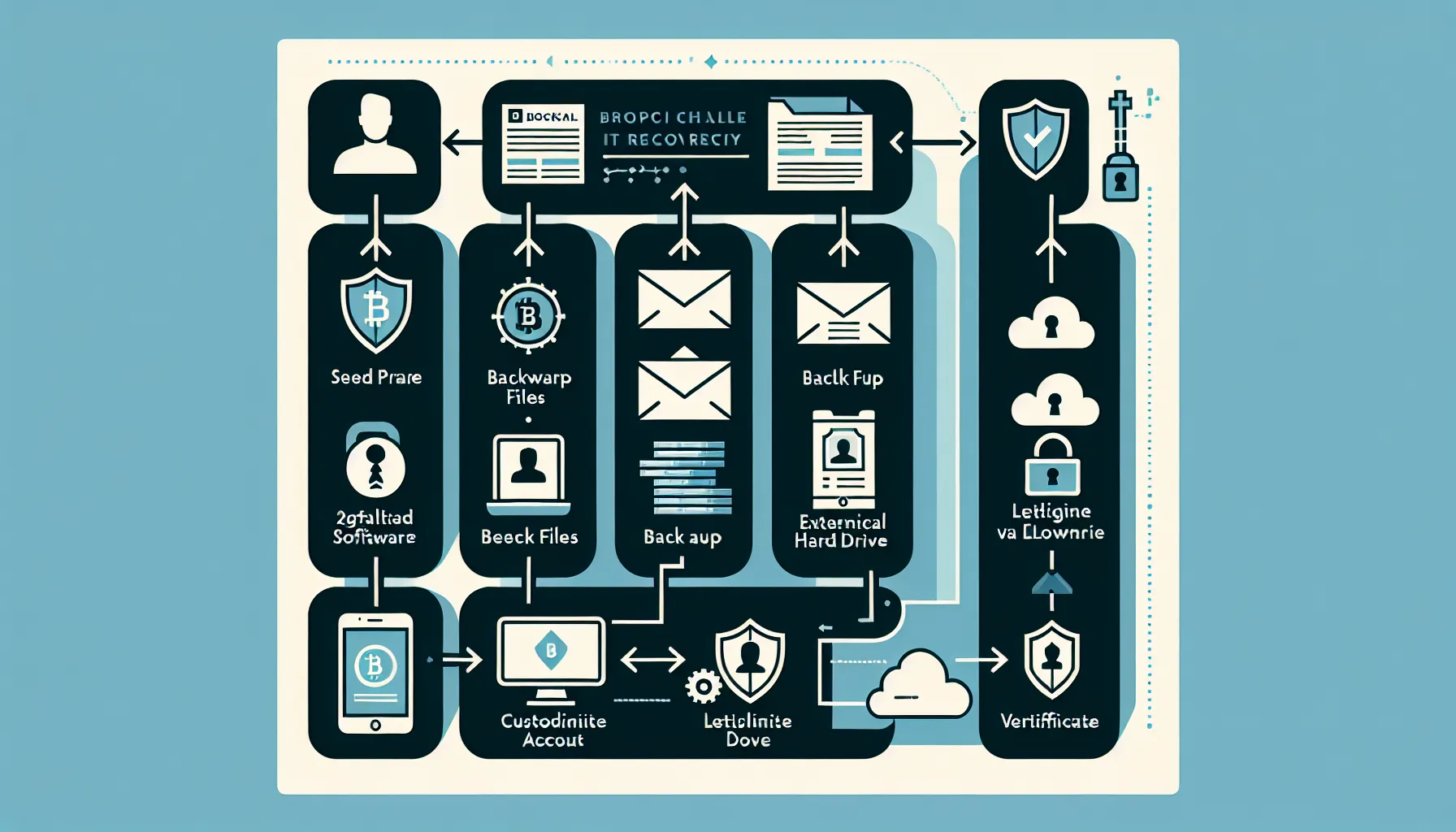
The most critical piece of recovery information is the seed or recovery phrase. This is a sequence of words, usually 12 or 24, that was generated when the wallet was first set up. It should have been written down on paper and stored in a secure, offline location. Digital storage, such as screenshots or text files saved on a computer or cloud service, is highly discouraged due to the risk of hacking or accidental deletion.
Plus to the seed phrase, some wallets use backup files. For example, desktop wallets like Bitcoin Core generate a wallet.dat file that contains private keys. If this file was backed up to an external drive or encrypted storage medium, it can be used to restore the wallet even without the seed phrase.
For custodial wallets or exchange accounts, recovery information might include account credentials, email addresses, two-factor authentication (2FA) backup codes, and identity verification documents. These platforms manage the private keys on behalf of users, so the recovery process involves proving identity to the service provider rather than relying solely on cryptographic data.
Before proceeding, it’s also wise to ensure that any software being used is legitimate and up to date. Phishing attempts often mimic wallet recovery tools, so users should download wallet apps only from official sources and double-check URLs and app store listings.
Step-by-Step Guide to Restoring Wallet Access
Once the necessary recovery information has been gathered, the restoration process can begin. The exact steps will vary depending on the wallet type and the nature of the lock-out.
Recovering Access Using Your Seed Phrase
Restoring a wallet with a seed phrase is the most common and straightforward recovery method for non-custodial wallets. First, the user should download the official wallet application associated with their wallet type, whether it’s a software wallet like Exodus, Electrum, or Trust Wallet, or a hardware wallet interface like Ledger Live or Trezor Suite.
Upon opening the app, there will typically be an option to “restore,” “import,” or “recover” an existing wallet. Selecting this option will prompt the user to enter their recovery phrase. It’s crucial to input the words in the exact order they were originally provided, as even a single mistake will prevent successful recovery. Some wallets also support passphrases, an optional additional word or phrase that adds a layer of security. If a passphrase was used during setup, it must be entered along with the seed phrase.
Once the phrase is entered correctly, the wallet software will regenerate the private keys and restore access to the funds. This process is usually instantaneous, though it may take a few moments for the wallet to sync with the blockchain and display the correct balance.
Resetting Your Wallet Password or PIN
In most non-custodial wallets, the password or PIN is device-specific and cannot be reset without the seed phrase. If a user forgets their password but still has access to the device, the wallet app may offer a “reset” or “restore” option that requires entering the recovery phrase to unlock the wallet and set a new password.
Custodial wallets and exchange platforms, on the other hand, may offer traditional password reset options via email or SMS verification. These services control the private keys, so they can help password recovery through identity verification processes. Users should follow the platform’s official password reset procedures and be prepared to provide identification documents if required.
Restoring on a New Device
If the original device is lost, stolen, or damaged, restoring the wallet on a new device is often necessary. The process is similar to recovering via seed phrase. After installing the wallet software on the new device, the user selects the “restore from backup” or “import wallet” option and enters their seed phrase or uploads a backup file.
For hardware wallets, the process involves connecting the new device and following the on-screen prompts to restore from the recovery phrase. The hardware wallet will regenerate the keys and allow access to the funds. It’s worth noting that restoring a wallet on a new device doesn’t transfer funds, it simply provides access to the same blockchain addresses controlled by the original private keys.
What to Do When You’ve Lost Your Recovery Phrase
Losing a recovery phrase is one of the most challenging situations a crypto user can face. Without it, traditional recovery methods won’t work, and options become extremely limited.
Exploring Partial Phrase Recovery Options
In some cases, users may have partial information, perhaps a fragment of the seed phrase, a damaged piece of paper with some words visible, or a vague memory of the phrase’s structure. Professional recovery services have emerged to address these scenarios. These services use cryptographic techniques and computational power to attempt reconstruction of incomplete phrases.
The success of such services depends on how much information is available. If most of the words are known and only one or two are missing, recovery is more feasible. But, if large portions of the phrase are missing or the order is completely unknown, the computational difficulty increases exponentially, and recovery becomes unlikely.
Users considering professional recovery services should research thoroughly. Reputable providers will never ask for payment upfront and will typically work on a contingency basis, charging a fee only if recovery is successful. It’s also crucial to verify the legitimacy of any service, as scams are common in this space.
When Recovery Is Not Possible
Unfortunately, there are situations where recovery simply cannot be achieved. If the recovery phrase, private key, and wallet backup file are all lost or destroyed, and the device is inaccessible, the funds are permanently unrecoverable. This is an inherent feature, not a bug, of decentralised cryptocurrency systems. No central authority can override the cryptographic security, which means no one, including the wallet developers, can retrieve lost funds.
This harsh reality underscores the importance of proper backup practices. While the finality of loss can be devastating, it also highlights the security and autonomy that crypto wallets provide. Users have complete control, which comes with complete responsibility.
Working With Custodial Wallets and Exchange Support
Custodial wallets and cryptocurrency exchanges operate differently from non-custodial wallets. In these platforms, the service provider holds the private keys on behalf of the user, which means recovery processes are more similar to traditional online accounts.
If access to an exchange account or custodial wallet is lost, the first step is to contact the provider’s customer support team. Most platforms offer account recovery options through email verification, SMS codes, or two-factor authentication resets. Users may be asked to verify their identity by providing government-issued ID, proof of address, or answers to security questions.
After identity verification, the support team can reset passwords, disable compromised 2FA devices, or unlock accounts that have been frozen due to suspicious activity. The process can take anywhere from a few hours to several days, depending on the platform’s policies and the complexity of the case.
It’s important to note that while custodial solutions offer easier recovery, they also introduce counterparty risk. Users must trust that the platform will safeguard their funds and honour withdrawal requests. For this reason, many experienced crypto users prefer non-custodial wallets even though the added responsibility.
Preventing Future Wallet Lock-Outs
The best recovery strategy is prevention. By adopting robust security and backup practices, users can minimise the risk of future lock-outs and avoid the stress and potential loss associated with wallet recovery.
Secure Backup Strategies
The foundation of wallet security is a well-protected recovery phrase. Users should write it down on paper, never typing it into a computer or storing it in the cloud, and keep multiple copies in secure, geographically separated locations. Some users opt to engrave their seed phrase on metal plates, which are resistant to fire, water, and physical damage.
Wallet backup files, such as wallet.dat, should also be stored on external drives or encrypted USB devices. These backups should be updated periodically, especially if new addresses or keys are generated.
Password managers can help users maintain strong, unique passwords for custodial accounts without the risk of forgetting them. But, the password manager itself should be secured with a master password and two-factor authentication.
Using Multi-Signature and Additional Security Layers
Multi-signature (multisig) wallets require multiple private keys to authorise a transaction, distributing control and reducing the risk of a single point of failure. For example, a 2-of-3 multisig setup might require two out of three keys to spend funds, allowing for recovery even if one key is lost.
Hardware wallets offer another layer of security by keeping private keys offline and away from potentially compromised devices. Even if a computer is infected with malware, the hardware wallet’s keys remain secure.
Regularly reviewing and testing backup procedures is also wise. Users should periodically verify that their recovery phrases work and that backup files are intact and accessible. This proactive approach can prevent unpleasant surprises when recovery is actually needed.
Conclusion
Restoring access to a lost or locked crypto wallet is possible in many cases, but success depends almost entirely on whether the user has backed up their recovery information. Seed phrases, backup files, and secure storage practices form the backbone of wallet security and recovery. While custodial wallets and exchanges offer more traditional recovery pathways, non-custodial wallets place the burden, and the power, squarely on the user.
For those facing a lock-out, identifying the scenario, gathering available recovery materials, and following the appropriate restoration steps can often restore access. But, when recovery information is completely lost, options are limited, and professional services may offer a last resort, though success is never guaranteed.
Eventually, the best defence against wallet lock-outs is a disciplined approach to backup and security from day one. By taking the time to securely store recovery phrases, use hardware wallets, and carry out additional security layers like multi-signature setups, users can protect their digital assets and avoid the anxiety and potential loss that comes with being locked out. In the world of cryptocurrency, where control and responsibility are decentralised, a little preparation goes a long way.
Frequently Asked Questions
What should I do if I’ve forgotten my crypto wallet password?
If you’ve forgotten your wallet password, you’ll need your recovery phrase to regain access. Most non-custodial wallets don’t offer traditional password resets. Instead, restore your wallet using your 12 or 24-word seed phrase through the wallet’s recovery option.
Can I recover my crypto wallet without the seed phrase?
Recovery without a seed phrase is extremely difficult and often impossible. If you have partial phrase information, professional recovery services may help reconstruct it using cryptographic techniques. However, if the phrase is completely lost, your funds are likely unrecoverable.
How do I restore my crypto wallet on a new device?
To restore your wallet on a new device, download the official wallet application, select the ‘restore’ or ‘import wallet’ option, and enter your recovery phrase in the correct order. The software will regenerate your private keys and provide access to your funds.
What is the difference between custodial and non-custodial wallet recovery?
Custodial wallets allow password resets through customer support and identity verification, as the provider controls your keys. Non-custodial wallets require your recovery phrase, placing full responsibility on you with no central authority able to assist with recovery.
How can I prevent losing access to my crypto wallet in future?
Write your recovery phrase on paper and store multiple copies in secure, separate locations. Consider metal backup plates for durability, use hardware wallets for enhanced security, and regularly test your backup procedures to ensure they work properly.
Are crypto wallet recovery services legitimate and safe to use?
Reputable recovery services exist and work on contingency, charging only if successful. However, scams are common, so research thoroughly before engaging any service. Never pay upfront fees, and verify the provider’s legitimacy through trusted community reviews and recommendations.