The cryptocurrency market is notoriously volatile, with prices swinging dramatically in short periods. Behind these wild movements lies something far more human: emotion. Unlike traditional markets, crypto trading operates around the clock, driven by a global community of investors whose collective mood, fear, greed, optimism, or panic, can send Bitcoin soaring or crashing within hours.
For beginners, understanding market sentiment is just as crucial as reading charts or following news. It’s the invisible hand that often determines whether traders buy, sell, or hold. When fear grips the market, sell-offs accelerate. When greed takes over, prices can rally to unsustainable heights. Learning to read these emotional undercurrents offers a powerful edge, helping traders anticipate trends and avoid costly mistakes.
This guide introduces the concept of crypto market sentiment, explores how fear and greed shape trading behaviour, and explains practical tools, like the Crypto Fear & Greed Index, that can help beginners navigate this emotional landscape with greater confidence.
Key Takeaways
- Crypto market sentiment reflects the collective emotional mood of traders and is a powerful force driving price movements in the absence of traditional value anchors.
- Understanding fear and greed helps traders anticipate market trends, avoid panic selling during downturns, and recognise when optimism may be inflating prices unsustainably.
- The Crypto Fear & Greed Index quantifies market sentiment on a scale from 0 to 100, using data from volatility, trading volume, social media, and Bitcoin dominance to provide actionable insights.
- Monitoring sentiment indicators like social media analysis, trading volume, and price momentum allows beginners to develop a nuanced understanding of emotional market forces.
- Successful traders combine crypto market sentiment analysis with technical and fundamental research rather than relying on sentiment alone to make informed decisions.
- Common mistakes include reacting impulsively to hype, over-relying on a single indicator, and ignoring broader market context when interpreting fear and greed signals.
What Is Crypto Market Sentiment and Why Does It Matter?
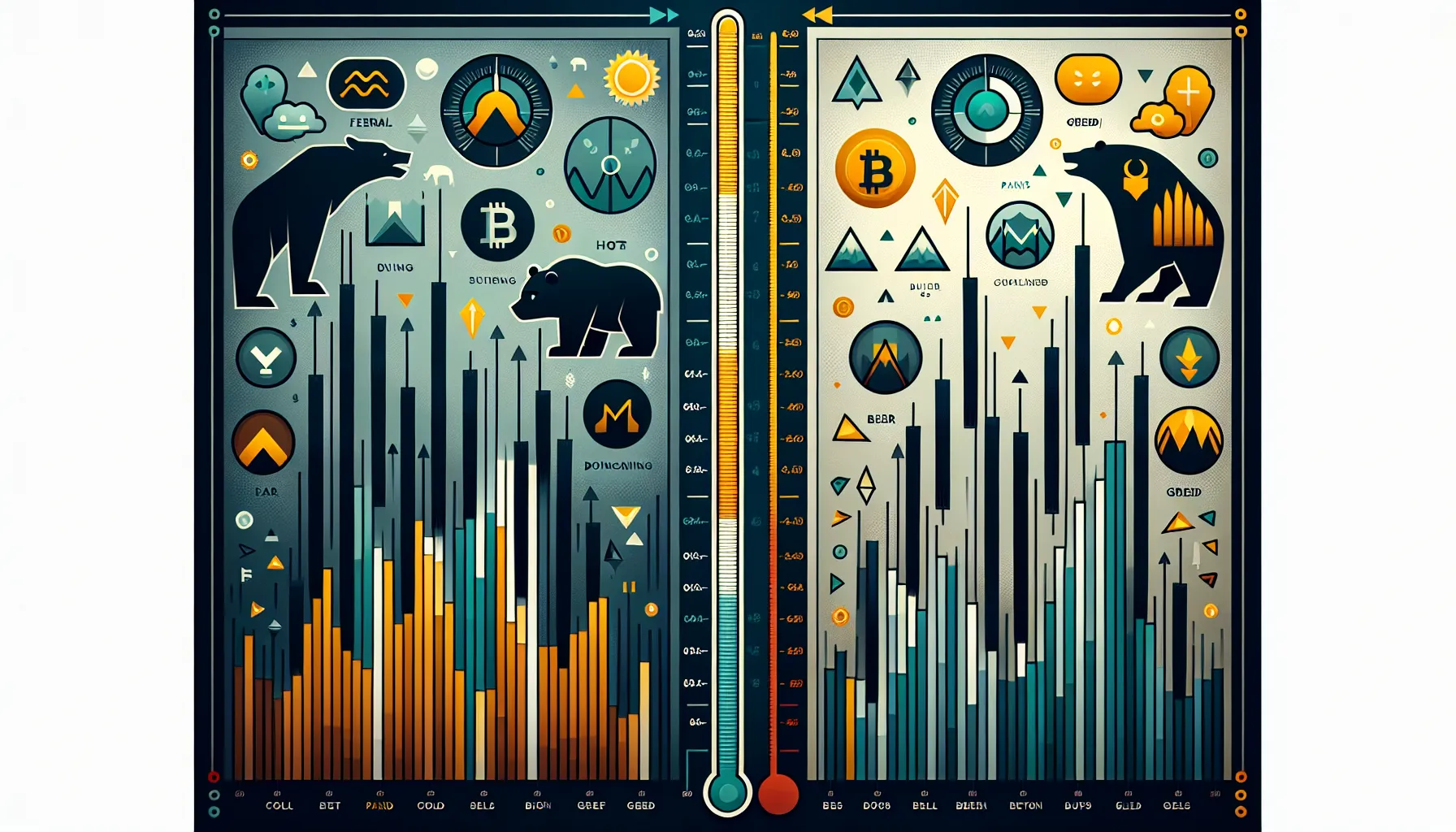
Crypto market sentiment refers to the overall attitude or mood of traders and investors towards cryptocurrencies at any given time. It’s a collective emotional snapshot, optimistic, pessimistic, fearful, or euphoric, that reflects how participants feel about the market’s direction.
Unlike traditional assets, cryptocurrencies lack intrinsic anchors like earnings reports or dividends. This makes sentiment an especially powerful force. Price movements often stem less from fundamental value and more from how traders perceive upcoming trends, news, or regulatory shifts.
Sentiment matters because it directly influences trading behaviours and price action. When the mood turns negative, investors may liquidate holdings en masse, triggering sharp declines. Conversely, widespread optimism can fuel aggressive buying and rapid rallies. In essence, sentiment acts as both a mirror and a driver of market trends.
For beginners, recognising sentiment helps answer critical questions: Is the market overheating? Are traders panicking for valid reasons, or is this an overreaction? By gauging the emotional temperature, traders can make more informed decisions, avoid herd behaviour, and potentially identify opportunities others miss.
Understanding Fear and Greed in Cryptocurrency Markets
Fear and greed are the twin engines of the crypto market. These primal emotions drive decision-making, often overriding logic and analysis. Understanding how each operates is fundamental to reading market sentiment.
Fear manifests when uncertainty or negative developments grip the market. Traders become risk-averse, worried about losing capital. This emotion tends to accelerate sell-offs, suppress buying interest, and create downward price pressure. Fear doesn’t emerge from nowhere, it’s typically triggered by events such as regulatory crackdowns, security breaches, or sustained price declines.
Greed, on the other hand, fuels bullish behaviour. When prices rise and optimism spreads, traders become more willing to take risks, chase gains, and invest heavily. Greed often accompanies price surges and widespread FOMO (fear of missing out), leading to aggressive buying that can inflate prices beyond sustainable levels.
Both emotions are contagious in crypto communities, where social media amplifies reactions and news travels instantly. Recognising when fear or greed dominates the market gives traders a strategic advantage, helping them avoid emotional traps and time their moves more effectively.
How Fear Drives Market Behaviour
When fear takes hold, the market’s psychology shifts rapidly. Traders who were once confident may suddenly question their positions, leading to panic selling. This creates a cascading effect: as prices drop, more investors rush to exit, further accelerating the decline.
Major events amplify fear. A high-profile exchange hack, for example, can trigger widespread concern about security, prompting traders to liquidate holdings and move to cash or stablecoins. Similarly, regulatory announcements, such as a government crackdown on crypto trading, can spark immediate fear, even if the long-term impact is uncertain.
Fear also manifests in lower trading volumes as participants retreat to the sidelines, waiting for clarity. During these periods, volatility can spike as thin liquidity exaggerates price swings. For contrarian investors, extreme fear may signal buying opportunities, as assets often become undervalued when panic dominates. But, distinguishing rational caution from irrational panic requires experience and careful analysis.
How Greed Influences Trading Decisions
Greed pushes traders to prioritise potential gains over risks. When markets rally, optimism spreads quickly, and the fear of missing out becomes overwhelming. Investors who initially hesitated may jump in at elevated prices, convinced the rally will continue indefinitely.
This behaviour is especially common during bull runs, when positive news, rising adoption, and social media hype create a feedback loop. Greed can blind traders to warning signs, such as overvaluation or weakening fundamentals, and encourage over-leveraging or investing more than they can afford to lose.
Historically, periods of extreme greed have preceded sharp corrections. Bubbles form when collective optimism detaches prices from underlying value, and when sentiment shifts, the descent can be swift and brutal. Recognising greed in the market, through indicators like the Fear & Greed Index or unusually high trading volumes, can help traders exercise caution, lock in profits, or prepare for potential downturns.
The Crypto Fear & Greed Index Explained
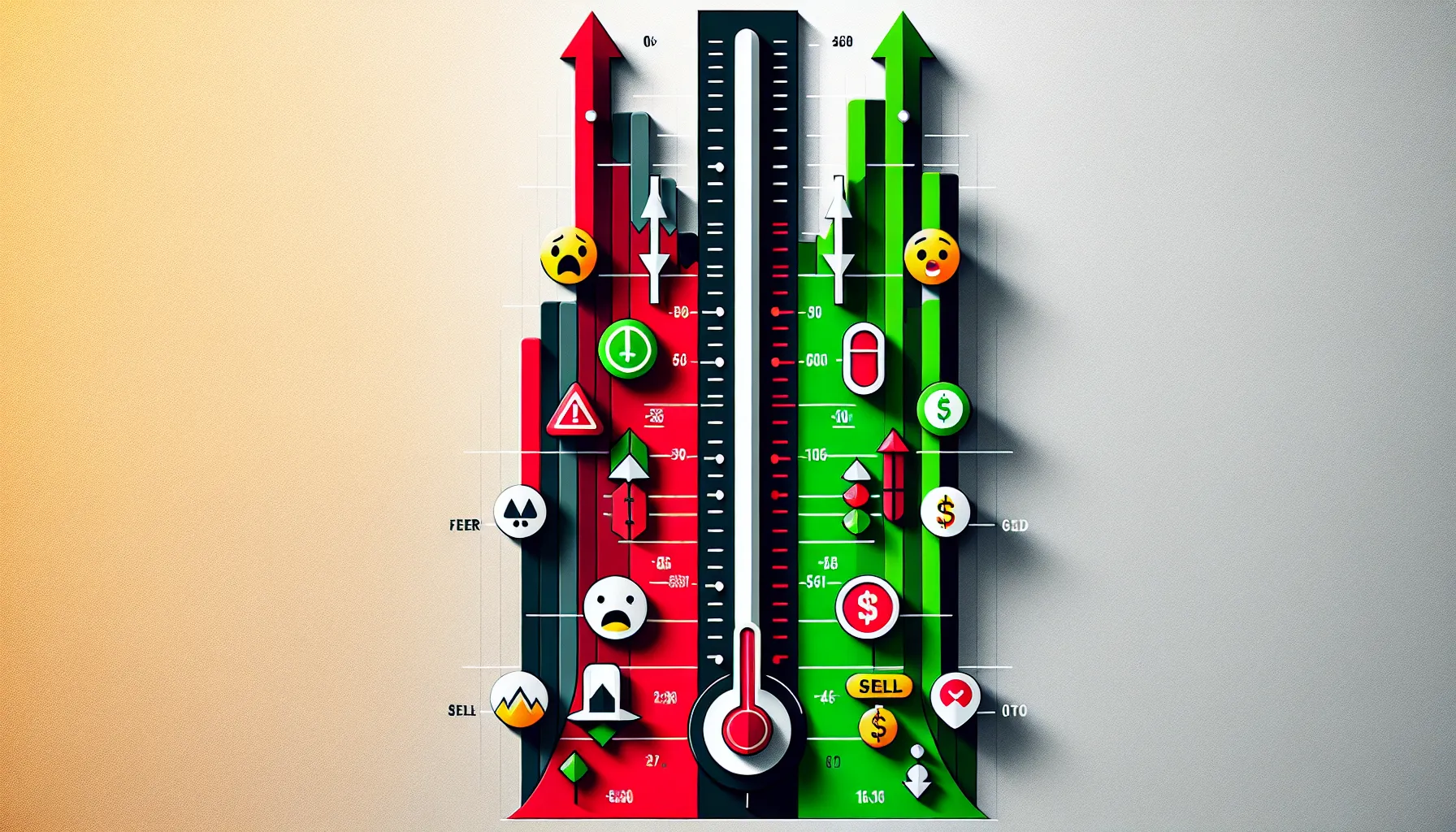
The Crypto Fear & Greed Index is one of the most popular tools for quantifying market sentiment. It translates the emotional state of the crypto market into a simple numerical score, ranging from 0 (Extreme Fear) to 100 (Extreme Greed). This makes it easier for traders, especially beginners, to grasp the prevailing mood at a glance.
Developed to mirror a similar index used in traditional stock markets, the crypto version aggregates multiple data sources to reflect real-time sentiment. The index is updated daily and widely referenced by traders, analysts, and media outlets.
What makes the index valuable is its ability to distil complex emotional signals into actionable insights. Rather than relying solely on intuition or anecdotal observations, traders can use the index as an objective measure of whether the market is leaning towards fear or greed. It serves as a compass, helping navigate the often chaotic emotional terrain of cryptocurrency trading.
How the Index Is Calculated
The Crypto Fear & Greed Index draws on several key data points to generate its score. Each component reflects a different aspect of market sentiment:
- Volatility: Measures the magnitude of price swings. High volatility often signals fear, as traders react nervously to rapid changes.
- Market Volume and Momentum: Analyses trading activity and buying pressure. Strong volume during upward price movements suggests greed, while declining volume during drops can indicate fear.
- Social Media Sentiment: Scans posts, hashtags, and interactions on platforms like Twitter and Reddit to gauge the emotional tone of discussions. Positive buzz correlates with greed: negative sentiment reflects fear.
- Surveys: Some versions incorporate direct polling of market participants about their outlook.
- Bitcoin Dominance: Tracks Bitcoin’s share of the total crypto market capitalisation. Rising dominance can indicate fear, as investors flee altcoins for the perceived safety of Bitcoin.
- Google Trends: Monitors search query volumes for crypto-related terms. Spikes in searches for “Bitcoin crash” or “buy Bitcoin” provide clues about sentiment shifts.
Each factor is weighted and combined into a single score. While the exact formula varies slightly depending on the provider, the underlying methodology remains consistent: aggregating diverse signals to create a comprehensive sentiment snapshot.
Reading and Interpreting Index Values
Interpreting the Fear & Greed Index requires understanding what different ranges imply:
- 0–25 (Extreme Fear): The market is gripped by panic or pessimism. Prices may be falling, and traders are selling or staying on the sidelines. For contrarian investors, this can signal potential buying opportunities, as assets may be undervalued.
- 26–46 (Fear): Sentiment is cautious but not panicked. Traders are uncertain, and risk appetite is low.
- 47–53 (Neutral): The market is balanced, with no strong emotional bias in either direction.
- 54–75 (Greed): Optimism is rising, and traders are becoming more aggressive. Prices are likely climbing, and FOMO may be setting in.
- 76–100 (Extreme Greed): The market is overheated. Euphoria dominates, and prices may be overextended. This often precedes corrections, making it a signal for caution or profit-taking.
It’s important to note that the index is a tool, not a crystal ball. Extreme fear doesn’t guarantee an immediate rebound, nor does extreme greed guarantee a crash. Context matters, external events, regulatory news, and broader market conditions should all inform how traders act on sentiment signals.
Key Indicators That Reveal Market Sentiment
Beyond the Fear & Greed Index, several other indicators help traders gauge market sentiment. By monitoring these signals, beginners can develop a more nuanced understanding of the emotional forces at play.
Social Media and News Sentiment Analysis
Cryptocurrency communities thrive on social media platforms like Twitter, Reddit, Telegram, and Discord. These channels are hotbeds of opinion, speculation, and real-time reaction to news. Analysing the tone and volume of conversations can reveal shifts in sentiment before they fully materialise in price action.
Tools and platforms now use natural language processing to scan thousands of posts, categorising them as positive, negative, or neutral. A surge in negative posts, especially around keywords like “crash,” “scam,” or “regulation”, can signal growing fear. Conversely, an uptick in bullish language, rocket emojis, and celebratory memes often accompanies greed.
News sentiment works similarly. Major headlines about adoption, institutional investment, or technological breakthroughs tend to boost optimism. Meanwhile, stories about hacks, lawsuits, or bans can spread fear rapidly. Monitoring reputable news sources alongside community chatter provides a fuller picture of sentiment.
Trading Volume and Market Dominance
Trading volume, the total amount of crypto bought and sold over a period, is a critical sentiment indicator. High volume during price increases suggests strong conviction and greed, as buyers aggressively enter the market. High volume during declines, but, often signals fear-driven selling.
Low volume can indicate indecision or apathy. When traders are uncertain, they’re less likely to commit capital, resulting in quieter markets. Volume spikes, especially when paired with price breakouts or breakdowns, often mark turning points in sentiment.
Market dominance, particularly Bitcoin’s share of total market capitalisation, also offers clues. When Bitcoin dominance rises, it often means investors are fleeing riskier altcoins for the relative safety of the largest cryptocurrency, a sign of fear. When dominance falls, it suggests greed and risk appetite, as traders chase higher returns in smaller coins.
Volatility and Price Momentum
Volatility measures the speed and magnitude of price changes. In crypto, volatility is the norm, but extreme spikes often reflect heightened emotion. Sharp, erratic swings typically indicate fear and uncertainty, as traders react impulsively to news or rumors.
Price momentum, the rate at which prices are rising or falling, also reveals sentiment. Sustained upward momentum fuels greed, drawing in more buyers who expect the trend to continue. Conversely, persistent downward momentum breeds fear, as losses mount and confidence erodes.
Technical indicators like the Relative Strength Index (RSI) can complement sentiment analysis. An RSI above 70 suggests the market is overbought (greed), while below 30 indicates oversold conditions (fear). Combining these signals with sentiment tools creates a more robust trading strategy.
Practical Ways to Use Sentiment Analysis in Your Trading Strategy
Understanding sentiment is one thing: applying it effectively is another. Here are practical ways beginners can integrate sentiment analysis into their trading approach.
Monitor sentiment indicators before entering trades. Before buying or selling, check the Fear & Greed Index, review social media trends, and assess trading volumes. If the index shows extreme greed and prices are near all-time highs, it may be wise to wait for a pullback. If extreme fear dominates and fundamentals remain strong, it could be a buying opportunity.
Combine sentiment with technical and fundamental analysis. Sentiment alone isn’t enough. Pair it with chart patterns, support and resistance levels, and fundamental factors like adoption rates or protocol upgrades. For example, if technical indicators suggest a breakout and sentiment is cautiously optimistic, the trade has stronger confluence.
Use sentiment to time entries and exits. The Fear & Greed Index can help identify inflection points. Buying during extreme fear and selling during extreme greed is a classic contrarian strategy. But, this requires patience and discipline, as markets can remain irrational longer than expected.
Set alerts for sentiment shifts. Many platforms and tools offer notifications when the index crosses certain thresholds or when social media sentiment changes sharply. These alerts can help traders stay informed without constantly monitoring the market.
Avoid overtrading based on short-term sentiment swings. Sentiment can change rapidly, and reacting to every shift leads to overtrading and higher fees. Focus on meaningful, sustained changes rather than daily noise.
By weaving sentiment analysis into a broader strategy, traders can make more informed decisions, reduce emotional bias, and better navigate the market’s psychological landscape.
Common Mistakes Beginners Make When Reading Sentiment
Sentiment analysis is powerful, but beginners often stumble into predictable traps. Recognising these mistakes can help avoid costly errors.
Over-relying on sentiment alone. Sentiment is just one piece of the puzzle. Relying exclusively on the Fear & Greed Index or social media buzz without considering fundamentals or technicals is risky. Markets can stay fearful or greedy longer than anticipated, and sentiment doesn’t always translate immediately into price action.
Reacting impulsively to hype or panic. Social media amplifies emotions, and it’s easy to get swept up in FOMO or fear. Beginners may buy at peaks because everyone is excited or sell at bottoms because panic is widespread. Discipline and a clear plan are essential to avoid these knee-jerk reactions.
Failing to verify data sources. Not all sentiment indicators are created equal. Some platforms use flawed methodologies or outdated data. Relying on unreliable sources can lead to poor decisions. Stick to established, transparent tools and cross-reference multiple indicators.
Ignoring broader market context. Sentiment doesn’t exist in a vacuum. External factors, such as macroeconomic trends, regulatory developments, or technological advancements, can override short-term sentiment. For example, extreme greed might seem like a sell signal, but if a major institution announces Bitcoin adoption, the rally could have legs.
Confusing correlation with causation. Just because sentiment is high doesn’t mean prices will fall, and low sentiment doesn’t guarantee a rebound. Sentiment reflects emotion, not certainty. It’s a guide, not a guarantee.
By staying aware of these pitfalls, beginners can use sentiment analysis more effectively, balancing it with other tools and maintaining a level-headed approach.
Conclusion
Learning to read crypto market sentiment, especially through the lens of fear and greed, equips beginners with a crucial skill for navigating the volatile world of cryptocurrency trading. Sentiment isn’t just background noise: it’s a driving force that shapes price movements, trading behaviours, and market cycles.
Tools like the Crypto Fear & Greed Index offer a practical, accessible way to gauge the emotional temperature of the market. By understanding how fear triggers sell-offs and how greed fuels rallies, traders can anticipate trends, avoid emotional traps, and make more strategic decisions.
Yet sentiment analysis works best when integrated into a broader strategy. It should complement, not replace, technical indicators, fundamental research, and sound risk management. Beginners who combine sentiment insights with disciplined analysis and a clear trading plan will be better positioned to thrive in the unpredictable crypto landscape.
As with any skill, mastering sentiment analysis takes time and practice. But focusing to the emotional currents beneath the surface, traders can gain an edge that goes beyond charts and headlines, an understanding of the psychology that moves markets.
Frequently Asked Questions
What is the Crypto Fear & Greed Index and how does it work?
The Crypto Fear & Greed Index is a sentiment measurement tool that scores market emotion from 0 (Extreme Fear) to 100 (Extreme Greed). It aggregates data from volatility, trading volume, social media sentiment, Bitcoin dominance, and Google Trends to provide a daily snapshot of whether traders are fearful or greedy.
How can beginners use market sentiment to improve their crypto trading?
Beginners can monitor sentiment indicators like the Fear & Greed Index before making trades, combining them with technical and fundamental analysis. Buying during extreme fear and selling during extreme greed is a common contrarian strategy that helps traders avoid emotional decision-making and identify potential opportunities.
Why does crypto market sentiment matter more than in traditional markets?
Cryptocurrencies lack intrinsic anchors like earnings reports or dividends, making sentiment an especially powerful force. Price movements often stem from how traders perceive trends and news rather than fundamental value, and the 24/7 trading cycle amplifies emotional reactions across global communities.
What does extreme fear mean in cryptocurrency markets?
Extreme fear (0–25 on the index) indicates the market is gripped by panic or pessimism, with traders selling or staying on the sidelines. For contrarian investors, this often signals potential buying opportunities, as assets may be undervalued when widespread fear dominates.
Can you make money trading against market sentiment in crypto?
Yes, contrarian trading involves buying when fear is extreme and selling when greed peaks. However, this strategy requires patience and discipline, as markets can remain irrational longer than expected. It works best when combined with fundamental analysis and clear risk management.
What are the most reliable indicators for tracking crypto market sentiment?
Beyond the Fear & Greed Index, reliable sentiment indicators include social media sentiment analysis, trading volume patterns, Bitcoin dominance levels, and volatility measurements. Combining multiple indicators provides a more comprehensive view of market psychology than relying on any single metric.