Litecoin has been one of the most enduring cryptocurrencies since its launch in 2011, often referred to as the “silver to Bitcoin’s gold.” But as 2025 rolls around, miners face a very different landscape than they did even a few years ago. Mining difficulty has surged, electricity costs continue to climb, and block rewards remain modest compared to the expenses required to compete. For anyone considering diving into Litecoin mining this year, the central question isn’t just how to mine,it’s whether the effort and investment can possibly pay off.
This guide walks through everything needed to mine Litecoin in 2025: the hardware, the software, the strategies, and,most critically,a hard look at profitability. Whether someone is a hobbyist curious about the process or an investor weighing ROI, understanding the current state of Litecoin mining is essential before spending a single dollar on equipment.
Key Takeaways
- Litecoin mining in 2025 requires specialized Scrypt ASIC hardware like the Antminer L9 or L7, as CPU and GPU mining became obsolete years ago.
- Most home-based Litecoin miners operate at a loss due to high electricity costs, with typical setups losing over $6 per day at average energy rates of $0.10 per kWh.
- Merge mining Litecoin with Dogecoin allows miners to earn rewards from both cryptocurrencies simultaneously without additional computational cost.
- Pool mining is the only practical option for individual miners, as Litecoin’s network difficulty makes solo mining extremely unlikely to yield any rewards.
- Profitability is achievable only for industrial operations with access to ultra-cheap electricity below $0.03 per kWh, making Litecoin mining unviable for most individuals in 2025.
- Alternatives like buying and holding LTC directly or mining other cryptocurrencies often provide better risk-adjusted returns than traditional Litecoin mining.
Understanding Litecoin Mining in 2025
Litecoin mining operates on the Scrypt algorithm, a memory-hard proof-of-work system that was originally designed to be more accessible to everyday miners than Bitcoin’s SHA-256. In theory, Scrypt should resist the dominance of specialized hardware,but in practice, that ship sailed years ago. By 2025, Litecoin mining is completely dominated by Application-Specific Integrated Circuits (ASICs) built exclusively for Scrypt hashing.
One unique advantage Litecoin still offers is merge mining with Dogecoin. This means miners can simultaneously mine both Litecoin and Dogecoin without additional computational cost, effectively doubling the potential reward stream if their hardware and pool support it. For miners who do commit to Scrypt ASICs, this dual-coin capability is one of the few bright spots in an otherwise challenging environment.
But, profitability has taken a significant hit in 2025. The Litecoin network’s hashrate and difficulty have climbed to near all-time highs as industrial-scale operations deploy the latest ASICs. Block rewards remain at 6.25 LTC per block, but with increased competition and relatively stagnant coin prices hovering around $105–$116, the economics have shifted against individual miners. Energy costs, which can easily eclipse mining revenue, are the primary culprit. For most home-based miners, the math simply doesn’t work anymore.
What You Need to Start Mining Litecoin
Hardware Requirements
Anyone serious about mining Litecoin in 2025 needs to understand one thing upfront: general-purpose hardware won’t cut it. CPU and GPU mining became obsolete for Litecoin years ago. Today, only specialized Scrypt ASIC miners are viable, and even among those, older models are rarely profitable.
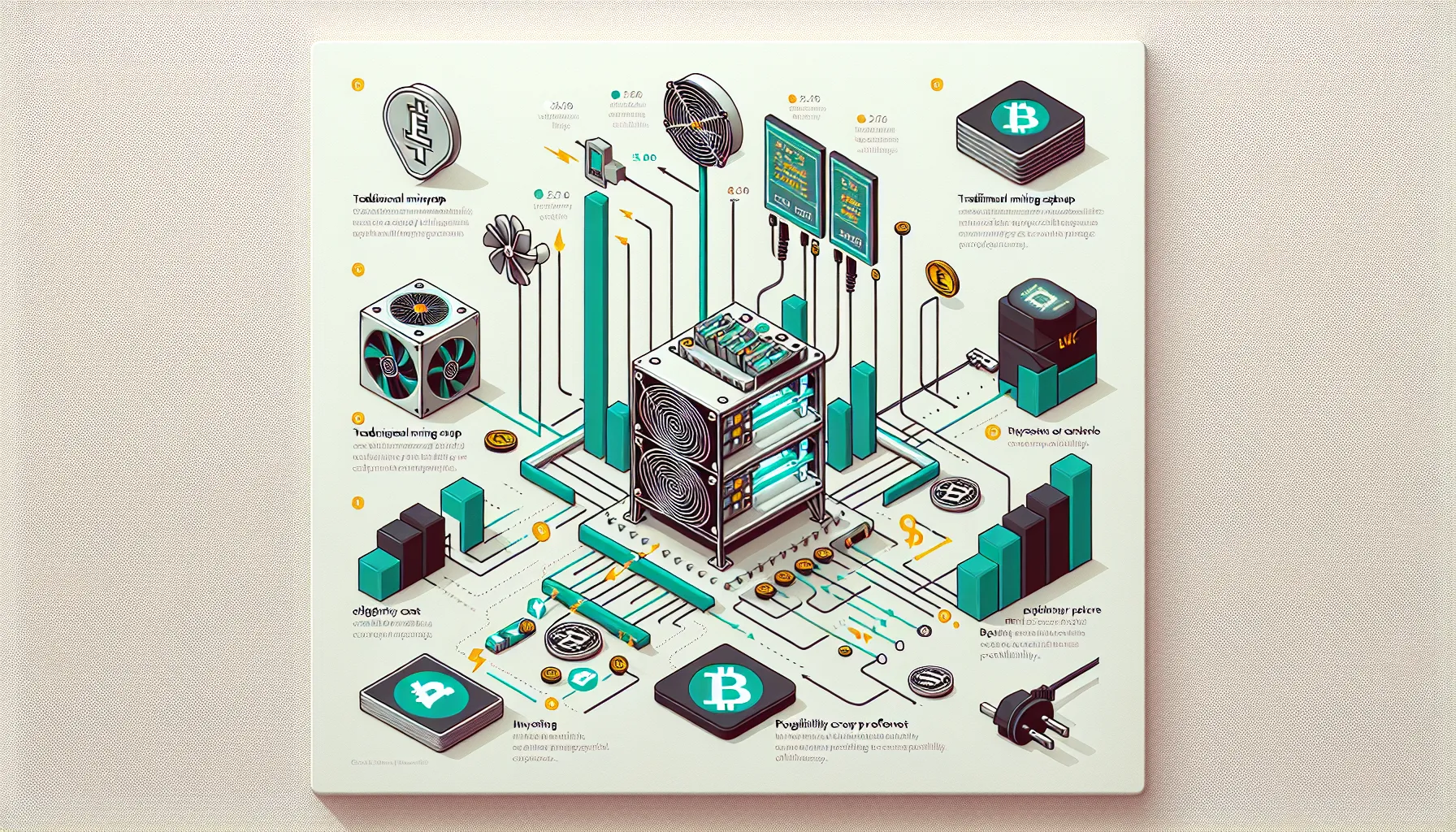
The current top-tier options include machines like the Bitmain Antminer L9 and Antminer L7. These devices boast impressive hashrates ranging from around 16 GH/s to 35 GH/s (gigahashes per second), but they’re also power-hungry beasts. The Antminer L9, for instance, delivers approximately 17 GH/s while consuming about 3,450 watts of electricity. Higher-end models like the L7 can push even further, but they demand nearly 6,000 watts under full load.
These machines aren’t cheap, either. Depending on market conditions and availability, expect to pay anywhere from several thousand to over ten thousand dollars for a competitive Scrypt ASIC. And because mining technology evolves quickly, today’s cutting-edge hardware could be outpaced within a year or two, adding another layer of risk to the investment.
Software and Wallet Setup
Once the hardware is secured, miners need compatible mining software. Most Scrypt ASICs come with proprietary firmware and web-based interfaces that simplify configuration, but third-party mining software options are also available for those who want more control or flexibility.
Before mining begins, setting up a Litecoin wallet is essential. This is where mined LTC will be sent and stored. Hardware wallets like Ledger or Trezor offer the best security, especially for anyone planning to accumulate significant amounts of Litecoin over time. Software wallets,whether desktop, mobile, or web-based,are more convenient but come with higher security risks. Whichever option a miner chooses, safeguarding private keys is non-negotiable.
Finally, unless someone has an enormous hashrate and a taste for risk, they’ll need to register with a mining pool. Pool mining allows miners to combine their computational power with others, sharing block rewards proportionally based on contributed hashrate. This approach delivers more consistent, predictable payouts compared to the lottery-like nature of solo mining.
Step-by-Step Guide to Mining Litecoin
Getting started with Litecoin mining involves a straightforward but detailed process. Here’s how it breaks down:
1. Purchase and set up a Scrypt ASIC miner.
Research current models, compare hashrates and power consumption, and buy from a reputable supplier. Be prepared for shipping delays and potential import fees if ordering internationally.
2. Install and configure the hardware.
Most ASICs connect via Ethernet and are accessed through a web interface. Ensure adequate ventilation and cooling,these machines generate serious heat and noise. Many miners set up operations in garages, basements, or dedicated server rooms.
3. Install compatible mining software.
If the ASIC uses proprietary firmware, configuration is typically done through its built-in interface. For third-party software, follow installation instructions and ensure compatibility with Scrypt mining.
4. Configure mining pool and wallet credentials.
Join a reputable Litecoin mining pool (popular options include F2Pool, Prohashing, and LitecoinPool.org). Input the pool’s server address (stratum URL), your wallet address, and any worker credentials. Double-check all settings,incorrect wallet addresses mean lost coins.
5. Start mining and monitor performance.
Once everything is configured, start the mining process. Use the pool’s dashboard or the ASIC’s interface to monitor hashrate, temperature, uptime, and earnings. Most pools provide real-time statistics and payout histories.
6. Optimize and maintain.
Regularly check for firmware updates, monitor hardware health, and adjust settings if needed. Dust buildup and high temperatures can degrade performance and shorten hardware lifespan, so routine maintenance is key.
Solo Mining vs. Pool Mining: Which Is Better?
The debate between solo mining and pool mining has a clear winner in 2025: pool mining is almost always the better choice for Litecoin.
Solo mining means attempting to find blocks entirely on one’s own. If successful, the miner claims the entire block reward,currently 6.25 LTC plus transaction fees. Sounds appealing, right? The problem is that Litecoin’s network difficulty is astronomically high. Even with a top-tier ASIC delivering 17 GH/s or more, the odds of successfully mining a block solo are incredibly slim. A miner could run for months or even years without finding a single block, making solo mining a high-risk gamble that rarely pays off unless someone controls a massive farm of ASICs.
Pool mining, on the other hand, allows miners to combine their hashrate with hundreds or thousands of others. When the pool successfully mines a block, the reward is distributed proportionally based on each miner’s contributed hashrate. Payouts are smaller but far more frequent and predictable. For anyone without industrial-scale resources, pool mining is the only practical option.
That said, pool mining comes with trade-offs. Pools typically charge fees ranging from 1% to 3% of earnings, and miners must trust the pool operator to distribute rewards fairly. Choosing a well-established, transparent pool with a solid reputation is critical to avoid scams or technical issues.
Profitability Analysis: Is Litecoin Mining Worth It in 2025?
Here’s where the rubber meets the road. For most individuals, Litecoin mining in 2025 is not profitable. The numbers tell a harsh story.
Consider a real-world example using the Bitmain Antminer L9, which hashes at 17,000 MH/s and consumes 3,450 watts. Assuming an electricity cost of $0.10 per kilowatt-hour,a fairly average rate in the United States,the daily operating cost comes to about $8.28. Meanwhile, daily mining revenue (including both Litecoin and potential merged Dogecoin) hovers around $1.99.
That’s a daily loss of $6.29. Over a year, this miner would generate roughly $726 in revenue but rack up over $3,022 in electricity costs, resulting in an annual loss exceeding $2,296. And this doesn’t even factor in the upfront hardware cost, which could be $5,000 or more.
| Time Frame | LTC Rewards | Revenue (USD) | Power Cost (USD) | Profit (USD) |
|---|---|---|---|---|
| Daily | 0.0189 | $1.99 | $8.28 | -$6.29 |
| Annually | 6.91 | $725.74 | $3,022.20 | -$2,296.46 |
The only miners who might break even or achieve modest returns are those operating in regions with ultra-cheap electricity,think under $0.03 per kWh, a rate available primarily to industrial operations in places like Iceland, certain regions of China, or areas with heavily subsidized energy.
Electricity Costs and ROI Calculations
Electricity is the single biggest determinant of mining profitability. At $0.10/kWh, ROI is decisively negative for retail miners. But what happens if electricity is cheaper?
At $0.05/kWh, the daily power cost drops to around $4.14. With the same $1.99 in daily revenue, the loss shrinks to about $2.15 per day,still unprofitable, but less painful. Even at $0.03/kWh, a miner would likely only break even or see marginal gains, and that’s before accounting for hardware depreciation, downtime, or maintenance costs.
The bottom line: unless someone has access to nearly free electricity or can negotiate commercial energy rates, Litecoin mining in 2025 will drain funds rather than generate them.
Current Market Conditions and Mining Difficulty
Litecoin’s current market conditions don’t offer much relief. As of November 2025, LTC trades in the range of $105 to $116, far below the highs seen in previous bull markets. Meanwhile, network hashrate and difficulty are near all-time peaks, driven by the widespread deployment of modern Scrypt ASICs.
Block rewards remain at 6.25 LTC per block, unchanged since the last halving. With difficulty rising and prices relatively stagnant, miners are squeezed from both sides. Even if Litecoin’s price were to spike, it would likely attract even more miners, pushing difficulty higher and dampening profitability gains.
Common Challenges and How to Overcome Them
Mining Litecoin in 2025 comes with a host of practical challenges beyond just profitability.
High electricity costs are the most obvious hurdle. For miners stuck with retail electricity rates, profitability is nearly impossible. The only real solution is relocating operations to regions with cheaper energy or negotiating bulk industrial rates,neither of which is feasible for most individuals.
Upfront hardware costs are another barrier. Scrypt ASICs aren’t cheap, and the payback period (if one exists at all) can stretch well beyond a year. Buying used equipment can lower initial expenses, but older models are often less efficient and more prone to failure. Miners need to carefully weigh the risk of hardware obsolescence against potential future gains.
Technical maintenance and downtime also eat into profitability. ASICs require regular cleaning, firmware updates, and monitoring to maintain optimal performance. Hardware failures can result in costly repairs or replacements, and even minor downtime translates to lost revenue.
Heat and noise management shouldn’t be underestimated, either. These machines are loud and produce intense heat, making them unsuitable for living spaces. Proper ventilation, cooling, and soundproofing are essential,and they add to the overall cost.
Finally, regulatory and tax considerations vary by jurisdiction. In some regions, mining income is taxed as ordinary income, while in others it may be treated as capital gains. Miners need to track earnings meticulously and consult with tax professionals to stay compliant.
Alternatives to Traditional Litecoin Mining
Given the bleak profitability outlook, many people are exploring alternatives to traditional Litecoin mining.
Cloud mining is one option, where users rent hashrate from a remote data centre rather than purchasing and maintaining their own hardware. On paper, it sounds convenient,no upfront hardware costs, no electricity bills, no noise. In reality, cloud mining is fraught with risk. Many services are outright scams, and even legitimate providers often charge fees high enough to make profitability elusive. The lack of transparency and control makes cloud mining a gamble most experts advise against.
Mining alternative cryptocurrencies is another route. Coins with lower difficulty or more energy-efficient algorithms (such as proof-of-stake or newer proof-of-work variants) might offer better returns. But, this requires research, flexibility, and often different hardware. Some miners switch between coins based on profitability calculators, a strategy known as “algo-switching” or “profit-switching.”
Staking or yield farming with Litecoin,or converting LTC into stakeable assets,offers a passive income alternative, though it’s not mining in the traditional sense. These strategies carry their own risks, including smart contract vulnerabilities and market volatility.
For those determined to stay involved with Litecoin without the operational headaches of mining, simply buying and holding LTC might be the most straightforward approach. If someone believes in Litecoin’s long-term value, purchasing coins directly avoids the complexity, costs, and risks of mining altogether.
Conclusion
Litecoin mining in 2025 is a tough sell for almost everyone. The combination of high electricity costs, fierce competition, elevated mining difficulty, and modest coin prices creates a financial environment where most home miners operate at a loss. Even with the latest Scrypt ASICs and the ability to merge-mine Dogecoin, the numbers rarely add up unless someone has access to industrial-scale infrastructure and ultra-cheap electricity,conditions that few individuals can meet.
For those with the resources and low-cost power, marginal profitability might be achievable, but the risks remain high. Hardware depreciates quickly, market conditions can shift overnight, and regulatory landscapes continue to evolve. Anyone considering Litecoin mining needs to go in with eyes wide open, armed with detailed ROI calculations and a realistic assessment of their electricity costs.
For most people, alternative strategies,whether that’s mining different coins, exploring staking opportunities, or simply buying Litecoin outright,will offer better risk-adjusted returns. The days of profitable home-based Litecoin mining have largely passed, and 2025 is unlikely to reverse that trend.
Frequently Asked Questions
What hardware do I need to mine Litecoin in 2025?
You need a Scrypt ASIC miner to mine Litecoin profitably in 2025. Top models like the Bitmain Antminer L9 or L7 deliver 16–35 GH/s but consume 3,450–6,000 watts. CPU and GPU mining are no longer viable for Litecoin.
Is Litecoin mining still profitable in 2025?
For most individuals, Litecoin mining is not profitable in 2025. High electricity costs and increased mining difficulty result in losses unless you have access to ultra-cheap electricity under $0.03 per kWh, typically available only to industrial operations.
How does merge mining Litecoin and Dogecoin work?
Merge mining allows you to mine both Litecoin and Dogecoin simultaneously without additional computational power. Both use the Scrypt algorithm, so miners can earn rewards from both networks, effectively doubling potential income if their pool supports it.
Should I solo mine or join a mining pool for Litecoin?
Pool mining is almost always better for Litecoin in 2025. Solo mining offers the full 6.25 LTC block reward but has extremely low success odds due to high network difficulty. Pool mining provides smaller but consistent, predictable payouts.
What is the Scrypt algorithm and why does Litecoin use it?
Scrypt is a memory-hard proof-of-work algorithm designed to be more accessible than Bitcoin’s SHA-256. It was intended to resist specialized hardware dominance, though ASICs now dominate Litecoin mining despite this original design goal.
How much electricity does Litecoin mining consume?
Modern Scrypt ASICs like the Antminer L9 consume approximately 3,450 watts, costing around $8.28 daily at $0.10/kWh. Electricity costs are the primary profitability factor and often exceed mining revenue for home-based operations in 2025.