Ethereum’s gas fees have long been a contentious topic within the blockchain community. Just when users thought the worst was behind them, recent months have seen renewed spikes that’ve left traders, developers, and everyday users questioning what’s driving costs upwards once more. For those navigating the decentralised finance landscape, understanding why these fees fluctuate so dramatically isn’t just academic, it directly impacts profitability, accessibility, and the broader viability of Ethereum as the preferred smart contract platform.
Throughout 2025, Ethereum’s fee dynamics have told a fascinating story. Daily transaction counts climbed from roughly 1.1 million in April to 1.4 million by July, yet mainnet fee revenue tumbled from $23 million at peak periods to approximately $6.3 million by November. This apparent contradiction, more transactions, lower revenue, reveals a shifting ecosystem where Layer-2 solutions shoulder increasing network burden whilst mainnet fees remain susceptible to sudden congestion-driven spikes.
This article examines the key factors behind Ethereum’s latest gas fee surges, from DeFi protocol expansion and NFT marketplace revivals to the sophisticated competition of MEV bots. It also explores practical solutions users and developers can employ to navigate this volatile fee environment without abandoning Ethereum’s robust security guarantees.
Key Takeaways
- Ethereum gas fees spike due to increased DeFi activity, NFT marketplace resurgence, bridge transactions, and MEV bot competition for limited block space.
- Daily Ethereum transactions climbed from 1.1 million in April to 1.4 million by July 2025, yet mainnet fee revenue fell from $23 million to approximately $6.3 million by November.
- Layer-2 scaling solutions like Arbitrum, Optimism, and zkSync reduce transaction costs to mere pence compared to several pounds on Ethereum’s mainnet.
- Strategic timing of transactions during off-peak hours can reduce Ethereum gas fees by up to 30 per cent without compromising transaction success.
- MEV bot activity causes gas wars that can spike Ethereum gas fees 10 to 20 times beyond normal levels during competitive trading periods.
- High gas fees create barriers for smaller investors and push developers towards Layer-2 deployment or alternative blockchains with lower transaction costs.
Understanding Ethereum Gas Fees
Before diving into why fees spike, it’s essential to grasp what Ethereum gas fees actually represent and how the network calculates them.
What Are Gas Fees on Ethereum?
Gas fees represent the cost required to execute transactions and smart contract interactions on the Ethereum blockchain. Every operation, whether transferring ETH, swapping tokens on a decentralised exchange, or minting an NFT, demands computational resources from the network’s validators. These fees compensate those validators for processing transactions and maintaining network security, creating economic incentives that keep Ethereum operational.
Gas is measured in gwei, a denomination of Ether where one gwei equals 0.000000001 ETH. The amount of gas a transaction consumes depends on its complexity: a simple ETH transfer might require 21,000 gas units, whilst intricate smart contract interactions can demand well over 100,000 units. This measurement system allows the network to price computational work precisely, ensuring users pay proportionally for the resources they consume.
How Gas Fees Are Calculated
Ethereum’s fee calculation mechanism underwent a fundamental transformation with the London Hard Fork, which introduced EIP-1559. Before this upgrade, users participated in a purely auction-based system, blindly bidding gas prices and often overpaying during uncertainty.
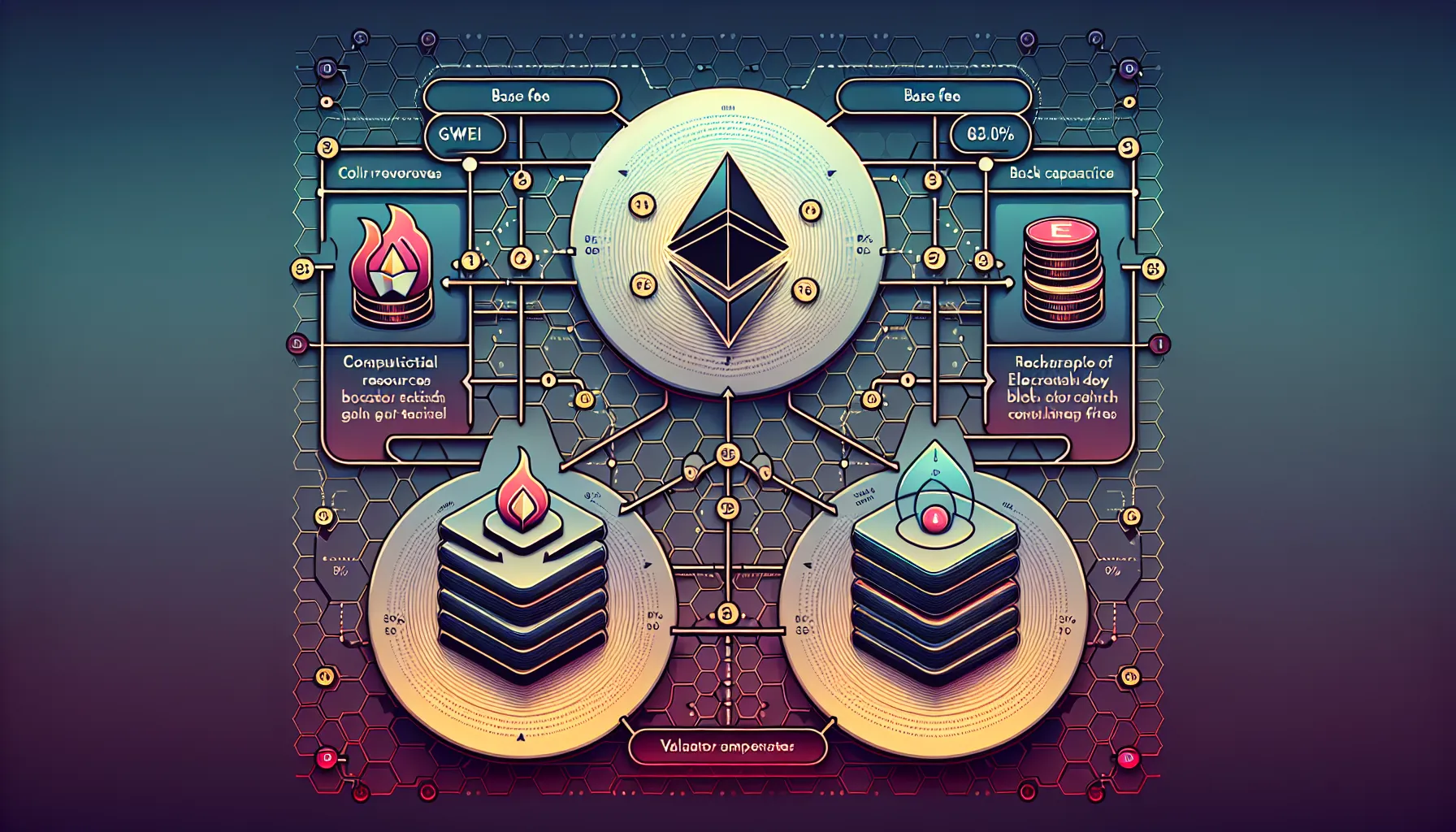
EIP-1559 changed this by establishing an automatic base fee that adjusts dynamically according to network demand. When blocks exceed 50 per cent capacity, the base fee increases: when they fall below this threshold, it decreases. This algorithmic approach creates more predictable pricing and reduces sudden volatility, though it certainly doesn’t eliminate spikes entirely.
Users can supplement the base fee with a priority tip (formerly called a “miner tip,” now a “validator tip”) to incentivise faster transaction inclusion. During periods of high demand, these tips become competitive, as users bid for limited block space. The base fee itself gets burned, permanently removing that ETH from circulation, whilst validators receive the priority tips as compensation.
Even though EIP-1559’s improvements, network congestion still drives costs upwards sharply when transaction demand exceeds Ethereum’s processing capacity. Understanding this mechanism helps explain why fees remain volatile even with protocol-level optimisations in place.
Recent Surge in Network Activity
Ethereum’s latest fee spikes stem largely from renewed demand across multiple network sectors. Several factors have converged to push transaction volumes higher, creating competition for block space that inevitably drives fees upwards.
DeFi Protocol Growth and Trading Volumes
Decentralised finance continues to be one of Ethereum’s most demanding use cases. DeFi protocols, ranging from lending platforms like Aave to decentralised exchanges such as Uniswap, require complex smart contract interactions that consume substantially more gas than simple transfers.
A single DeFi transaction might involve multiple contract calls: checking balances, executing swaps, updating liquidity pools, and emitting events. These operations routinely exceed 100,000 gas units, translating to considerably higher fees during congestion periods. When popular DeFi protocols launch new features or tokens, the effect intensifies dramatically. Analysis shows that DeFi launches alone can trigger gas fee spikes reaching up to three times baseline levels during peak activity.
The competitive nature of DeFi trading amplifies this further. When arbitrage opportunities emerge or liquidity mining rewards attract attention, traders rush to capitalise, flooding the network with transactions and bidding up fees in their urgency to secure profitable positions before windows close.
NFT Marketplace Resurgence
After a period of relative quiet, NFT marketplaces have experienced renewed vitality. NFT minting and trading activities represent significant contributors to gas fee escalation, as these operations demand substantial computational resources.
Historical precedent illustrates the impact vividly: during previous NFT boom periods, marketplaces like OpenSea caused severe congestion, with fees exceeding $100 per transaction when mania peaked. Even moderate NFT activity elevates overall network gas consumption noticeably. Popular NFT drops create frenzied competition, as collectors race to mint limited editions, often setting extremely high gas prices to guarantee their transactions process first.
Recent NFT marketplace innovations, including dynamic pricing mechanisms and batch minting, haven’t entirely solved the congestion problem. When high-profile collections launch or blue-chip NFTs change hands, the marketplace resurgence continues to contribute meaningfully to overall fee pressure.
Increased Layer 2 Bridge Transactions
Ironically, the very solutions designed to alleviate mainnet congestion can themselves trigger temporary fee spikes. Bridge transactions, which move assets between Ethereum’s mainnet and Layer-2 networks, generate sudden demand surges capable of pushing gas fees up to ten times normal levels.
Large-scale migrations prove particularly impactful. When stablecoin issuers like Circle expanded USDC availability across multiple Layer-2 networks, the resulting bridge transactions created noticeable mainnet congestion. More than half of Layer-2 gas usage in certain networks links directly to MEV interactions in DeFi, creating a feedback loop where bridge activity both alleviates and contributes to mainnet fee pressure.
As Layer-2 adoption grows, bridge transactions represent an increasingly important, and somewhat paradoxical, factor in mainnet fee dynamics. Users bridging assets to escape high fees can temporarily worsen the very congestion they’re fleeing.
Market Volatility and Speculative Trading
Cryptocurrency markets thrive on volatility, and Ethereum is no exception. ETH price fluctuations and speculative trading activity drive increased on-chain transactions, creating predictable patterns of fee escalation during market turbulence.
When Ethereum’s price swings dramatically, whether surging towards new highs or plummeting during market downturns, trading activity intensifies across decentralised exchanges. Traders rush to capitalise on price movements, arbitrageurs exploit price discrepancies between platforms, and leveraged positions get liquidated automatically. Each of these actions generates on-chain transactions that compete for block space.
Security incidents and major market events compound this effect substantially. When a DeFi protocol suffers an exploit, users scramble to withdraw funds from potentially vulnerable contracts. When major announcements drop, regulatory developments, protocol upgrades, or institutional adoption news, speculative positioning accelerates. These concentrated bursts of activity create temporary but severe congestion that pushes fees sharply higher.
The psychological dimension matters too. During volatile periods, urgency overrides cost sensitivity. Traders willing to pay premium fees during calm markets become willing to pay almost anything during crisis moments or opportunity windows. This behaviour creates fee spikes that far exceed what network demand alone would suggest, as users effectively bid against their own panic or greed rather than making rational cost-benefit calculations.
Network Congestion During High Demand
At its core, Ethereum’s fee spikes result from a fundamental economic reality: finite supply meeting surging demand. Network congestion remains the primary mechanism through which various demand factors translate into elevated costs.
Block Space Limitations
Ethereum’s architecture imposes strict limits on transaction throughput. Following the block gas limit expansion to 37.3 million in July 2025, the network’s capacity improved modestly, but block space remains fundamentally constrained.
Each block, produced approximately every 12 seconds, can accommodate only a limited amount of computational work. During peak demand periods, transaction submissions far exceed this capacity, creating a queue where users must compete for inclusion. This scarcity mechanism drives fees upwards significantly through straightforward supply-demand dynamics.
The constraint isn’t arbitrary: it reflects deliberate design choices balancing decentralisation, security, and throughput. Larger blocks would enable higher transaction capacity but would also increase hardware requirements for validators, potentially centralising the network. This trade-off means that block space scarcity, and the resulting fee volatility, represents an inherent characteristic of Ethereum’s current architecture rather than a flaw to be eliminated.
For users with smaller capital amounts or those conducting frequent low-value transactions, these limitations create substantial barriers to network participation. When fees spike, entire categories of use cases become economically unviable, shifting activity either to Layer-2 solutions or to alternative blockchains entirely.
MEV Bots and Priority Transactions
Maximal Extractable Value (MEV) bot activity introduces an additional dimension to fee volatility that often catches ordinary users off guard. MEV refers to profit that sophisticated operators extract by strategically ordering, including, or excluding transactions within blocks they produce or influence.
MEV bots constantly monitor the mempool, the waiting area for unconfirmed transactions, searching for profitable opportunities. When they spot one, they engage in aggressive bidding wars, submitting transactions with extremely high priority fees to ensure favourable positioning. This phenomenon particularly affects DeFi trading and arbitrage opportunities, where microseconds and transaction ordering determine profitability.
During competitive periods, MEV-driven gas wars cause fees to spike by 10 to 20 times beyond normal levels. A user attempting a simple token swap might suddenly find themselves competing unknowingly against sophisticated bots willing to pay hundreds of dollars in fees to capture arbitrage worth thousands.
This creates a two-tiered network experience: sophisticated operators with MEV infrastructure can profit from volatility, whilst ordinary users face unpredictable costs and potentially failed transactions. More than half of Layer-2 gas usage in certain networks links to MEV interactions, demonstrating how pervasive this phenomenon has become across Ethereum’s ecosystem.
Impact on Ethereum Users and Developers
High gas fees don’t merely represent an inconvenience, they fundamentally shape how users interact with Ethereum and influence developers’ architectural decisions.
For everyday users and investors, elevated fees erode profitability substantially, particularly for frequent traders and DeFi participants. A trader making multiple swaps daily might find that gas fees consume a significant portion of potential gains, rendering strategies that would be profitable on paper economically unviable in practice. Average mainnet transaction costs reached approximately £0.35 (about $0.44) in August 2025 for simple transfers, though complex smart contract interactions still incurred several pounds during congestion.
These costs create pronounced barriers to entry for newer users with limited capital. Someone with £100 to invest might hesitate when a single transaction costs £5-10, representing 5-10 per cent of their entire capital. This dynamic potentially restricts ecosystem growth, as Ethereum becomes accessible primarily to users transacting larger amounts who can amortise fees across greater value.
So, investors increasingly seek alternative blockchains like Solana and Avalanche, which offer substantially lower transaction costs. Whilst these alternatives involve trade-offs, potentially sacrificing decentralisation or security for throughput, the immediate cost savings prove compelling for price-sensitive users.
Developers face equally significant considerations. Building sophisticated decentralised applications on Ethereum requires accounting for elevated operational costs that directly affect user experience. A gaming application or social platform requiring frequent micro-transactions becomes practically impossible on mainnet when each interaction costs several pounds.
This reality has driven architectural evolution. Developers increasingly design applications specifically for Layer-2 deployment, treating mainnet as a settlement layer rather than an execution environment. Those building mainnet applications must optimise ruthlessly, batching operations, minimising storage writes, and employing gas-efficient coding patterns that wouldn’t be necessary on higher-throughput chains.
The fee environment also influences which types of applications get built at all. High-value financial applications, where transaction costs represent a small percentage of transaction value, remain viable on mainnet. Lower-value use cases migrate elsewhere or don’t get developed on Ethereum at all, potentially limiting the platform’s long-term versatility and competitiveness.
Solutions and Alternatives to High Gas Fees
Whilst gas fee spikes create genuine challenges, users and developers aren’t helpless. Several practical strategies can substantially reduce costs without abandoning Ethereum’s security guarantees.
Layer 2 Scaling Solutions
Layer-2 solutions represent the primary long-term mechanism for fee reduction, and they’ve already transformed Ethereum’s transaction landscape. These networks, including Arbitrum, Optimism, Base, and zkSync, process transactions off the mainnet before periodically settling batched results on-chain.
The efficiency gains prove dramatic. Transactions that might cost several pounds on mainnet frequently cost mere pence on Layer-2 networks, sometimes dropping below £0.01 for simple operations. These solutions have attracted the majority of Ethereum activity, with most transaction volume now occurring on Layer-2 networks rather than mainnet.
This architectural shift reduces mainnet congestion whilst maintaining security through periodic on-chain verification. Layer-2 networks inherit Ethereum’s security properties, though with varying mechanisms and trust assumptions, allowing users to benefit from dramatically lower fees without completely abandoning Ethereum’s established security model.
For users, adopting Layer-2 solutions requires initial learning and occasionally bridging assets between networks, but the cost savings typically justify this modest friction. Major DeFi protocols, NFT marketplaces, and applications now deploy across multiple Layer-2 networks, making migration increasingly seamless.
Optimising Transaction Timing
For those transactions that must occur on mainnet, strategic timing can substantially reduce costs. Gas fees exhibit predictable volatility patterns based on geographic user demand cycles, particularly influenced by activity from Asian and US time zones.
Fees typically peak during business hours in these major markets, when trading activity, DeFi interactions, and NFT transactions concentrate. Conversely, they drop considerably during off-peak hours, often late evening or early morning in these key time zones. Analysis indicates that gas fees can drop by up to 30 per cent during these quieter periods.
Several tools and websites track real-time gas prices and historical patterns, helping users identify optimal transaction windows. For non-urgent transactions, claiming rewards, moving assets between wallets, or executing planned trades without time sensitivity, waiting a few hours can mean the difference between paying £2 and paying £10 for identical operations.
This strategy requires patience and flexibility, admittedly not suitable for time-sensitive trading or urgent transactions. But, for users conducting regular portfolio management or routine operations, transaction timing represents one of the simplest and most effective fee reduction techniques available.
Conclusion
Ethereum’s gas fee spikes stem from a confluence of factors: surging DeFi adoption, NFT marketplace revivals, bridge transaction volumes, market volatility, and the sophisticated competition of MEV bots all converging on fundamentally limited block space. Whilst the network’s architecture deliberately constrains throughput to preserve decentralisation and security, this design choice creates inevitable fee volatility when demand surges.
The apparent paradox of 2025, increasing transaction counts alongside declining mainnet fee revenue, reflects successful Layer-2 adoption rather than reduced network value. As the ecosystem matures, Layer-2 scaling solutions increasingly provide viable alternatives to mainnet transactions, establishing a sustainable fee structure that accommodates both high-value transactions requiring maximum security and broader user participation demanding affordability.
For users navigating this environment, understanding fee dynamics proves essential. Leveraging Layer-2 solutions for routine transactions, timing mainnet operations strategically during off-peak periods, and maintaining realistic expectations about costs can substantially improve the Ethereum experience. Developers, meanwhile, must design with fees in mind, optimising code and considering Layer-2 deployment from the outset.
Ethereum’s fee landscape will likely remain dynamic. Protocol upgrades, evolving Layer-2 technologies, and shifting user behaviour will continue reshaping cost structures. Yet the fundamental tension between limited block space and growing demand ensures that understanding why fees spike, and how to mitigate their impact, will remain crucial knowledge for anyone participating in Ethereum’s ecosystem.
Frequently Asked Questions
Why are Ethereum gas fees spiking again in 2025?
Ethereum gas fees are spiking due to increased network activity from DeFi protocol growth, NFT marketplace resurgence, Layer-2 bridge transactions, and MEV bot competition. These factors create demand that exceeds Ethereum’s limited block space, driving costs upwards through supply-demand dynamics.
How does EIP-1559 affect Ethereum gas fee calculations?
EIP-1559 introduced an automatic base fee that adjusts based on network demand, replacing the purely auction-based system. The base fee increases when blocks exceed 50% capacity and decreases below that threshold, creating more predictable pricing whilst the base fee gets burned permanently.
What are the best times to make Ethereum transactions to save on gas fees?
Ethereum gas fees typically drop by up to 30% during off-peak hours, particularly late evening or early morning in Asian and US time zones. Fees peak during business hours in these major markets when trading and DeFi activity concentrates.
How much can I save by using Layer-2 solutions instead of Ethereum mainnet?
Layer-2 solutions like Arbitrum, Optimism, and zkSync offer dramatic savings, with transactions often costing mere pence compared to several pounds on mainnet. Simple operations frequently drop below £0.01 on Layer-2 networks whilst maintaining Ethereum’s security guarantees through periodic on-chain settlement.
What is MEV and how does it impact Ethereum gas fees?
Maximal Extractable Value (MEV) refers to profit extracted by strategically ordering transactions. MEV bots aggressively bid with extremely high priority fees to capture arbitrage opportunities, causing gas wars that can spike fees 10 to 20 times beyond normal levels during competitive periods.
Will Ethereum gas fees ever become consistently affordable for small transactions?
Ethereum mainnet fees will likely remain volatile due to limited block space preserving decentralisation and security. However, Layer-2 scaling solutions increasingly provide consistently affordable alternatives for small transactions, establishing a two-tier system where mainnet serves high-value transactions requiring maximum security.