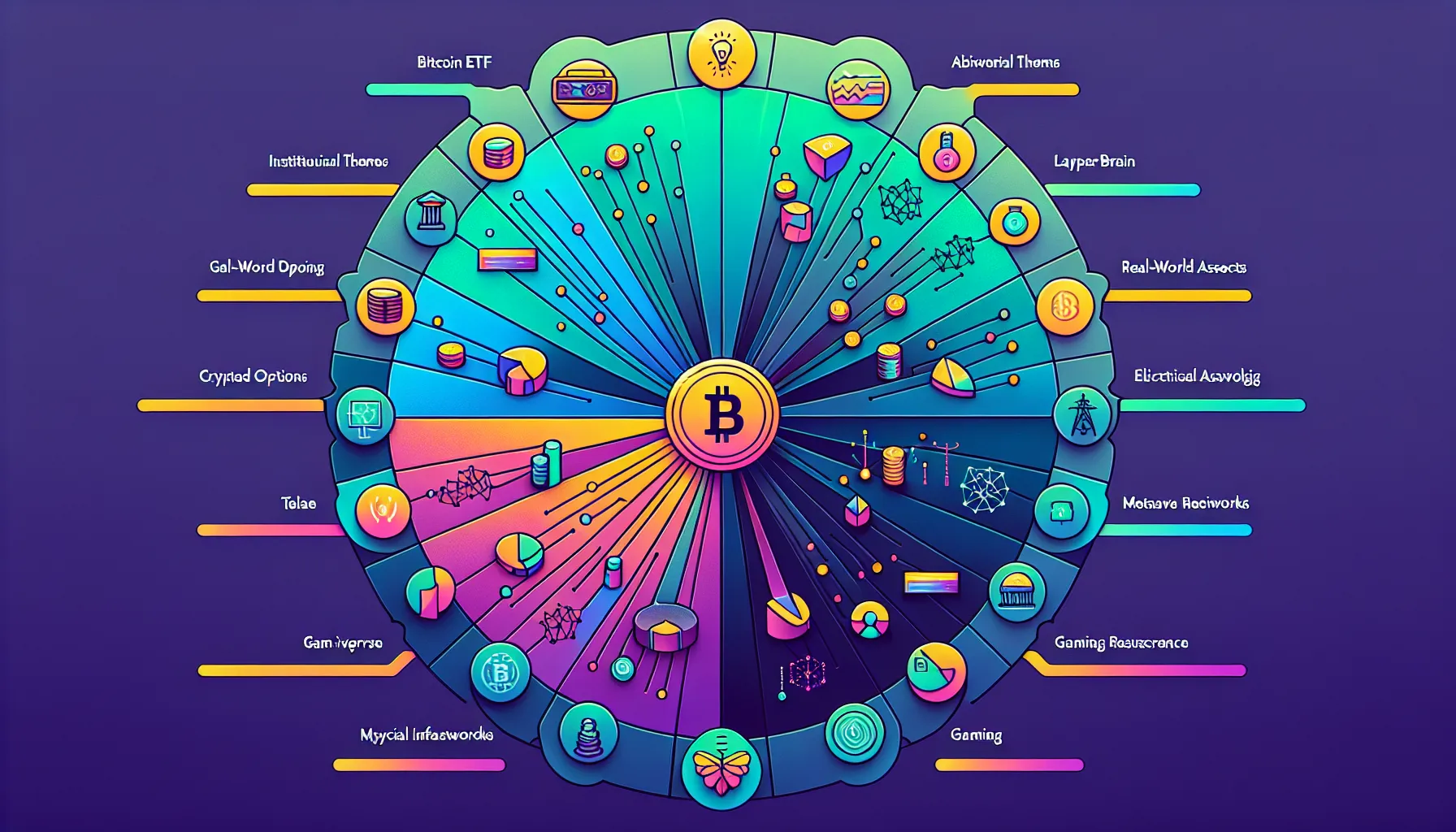
The cryptocurrency landscape shifts faster than almost any other market, and November 2025 is proving no exception. As digital assets mature beyond their speculative origins, several powerful narratives are capturing attention across retail and institutional circles alike. From regulatory breakthroughs that legitimise the entire sector to cutting-edge technological integrations that expand blockchain’s utility, these trends represent more than fleeting hype, they signal fundamental shifts in how the world interacts with decentralised technology.
Understanding which narratives hold genuine momentum versus those merely riding short-term sentiment can make all the difference for investors, developers, and observers trying to navigate this dynamic environment. This month, seven distinct themes have emerged as particularly significant, each supported by substantial capital flows, technological progress, or regulatory developments that warrant close attention. Let’s explore what’s genuinely heating up in crypto right now.
Key Takeaways
- Bitcoin ETFs have attracted over £90 billion in assets, with BlackRock’s iShares Bitcoin Trust scaling to £59 billion and unlocking institutional access to crypto narratives.
- AI-powered blockchain projects are gaining traction through decentralised GPU networks and machine learning-enhanced protocols, backed by measurable developer activity and venture capital.
- Real-world asset tokenisation has moved from pilots to live markets, with major banks issuing digital bonds and real estate platforms distributing rental income via smart contracts.
- Ethereum layer 2 solutions now process more daily transactions than the base layer, with total value locked surpassing £25 billion and transaction costs falling to fractions of a penny.
- Decentralised Physical Infrastructure Networks (DePIN) are coordinating real-world wireless, storage, and energy systems through token incentives, demonstrating tangible utility.
- Regulatory clarity, including the US federal cryptocurrency framework and EU’s MiCA regulation, is driving market confidence and unlocking an estimated £2.4 trillion in institutional capital for crypto narratives.
Bitcoin ETF Momentum and Institutional Adoption
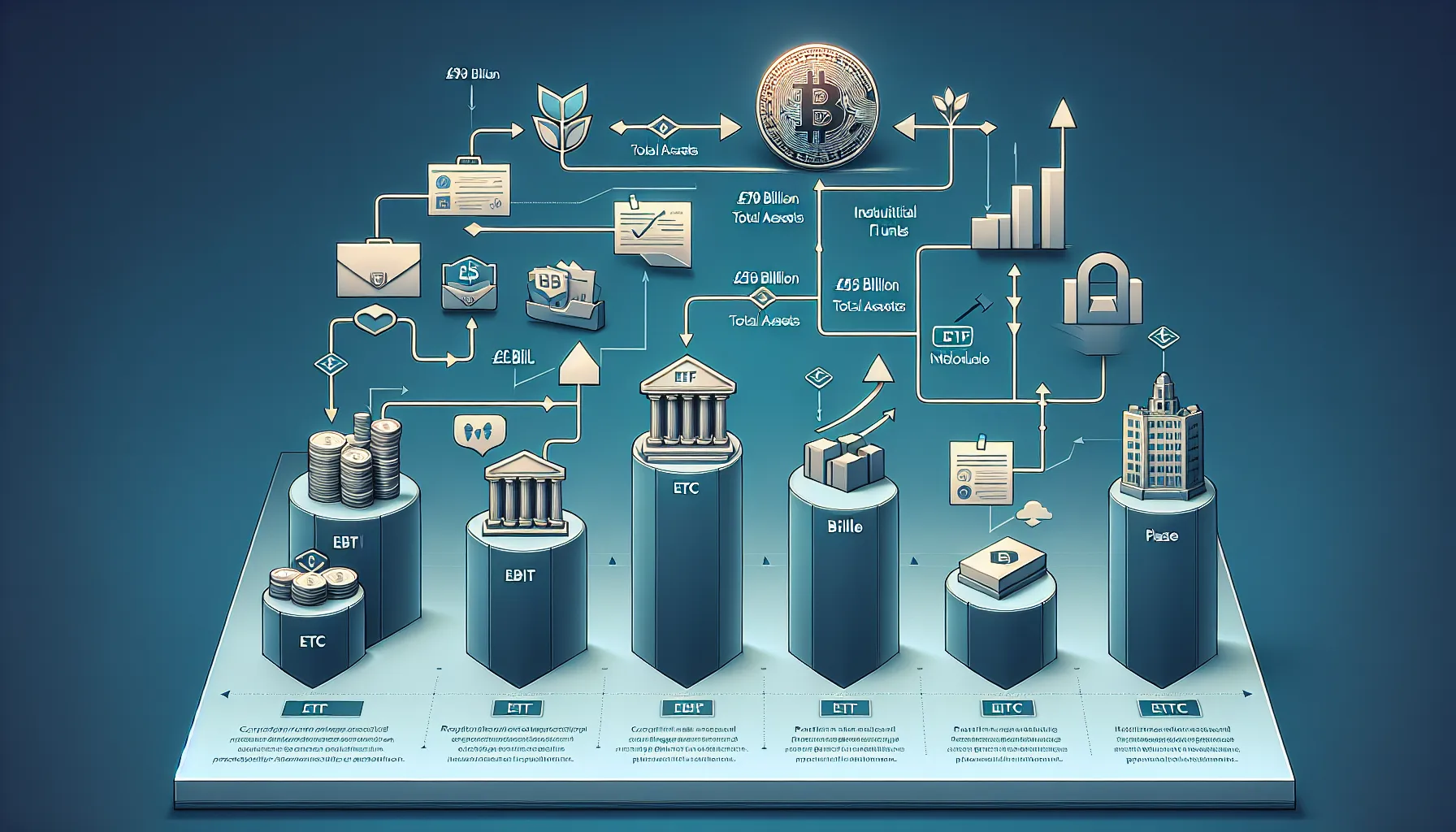
Bitcoin exchange-traded funds have fundamentally altered the cryptocurrency investment landscape, transforming what was once a fringe asset class into a legitimate portfolio component for the world’s largest financial institutions. The numbers tell a compelling story: as of late 2025, spot Bitcoin ETFs collectively manage over £90 billion in assets, with BlackRock’s iShares Bitcoin Trust (IBIT) commanding approximately £59 billion, followed by Fidelity’s FBTC exceeding £16 billion.
IBIT’s trajectory alone deserves attention, it scaled from zero to £77 billion in just 435 days, expanding across 80 countries and reaching 100,000 institutional clients. That’s not merely impressive: it represents one of the fastest asset accumulations in ETF history, rivalling products that took decades to achieve comparable scale.
The regulatory approval of spot Bitcoin ETFs in early 2024 provided the institutional legitimacy that traditional finance desperately needed. Before this breakthrough, custody complexities and compliance barriers deterred conservative fiduciaries from meaningful exposure. Pension funds and 401(k) plans now routinely integrate Bitcoin ETF options, with major providers including Schwab, Vanguard, and BlackRock offering cryptocurrency investment vehicles within retirement accounts.
Institutional investors increasingly view Bitcoin not as speculative exposure but as a core portfolio component. Sixty-eight per cent of institutional investors now consider digital assets essential for managing tail risks amid geopolitical instability and monetary uncertainty. BlackRock’s revenue data underscores this strategic shift: Bitcoin and Ethereum ETFs generated £172 million and £33 million respectively in 2025, establishing crypto as a primary revenue driver for the asset management giant.
Perhaps most significantly, this infrastructure has unlocked an estimated £2.4 trillion in potential institutional capital against just £61 billion in new Bitcoin supply, mathematics that strongly favour sustained appreciation. The ETF wrapper has effectively removed the technological and operational friction that kept traditional finance on the sidelines for over a decade.
AI-Powered Blockchain Projects Gaining Traction
The convergence of artificial intelligence and blockchain technology has moved from theoretical potential to practical deployment, with several projects demonstrating genuine utility this month. This narrative centres on blockchains that either help AI computation in decentralised environments or leverage AI to enhance blockchain functionality, two distinct but complementary approaches.
Decentralised AI computation networks are attracting particular interest as developers seek alternatives to centralised cloud providers for training and inference workloads. Projects enabling distributed GPU resources through blockchain coordination have seen significant token appreciation and developer activity, reflecting genuine demand for compute-power marketplaces that aren’t controlled by a handful of tech giants.
On the other side, AI-enhanced blockchain protocols are using machine learning to optimise consensus mechanisms, predict network congestion, and automate security responses. Smart contracts that adapt based on pattern recognition and predictive analytics represent a meaningful evolution beyond static code execution.
What separates this narrative from previous hype cycles is measurable adoption metrics. Developer activity on AI-blockchain platforms has increased substantially, with GitHub commits, active addresses, and transaction volumes all showing upward trajectories. Venture capital has also followed, with several AI-crypto projects securing eight-figure funding rounds specifically earmarked for infrastructure development rather than token launches.
The regulatory environment has also proved surprisingly accommodating, as governments recognise AI compute capacity as strategically important infrastructure. This geopolitical dimension, where nations compete for technological advantage, has lent legitimacy to decentralised AI narratives that might otherwise face scepticism.
Real-World Asset Tokenisation on the Rise
Tokenisation of real-world assets, everything from commercial property and fine art to commodities and government bonds, has transitioned from pilot programmes to meaningful market activity. The premise remains straightforward: represent ownership of physical or traditional financial assets as blockchain tokens, enabling fractional ownership, 24/7 trading, and programmable compliance.
Financial institutions that once dismissed tokenisation as unnecessary are now leading its implementation. Major banks have launched tokenised money market funds, and several have issued digital bonds on public blockchains. The motivations are clear: settlement efficiency, reduced intermediary costs, and expanded investor access all translate to competitive advantages in an industry where margins face constant pressure.
Real estate tokenisation platforms have demonstrated particular momentum this month, with several properties successfully fractionalized and traded on secondary markets. This isn’t merely speculative, investors are receiving rental income distributions via smart contracts, and property management occurs with unprecedented transparency. The friction involved in buying, selling, or rebalancing real estate exposure has decreased dramatically for participants in these platforms.
Regulatory frameworks have matured sufficiently in several jurisdictions to support tokenised securities with legal clarity. Singapore, Switzerland, and parts of the European Union have established comprehensive guidelines that define token ownership rights and regulatory obligations, removing much of the legal ambiguity that previously stalled institutional participation.
The tokenisation narrative also benefits from clear value propositions that resonate beyond crypto-native audiences. Traditional investors understand the appeal of fractional ownership, programmable compliance, and always-on markets, these aren’t blockchain concepts requiring evangelism: they’re practical improvements to existing financial infrastructure.
Layer 2 Scaling Solutions Reaching New Heights
Ethereum’s layer 2 ecosystem has matured dramatically, with multiple scaling solutions now processing more daily transactions than the base layer itself. These networks, including optimistic rollups, zero-knowledge rollups, and other variants, address Ethereum’s throughput limitations whilst inheriting its security guarantees.
Transaction costs on leading layer 2 networks have fallen to fractions of a penny, making microtransactions and frequent interactions economically viable for the first time. This cost reduction has unlocked use cases previously impractical on Ethereum mainnet, from decentralised social media platforms to complex DeFi strategies requiring numerous transaction steps.
Total value locked across layer 2 solutions has surged past £25 billion this month, reflecting genuine capital migration rather than speculative positioning. Users aren’t merely testing these networks: they’re conducting substantial economic activity with meaningful capital at stake. Major protocols have deployed on multiple layer 2s, fragmenting liquidity but expanding overall ecosystem capacity.
Interoperability solutions have also advanced considerably, with cross-layer bridges becoming more secure and user-friendly. Early concerns about fragmented liquidity and poor user experience have diminished as infrastructure matures. Users can now move assets between layer 2 networks with relative ease, and aggregators abstract away much of the underlying complexity.
The technological race between different layer 2 approaches, optimistic versus zero-knowledge proofs, generalised versus application-specific chains, has driven rapid innovation. Each approach offers distinct trade-offs between decentralisation, security, and performance, and the market appears large enough to support multiple winners rather than converging on a single solution.
Decentralised Physical Infrastructure Networks (DePIN)
Decentralised Physical Infrastructure Networks represent one of crypto’s most tangible narratives, coordinating real-world infrastructure through token incentives. Rather than abstract financial primitives, DePIN projects build wireless networks, storage systems, sensor arrays, and energy grids using blockchain coordination mechanisms.
Decentralised wireless networks have demonstrated the clearest product-market fit within DePIN. Projects deploying physical hotspots that provide connectivity in exchange for token rewards have expanded coverage to millions of locations globally. Major telecommunications providers have begun partnerships with these networks, recognising their cost advantages and rapid deployment capabilities in underserved areas.
Decentralised storage networks have similarly reached meaningful scale, with enterprises increasingly using blockchain-based alternatives to traditional cloud storage. The value proposition combines competitive pricing with censorship resistance and geographic redundancy, attributes that resonate with organisations concerned about centralised control over critical data infrastructure.
Energy DePIN projects are coordinating distributed renewable generation and storage, creating virtual power plants through blockchain-based coordination. These networks enable peer-to-peer energy trading and grid stabilisation services without centralised intermediaries, addressing genuine infrastructure challenges whilst generating revenue for participants.
The DePIN narrative benefits from measurability, physical infrastructure either exists and functions or doesn’t. Unlike purely digital protocols where utility can remain ambiguous, DePIN projects can demonstrate coverage maps, uptime statistics, and real-world usage metrics. This tangibility has attracted institutional capital and mainstream attention in ways that purely financial crypto applications sometimes struggle to achieve.
Token incentives have proven remarkably effective at coordinating infrastructure deployment, solving cold-start problems that traditionally required substantial upfront capital. By distributing ownership and aligning incentives, DePIN projects mobilise global communities to build networks that might otherwise remain economically unviable.
Gaming and Metaverse Tokens Making a Comeback
After a prolonged downturn that saw gaming and metaverse tokens decline substantially from 2021 peaks, this sector is experiencing renewed momentum backed by genuine product improvements rather than speculative enthusiasm alone. Several blockchain gaming projects have launched titles that prioritise gameplay over tokenomics, a fundamental shift from earlier iterations that felt more like financial schemes than entertainment.
Player retention metrics have improved considerably across leading blockchain games, with daily active users and session lengths approaching those of traditional free-to-play titles. This suggests developers have internalised lessons from the previous cycle, focusing on sustainable engagement rather than unsustainable reward mechanisms that attracted mercenary capital but failed to build lasting communities.
The metaverse narrative has also matured, with platforms shifting from land speculation to genuine virtual experiences. Virtual concerts, branded experiences, and social spaces are attracting mainstream participation from users who may not even realise they’re interacting with blockchain infrastructure. This invisibility of the underlying technology represents progress, crypto becomes infrastructure rather than the primary value proposition.
Major gaming publishers have quietly continued blockchain integration even though public scepticism, and several are preparing launches of blockchain-enabled titles for mainstream audiences. These efforts prioritise optional crypto features rather than mandatory token interactions, reducing friction for players unfamiliar with digital asset management.
The tokenomics of newer gaming projects reflect more sustainable design, with reduced inflation rates, meaningful token sinks, and economic models that don’t rely on perpetual new user growth. This structural improvement suggests the sector has learned from past failures and is building for long-term viability rather than short-term extraction.
Regulatory Clarity Driving Market Confidence
Regulatory developments have accelerated institutional adoption timelines dramatically this month, with several jurisdictions providing the clarity that market participants have sought for years. In the United States, President Trump’s January 2025 executive order mandated a comprehensive federal cryptocurrency framework within 180 days whilst rescinding Staff Accounting Bulletin 121, which previously forced banks to hold customer crypto assets on balance sheets, a requirement that effectively prohibited many institutions from offering crypto services.
The Securities and Exchange Commission’s newly established Crypto Task Force, led by crypto-friendly Commissioner Hester Peirce, has shifted regulatory approach from enforcement-led deterrence to proactive framework development. The dismissal of enforcement cases against major exchanges has removed significant legal uncertainty, allowing these platforms to operate with greater confidence and invest in compliance infrastructure rather than litigation defence.
This regulatory clarity has unlocked an estimated £2.4 trillion in potential institutional capital that previously remained sidelined due to compliance concerns and unclear legal treatment. Banks, asset managers, and pension funds require regulatory certainty before committing substantial resources, and the past several months have delivered precisely that clarity across multiple jurisdictions.
European Union’s Markets in Crypto-Assets (MiCA) regulation has provided a comprehensive framework that, whilst demanding, offers clear operational guidelines for crypto businesses. Several major exchanges and platforms have secured MiCA licences, enabling passporting across EU member states and establishing legitimacy with traditional finance counterparts.
The regulatory narrative benefits every other trend discussed, Bitcoin ETFs, tokenised assets, and institutional adoption all depend fundamentally on clear legal frameworks. As governments transition from reactive prohibition to thoughtful regulation, the entire crypto sector gains legitimacy and access to capital that was previously inaccessible.
Conclusion
These seven narratives collectively represent crypto’s evolution from speculative frontier to established financial and technological infrastructure. What distinguishes this moment from previous cycles is the substance underlying the momentum, measurable adoption, institutional capital deployment, and regulatory legitimacy that previous rallies lacked.
Bitcoin’s transformation into an institutional-grade asset through ETF infrastructure represents a structural shift unlikely to reverse. AI-blockchain convergence and DePIN projects demonstrate genuine utility beyond financial speculation. Real-world asset tokenisation and layer 2 scaling address practical limitations that constrained earlier development. Gaming’s renewed focus on entertainment over extraction suggests the sector has matured. And regulatory clarity removes barriers that kept trillions in institutional capital on the sidelines.
None of these narratives exist in isolation, they reinforce each other, creating network effects that compound their individual significance. Regulatory clarity enables institutional adoption, which drives capital into infrastructure that supports new use cases, which attracts developers who build applications that reach mainstream audiences.
The crypto market remains volatile and speculation-driven, but these narratives rest on foundations considerably more solid than previous cycles. For investors, developers, and observers, understanding which trends possess genuine momentum versus fleeting sentiment will prove crucial in navigating the months ahead.
Frequently Asked Questions
What are the top crypto narratives gaining momentum in November 2025?
Seven major crypto narratives are heating up: Bitcoin ETF institutional adoption, AI-powered blockchain projects, real-world asset tokenisation, Layer 2 scaling solutions, Decentralised Physical Infrastructure Networks (DePIN), blockchain gaming and metaverse tokens, and regulatory clarity driving market confidence. Each represents substantial technological or regulatory progress beyond short-term speculation.
How much assets do Bitcoin ETFs currently manage?
Spot Bitcoin ETFs collectively manage over £90 billion in assets as of late 2025. BlackRock’s iShares Bitcoin Trust leads with approximately £59 billion, followed by Fidelity’s FBTC exceeding £16 billion. IBIT scaled from zero to £77 billion in just 435 days across 80 countries.
What is DePIN in cryptocurrency?
Decentralised Physical Infrastructure Networks (DePIN) coordinate real-world infrastructure like wireless networks, storage systems, and energy grids through blockchain and token incentives. Projects deploy physical hotspots and infrastructure that provide tangible services whilst distributing ownership, solving cold-start problems that traditionally required substantial upfront capital.
How do Layer 2 scaling solutions improve Ethereum?
Layer 2 solutions process more daily transactions than Ethereum’s base layer whilst inheriting its security. Transaction costs have fallen to fractions of a penny, making microtransactions viable. Total value locked exceeds £25 billion, with improved interoperability allowing users to move assets between networks with relative ease.
Can I invest in Bitcoin through my retirement account?
Yes, major providers including Schwab, Vanguard, and BlackRock now offer Bitcoin ETF options within retirement accounts like 401(k) plans. Spot Bitcoin ETF approval in early 2024 provided the institutional legitimacy that enabled pension funds to routinely integrate cryptocurrency investment vehicles into their offerings.
Why is regulatory clarity important for crypto markets?
Regulatory clarity unlocks institutional capital previously sidelined by compliance concerns. President Trump’s 2025 executive order and the SEC’s Crypto Task Force have shifted approach from enforcement to framework development, removing legal uncertainty and enabling banks, asset managers, and pension funds to commit resources confidently.