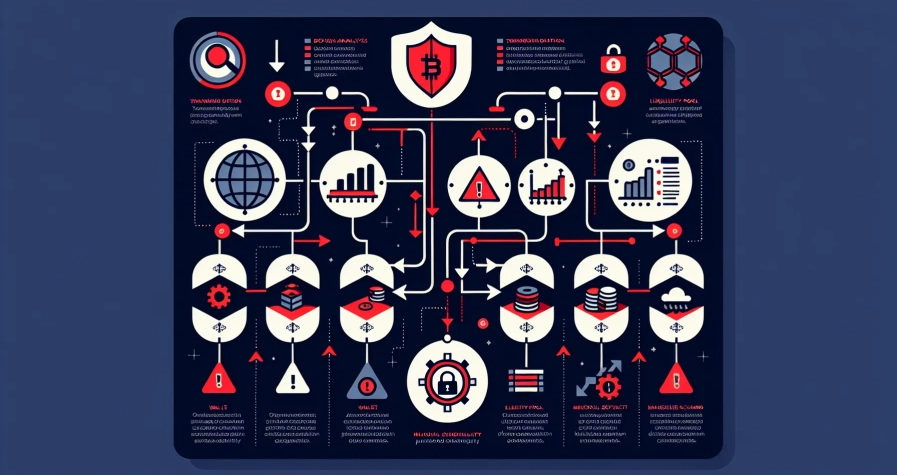
Liquidation is one of the most feared outcomes in crypto trading. It represents the moment when an exchange forcibly closes a trader’s position because their margin balance has dipped below the required maintenance level, often wiping out their initial investment in seconds. For leveraged traders, the difference between a calculated risk and catastrophic loss can hinge on a single price swing.
The cryptocurrency markets are notoriously volatile, with double-digit percentage moves possible within hours or even minutes. When combined with leverage, this volatility creates a high-stakes environment where even experienced traders can find themselves on the wrong side of a liquidation event. Yet liquidation isn’t inevitable. With disciplined risk management, proper calculation, and emotional control, traders can drastically reduce their exposure to forced closure and preserve their capital through turbulent market conditions.
This article explores proven strategies to avoid getting liquidated in crypto trading, from understanding how liquidation works to implementing practical measures that protect positions against sudden market movements.
Key Takeaways
- Liquidation occurs when a trader’s margin balance falls below the maintenance level, forcing the exchange to close the position automatically to prevent further losses.
- Using lower leverage (2-5x) is the most effective way to avoid getting liquidated in crypto trading, as it provides substantially more room to withstand market volatility.
- Always calculate your liquidation price before entering a position and ensure it sits well beyond recent price swings to give your trading thesis adequate room to develop.
- Implementing stop-loss orders removes emotional decision-making from loss-taking and protects positions from flash crashes that could otherwise lead to liquidation.
- Maintaining generous margin buffers above the minimum requirement and monitoring market volatility allows traders to adapt their positions before liquidation becomes a threat.
- Avoiding overtrading and emotional decision-making preserves both capital and mental clarity, as disciplined risk management consistently outperforms brilliant analysis paired with poor risk control.
Understanding Liquidation in Crypto Trading
What Is Liquidation and How Does It Happen?
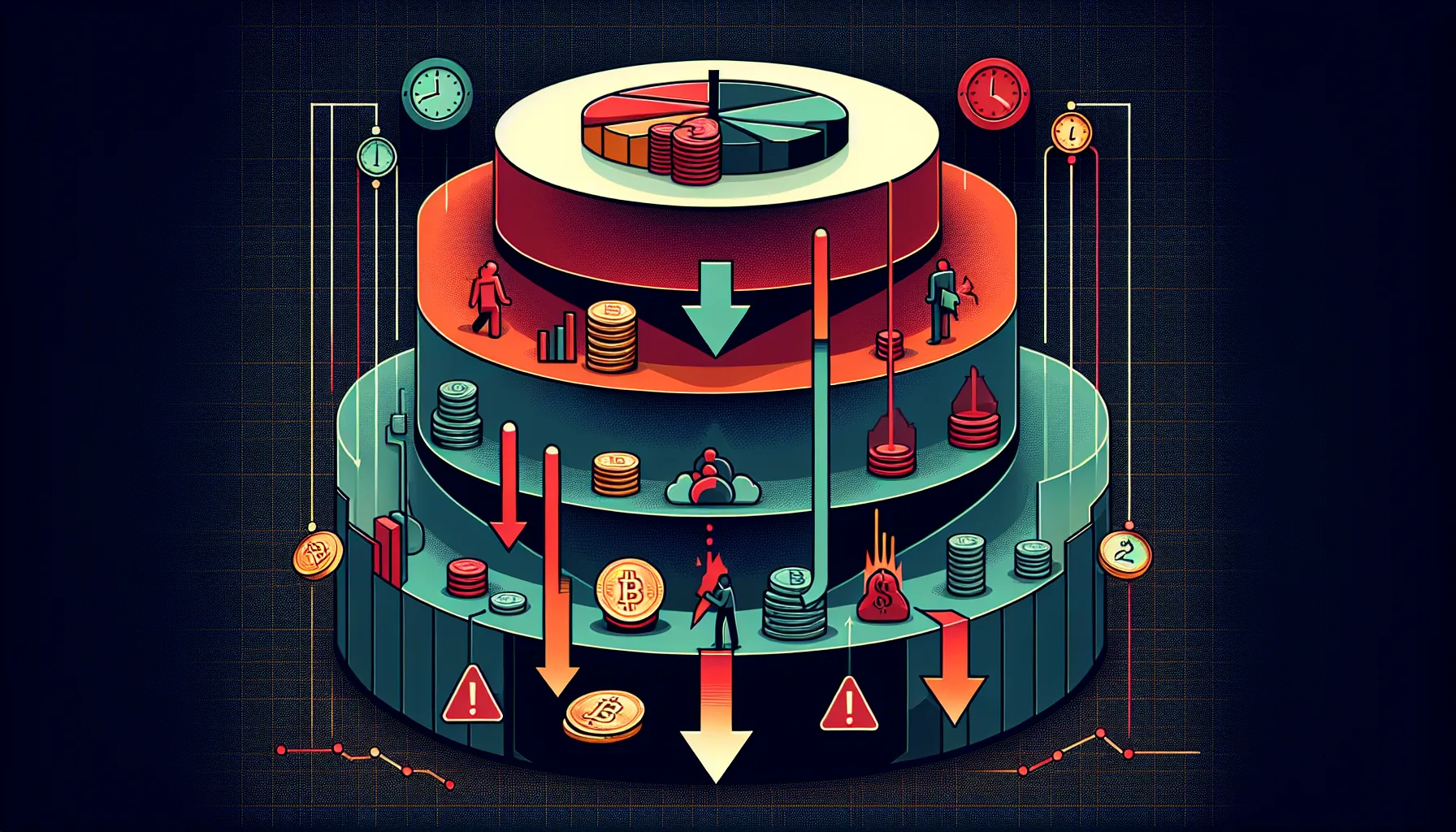
Liquidation occurs when an exchange automatically closes a trader’s position because insufficient margin remains to cover potential losses. It’s essentially the exchange’s safety mechanism, a way to ensure that borrowed funds (leverage) don’t result in losses the trader can’t repay.
The process typically unfolds like this: a trader opens a leveraged position, meaning they’ve borrowed funds from the exchange to control a larger position than their actual capital would allow. As the market moves against their position, their margin balance decreases. When this balance falls below the maintenance margin, the minimum amount required to keep the position open, the exchange steps in and liquidates the position to prevent further losses. In some cases, traders can lose their entire margin or even end up owing the exchange if the market moves too quickly for orderly closure.
Liquidation doesn’t discriminate. It can happen to novice traders who misunderstand leverage and to experienced market participants caught off-guard by sudden volatility. The speed of crypto markets means that liquidation can occur whilst a trader sleeps, is away from their screens, or simply during a brief moment of inattention.
The Risks of Leverage in Cryptocurrency Markets
Leverage is a double-edged sword. It allows traders to control positions worth far more than their deposited capital, amplifying potential gains but also magnifying losses with equal force. A trader using 10x leverage can control £10,000 worth of Bitcoin with just £1,000, but a mere 10% adverse price movement will erase their entire margin.
High leverage makes liquidation exponentially more likely. Whilst a 20% price drop might be uncomfortable for a spot trader, it’s utterly catastrophic for someone using 5x leverage, their position would be liquidated long before that threshold. The mathematics are unforgiving: the higher the leverage multiple, the smaller the price movement needed to trigger liquidation.
Cryptocurrency markets are particularly dangerous for high-leverage trading because of their inherent volatility. Traditional assets rarely move 5-10% in a day, but such swings are commonplace in crypto. Flash crashes, coordinated liquidation cascades (where one liquidation triggers others in a domino effect), and sudden news events can send prices plummeting or soaring with little warning. In this environment, excessive leverage doesn’t just increase risk, it practically guarantees eventual liquidation for most traders.
Calculate Your Liquidation Price Before Trading
Before entering any leveraged position, traders must know their liquidation price, the exact market rate at which their position will be forcibly closed. This single number represents the boundary between maintaining a position and losing it entirely, yet many traders enter positions without calculating it.
The liquidation price depends on several factors: the entry price, the leverage multiplied, the position size, and the amount of margin allocated. Most reputable exchanges display this figure when opening a position, but traders should verify the calculation independently to fully understand their risk exposure.
Knowing the liquidation price allows traders to make informed decisions. If a long position on Bitcoin has a liquidation price of £38,000 and the current price is £40,000, the trader knows they have only £2,000 of price buffer. They can then assess whether this buffer is sufficient given recent volatility and expected market conditions. If Bitcoin has been swinging £3,000–£4,000 daily, that position is dangerously exposed to normal market fluctuations.
This calculation also informs position sizing. If the liquidation price feels too close to the current market price, the solution isn’t hope, it’s either reducing leverage, adding more margin, or decreasing position size until the liquidation price sits at a level the trader is comfortable with. Many professional traders ensure their liquidation price is positioned beyond recent swing lows or highs, giving their thesis room to play out without premature closure.
Use Appropriate Leverage Levels
Lower leverage is the single most effective defence against liquidation. Whilst exchanges may offer 50x, 100x, or even higher leverage multiples, the ability to use extreme leverage doesn’t mean one should. Over-leveraging is perhaps the most common mistake amongst traders who experience liquidation.
Consider the difference: a trader using 2x leverage can withstand a 50% adverse price move before liquidation (minus fees and maintenance margin), whilst a trader using 50x leverage is liquidated after a mere 2% move against their position. In crypto markets where 5–10% intraday swings are routine, the latter position has virtually no margin for error.
Professional and institutional traders typically use far less leverage than retail participants imagine. Many successful crypto traders employ 2-5x leverage at most, and often use isolated margin (where only the allocated margin is at risk, not the entire account balance). This conservative approach allows them to survive the inevitable periods of high volatility and remain in the game long enough for their analysis to prove correct.
The psychological dimension matters too. Lower leverage means less stress, fewer sleepless nights monitoring positions, and clearer decision-making. A trader comfortable with their leverage level is less likely to panic-close at the worst possible moment or make impulsive adjustments that increase risk. The goal isn’t to maximise potential gains on a single trade, it’s to preserve capital across many trades, allowing compounding to work its magic over time.
Implement Stop-Loss Orders Effectively
Why Stop-Loss Orders Are Essential
Stop-loss orders represent a trader’s first line of defence against liquidation. These automated instructions tell the exchange to close a position when the price reaches a predetermined level, cutting losses before they spiral into liquidation territory.
The beauty of stop-losses is their automation, they remove emotion from loss-taking. When a trade moves against a position, human psychology often interferes: hope that the price will recover, reluctance to accept a loss, or simple denial about deteriorating conditions. A properly set stop-loss bypasses these emotional pitfalls, executing the exit regardless of how the trader feels in the moment.
In volatile crypto markets, stop-losses are particularly crucial. Flash crashes can send prices plummeting 10-20% in minutes before recovering. Without a stop-loss, a trader might watch helplessly as their position approaches liquidation. With one properly set, they take a controlled loss and live to trade another day.
Stop-losses also free up mental bandwidth. Rather than constantly monitoring positions with anxiety, traders can set their stops and focus on analysis, research, or simply maintaining a healthier relationship with their trading. The position is protected: if the stop is hit, the thesis was wrong, and the trader moves on.
How to Set Strategic Stop-Loss Levels
Setting effective stop-losses is an art that balances protection against premature exit. Place a stop too close to the entry price, and normal market noise will trigger it, stopping the trader out of positions that would have eventually been profitable. Set it too far away, and it fails to prevent steep losses or provides insufficient protection against liquidation.
The most effective stop-loss placements account for market structure and volatility. Technical traders often place stops just beyond recent swing lows (for long positions) or swing highs (for shorts), reasoning that if price breaches these levels, the market structure has changed and the original thesis is invalidated. Others use percentage-based stops calibrated to the asset’s average volatility.
Volatility-adjusted stops are particularly relevant in crypto. During calm periods, tighter stops make sense: during high-volatility events, wider stops prevent being shaken out of good positions by temporary whipsaws. Some traders calculate the average true range (ATR) of their chosen cryptocurrency and place stops at a multiple of this figure, giving the position breathing room proportional to current market conditions.
Crucially, stops should always be positioned well before the liquidation price. A stop-loss that sits 1% above a liquidation price provides minimal protection, if slippage occurs during rapid price movement, the stop might not execute until the price has blown through it, resulting in liquidation anyway. Conservative traders ensure at least 20-30% of price buffer between their stop-loss and liquidation levels, guaranteeing that even if the stop is hit with slippage, liquidation remains unlikely.
Maintain Adequate Margin in Your Account
Margin is a trader’s safety buffer, the cushion that absorbs adverse price movements before liquidation becomes a threat. Many liquidations occur not because a trader’s thesis was fundamentally wrong, but because they operated with insufficient margin to weather normal market volatility.
Exchanges typically specify a maintenance margin, the minimum margin percentage required to keep a position open. If a trader’s margin falls to this level, liquidation triggers. Smart traders never allow their margin to approach this threshold. Instead, they maintain margin well above the minimum, creating a buffer zone that can absorb unexpected price swings.
Adding margin to a threatened position can prevent liquidation, but this strategy requires careful consideration. If the market is genuinely moving against a position due to changed fundamentals or invalidated technical setup, adding margin is simply throwing good money after bad. But, if a temporary volatility spike or news event creates brief but intense price pressure, topping up margin can keep a sound position alive until conditions stabilise.
The best approach is proactive rather than reactive. Rather than scrambling to add margin as liquidation looms, traders should structure positions from the outset with generous margin allocations. This might mean smaller position sizes relative to account balance, but it dramatically reduces liquidation risk and allows traders to maintain composure during market turmoil. An adequately margined position is one where the trader can sleep soundly, knowing that typical market movements won’t threaten their capital.
Monitor Market Volatility and Adjust Positions
Crypto markets don’t stand still, and neither should a trader’s risk management. Market conditions fluctuate between calm accumulation phases and explosive volatility, and positions that were safely margined during quiet periods can suddenly become dangerously exposed when volatility spikes.
Effective traders continuously monitor volatility indicators and broader market conditions. When volatility increases, whether measured by indicators like Bollinger Band width, ATR expansion, or simply observed price action, prudent traders respond by either reducing position size, lowering leverage, widening stop-losses, or adding margin. These adjustments acknowledge that the risk profile of a position changes with market conditions.
Major market-moving events demand particular attention. Regulatory announcements, macroeconomic data releases, exchange hacks, or significant technical breakouts/breakdowns often trigger volatility spikes that can liquidate overleveraged positions in minutes. Traders who monitor economic calendars and crypto-specific news sources can anticipate these events and adjust their exposure accordingly, perhaps closing or reducing positions ahead of major announcements, or at minimum ensuring adequate margin buffers.
Position adjustment isn’t about constant tinkering or second-guessing every small price movement. It’s about recognising regime changes, shifts from low to high volatility, from trending to ranging markets, or from risk-on to risk-off sentiment, and adapting risk parameters to match the new reality. A trader who maintains 3x leverage with a 5% stop during calm conditions might shift to 2x leverage with a 7% stop when volatility doubles, maintaining approximately equivalent actual risk even though changed market character.
Avoid Overtrading and Emotional Decision-Making
Overtrading is both a cause and consequence of poor risk management. Traders who open too many positions, trade too frequently, or constantly adjust their exposure increase their liquidation risk through sheer volume of exposure and the mental fatigue that accompanies excessive activity.
Each additional position represents another opportunity for something to go wrong, another liquidation price to monitor, and another drain on attention and capital. Overtrading often stems from emotional impulses, the need to “make back” a loss, fear of missing out on price moves, or simple boredom. None of these motivations lead to sound decision-making, and all increase the likelihood that a trader will find themselves in poorly structured positions vulnerable to liquidation.
Emotional decision-making is liquidation’s best friend. When traders allow fear, greed, or frustration to override their risk management rules, they make the exact mistakes that lead to forced closure: over-leveraging in hope of quick gains, moving stop-losses further away to avoid taking a loss, or adding margin to fundamentally flawed positions out of stubborn attachment.
The antidote is disciplined, rules-based trading. Before opening a position, traders should have clear criteria: entry price, position size, leverage level, stop-loss, take-profit target, and the conditions under which they’ll adjust or exit. Once these parameters are set, they should be respected regardless of emotional state. If a trader finds themselves constantly overriding their own rules, the solution isn’t to try harder, it’s to step back, reduce activity, and potentially reduce position sizes until discipline returns.
Many successful traders carry out forced breaks after losses or during periods of high emotional volatility. They recognise that trading whilst tilted (poker terminology for emotional impairment) is far more dangerous than missing a few opportunities. In the long run, the trades avoided during emotional periods often represent their most valuable decision, the positions they didn’t open rather than those they did.
Conclusion
Liquidation remains an ever-present risk in leveraged crypto trading, but it’s far from inevitable. Traders who approach the markets with appropriate humility, disciplined risk management, and emotional control can dramatically reduce their exposure to forced closure.
The strategies outlined here, calculating liquidation prices, using moderate leverage, implementing effective stop-losses, maintaining adequate margin, monitoring volatility, and avoiding emotional overtrading, form an interconnected defence system. No single technique eliminates liquidation risk entirely, but together they create multiple layers of protection that allow traders to survive the market’s inevitable volatility.
Perhaps the most important insight is this: avoiding liquidation isn’t primarily about market prediction or trading skill. It’s about position structuring and risk management. A trader with mediocre market timing but excellent risk management will outlast and eventually outperform a trader with brilliant analysis but poor risk discipline. In crypto’s unforgiving markets, survival itself is a form of edge.
The question isn’t whether a trader will face adverse market movements, they will. The question is whether their positions are structured to withstand those movements without catastrophic loss. Traders who can honestly answer “yes” to that question have taken the most important step towards long-term success in crypto trading.
Frequently Asked Questions
What is liquidation in crypto trading and how does it happen?
Liquidation occurs when an exchange automatically closes a trader’s leveraged position because their margin balance falls below the required maintenance level. It’s a safety mechanism to prevent losses from exceeding what the trader can repay, often triggered by adverse market movements.
How much leverage should I use to avoid getting liquidated in crypto?
Professional traders typically use 2–5x leverage at most. Lower leverage provides significantly more protection, as 2x leverage allows withstanding a 50% adverse move, whilst 50x leverage results in liquidation after just a 2% price movement against your position.
Why is it important to calculate my liquidation price before trading?
Knowing your liquidation price lets you assess whether your position has sufficient buffer against normal market volatility. If your liquidation price sits within typical daily price swings, your position is dangerously exposed and should be adjusted before entering the trade.
Where should I place my stop-loss order to prevent liquidation?
Place stop-losses well before your liquidation price, ideally with a 20–30% buffer. Position them beyond recent swing lows for long positions or swing highs for shorts, accounting for the asset’s volatility to avoid premature exits whilst protecting your capital.
Can I add more margin to prevent liquidation if the market moves against me?
Whilst adding margin can prevent liquidation, it should only be done if the original thesis remains valid and volatility is temporary. If fundamentals have changed or your setup is invalidated, adding margin is simply increasing losses on a flawed position.
What causes most crypto liquidations during high volatility?
Most liquidations during volatility spikes result from excessive leverage combined with insufficient margin buffers. Flash crashes, liquidation cascades, and sudden news events can trigger 10–20% price swings within minutes, overwhelming traders who haven’t adjusted their risk parameters to match market conditions.